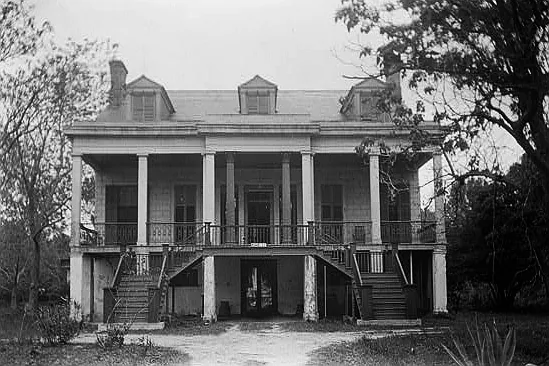
Built around 1850, when the coast was still frontier. The coastal population at statehood was just 2.5% of Mississippi's total. At a time when settlers concentrated in northern parts of the state, the Gulf Coast remained sparsely populated — the Census counted only 586 of Mississippi's 30,061 slaves living in the entire coastal region. Cultural influences here came from the Mediterranean, carried across the water more easily than overland. As Mississippi's deputy historic preservation officer has noted, the coast's situation along the Gulf of Mexico "facilitated the region's ethnic diversity and maintained its ties to the rest of the world much more easily than was possible for other regions of the state."
The house is listed on the National Register of Historic Places. It carries two names: Longfellow House and Bellingrath-Morse House. It stands in Pascagoula, one of the cities that grew along the Mississippi Sound where the French had first attempted settlement three centuries earlier.
Hurricane Camille hit on August 17, 1969. Hurricane Katrina hit on August 29, 2005. Both caused historic destruction to the Gulf Coast — the kind of destruction that remade what had once been called "America's Riviera," the region that had drawn tourists as an alternative to Florida with its manmade beach, its golf courses, its gaming resorts.
The house dates to the era before all of that, before the twentieth-century tourism boom, before Keesler Air Force Base brought new development, before the casinos arrived in the early 1990s. It belongs to the antebellum period, when this stretch of coast was still frontier.
Memories
Editorial content compiled with AI assistance. Place details verified against public records.