After the Fall of Saigon in April 1975, more than 120,000 Vietnamese refugees arrived in the United States within months. Gulf Coast states received approximately 20,000 of them — about fifteen percent of the total. The distribution was not random.
Vietnamese Catholic organizations worked in coordination with Gulf Coast dioceses to place families. People wrote letters home about what they found: salt water, shrimp boats, a fishing economy, a climate that didn't feel entirely foreign. Families followed families. The coast filled with people who had fished the South China Sea and found the Gulf of Mexico recognizable in ways they hadn't expected.
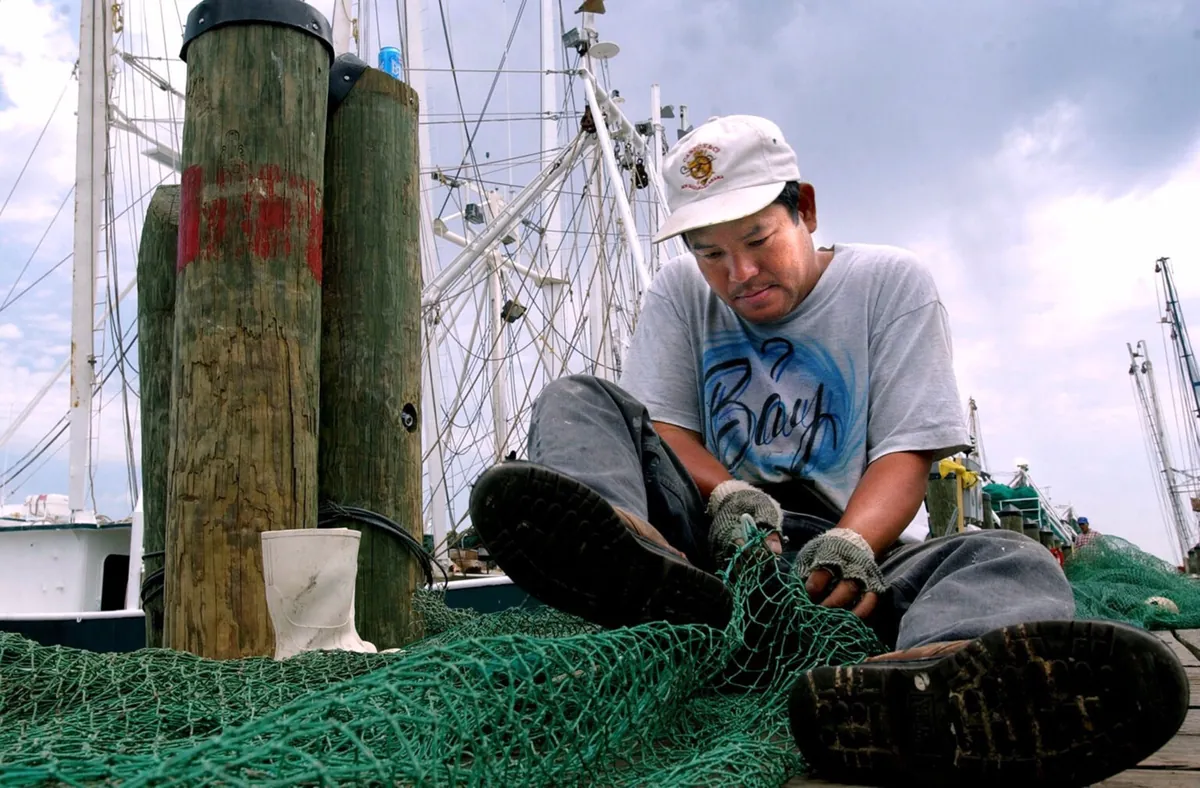
In Biloxi, the specific moment of arrival was 1977. Richard Gollott of Golden Gulf Coast Packing needed workers to shuck oysters at his plant. He heard Vietnamese laborers were working in New Orleans, drove there, and spent a week shuttling workers back and forth before persuading one family to relocate to Biloxi permanently. Within a few years, the community had moved from the docks to the boats. Former South Vietnamese Navy veterans and coastal fishermen bought or leased shrimp trawlers and went to work on Biloxi Sound.
The integration was not smooth. Vietnamese fishermen trawled north to south — the traditional practice from their home waters — while established Biloxi shrimpers worked east to west. Nets tangled. Coast Guard regulations were posted in English that most new arrivals could not read. Tensions rose and in the early 1980s, Klan activity targeted Vietnamese fishermen at several points along the Gulf Coast. The situation was addressed through church mediation, city negotiation, and the practical reality that the Vietnamese had become too integral to the industry to push out.
The Catholic Diocese of Biloxi established a Vietnamese Apostolate — including a Vietnamese priest who was himself a refugee — that still serves the community. The shrimping fleet working the Sound today carries Vietnamese family names alongside the Croatian and Cajun names that came before them. The Gulf Coast has always been assembled from somewhere else. This is just the most recent chapter.
Memories
Editorial content compiled with AI assistance. Place details verified against public records.