New Orleans money came here to summer before air conditioning, and they built to prove it — 135 antebellum and Victorian mansions along Scenic Drive, where the bluff gave a few feet of elevation over the Sound. Then Camille came in 1969 and took most of them. Katrina took them again in 2005. Of those 135, five survived both storms.
They rebuilt. Again.
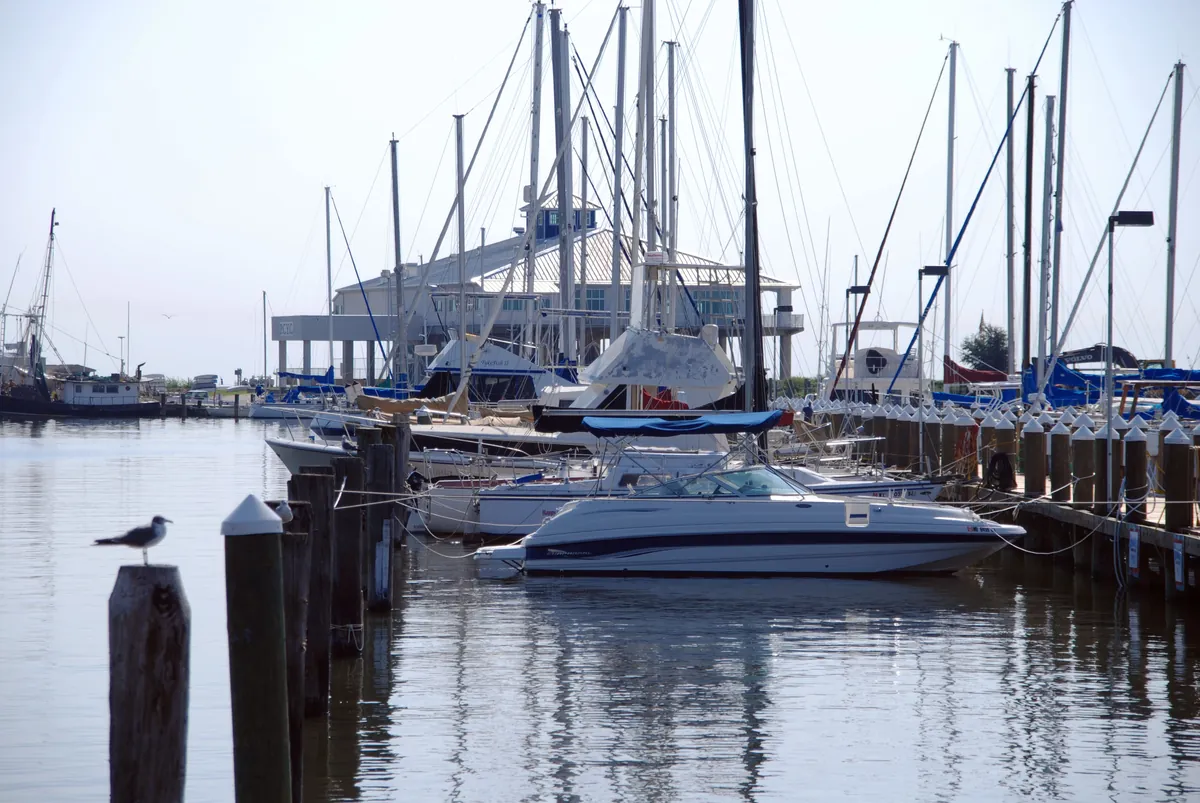
This is not resilience-by-slogan. The yacht club founded in 1849 — second-oldest in America — is still here. The first sailing regatta on the Gulf Coast happened in these waters on July 21, 1849, twelve boats organized by the Pass Christian Regatta Club. That was the sort of place this was: the kind of summer resort where wealthy New Orleans families built not just houses but clubs, not just clubs but regattas, not just regattas but traditions. Hurricane Camille's storm surge in 1969 killed eight people in the Richelieu Apartments. Katrina's surge in 2005 measured 27.8 feet — the U.S. record high — and leveled the town half a mile inland. Of approximately 8,000 homes, all but 500 were damaged or destroyed.
The Pass today is quieter than Bay St. Louis, more residential than Gulfport, none of Biloxi's neon. What you go for is to see what endured and what got remade. The snowball stand at Sea Level and the Rosenwald school on Clark Avenue tell the whole story: this is a town that knows what mattered enough to put back.
- ·'The Pass' was where New Orleans money came to summer before air conditioning.
- ·Scenic Drive had 135 antebellum and Victorian houses. Camille took most in 1969. Katrina took them again — 5 of 135 survived.
- ·They rebuilt. Again.
- ·The yacht club, founded 1849, is the second-oldest in America.
- ·Quieter than Bay St. Louis, more residential than Gulfport, none of Biloxi's neon.
- ·The snowball stand at Sea Level and the Rosenwald school on Clark Avenue tell the whole story.
Memories
Editorial content compiled with AI assistance. Place details verified against public records.