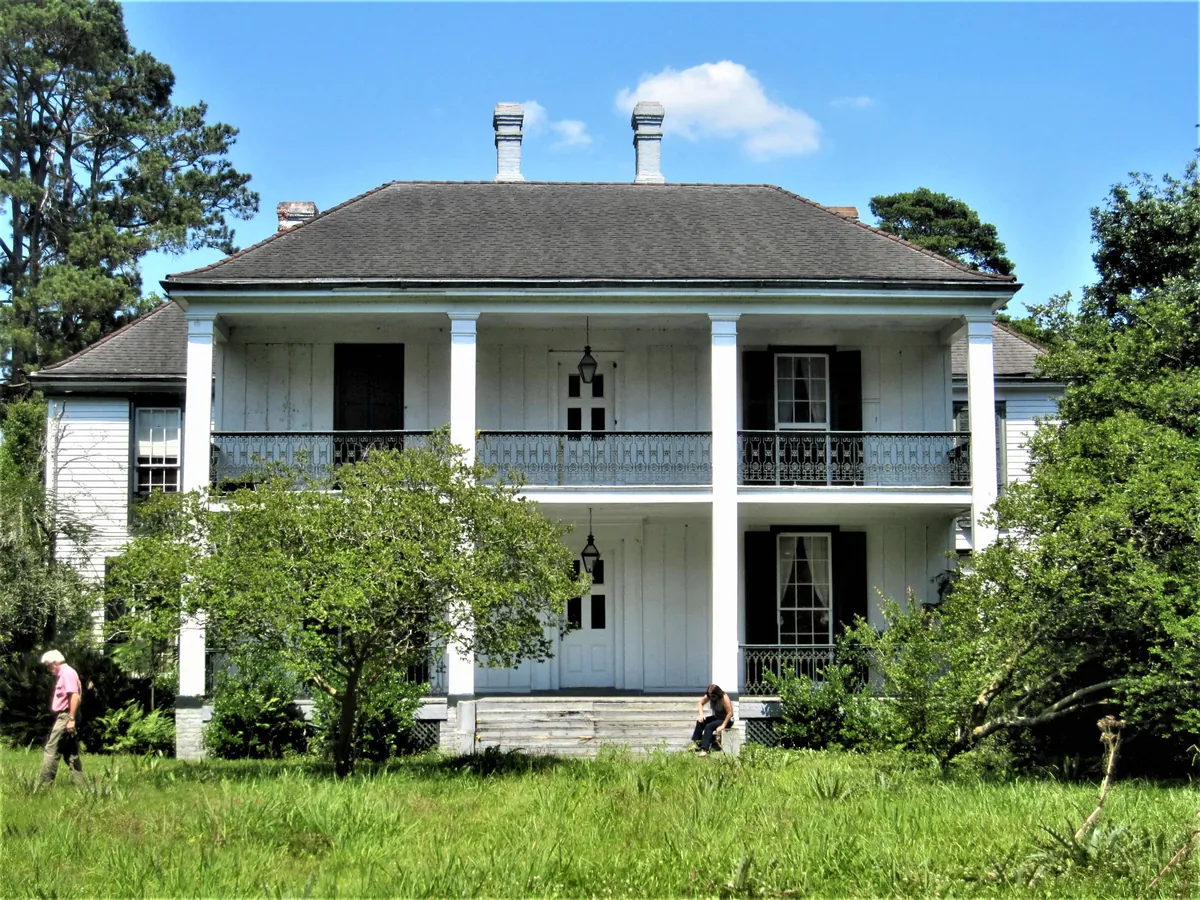
A two-story house with Doric columns stands on the east bank bluffs south of the city, its Greek Revival façade masking an older truth. Built around 1785, Longwood is one of the oldest surviving plantation structures in East Baton Rouge Parish—older than Louisiana statehood, older than the Louisiana Purchase, a structure that predates the nation claiming it.
The house you see now emerged from a significant 1830s remodeling that transformed the original French Colonial form. What began as one architectural expression of planter wealth became another, the columns and proportions declaring allegiance to a different aesthetic vocabulary while the bones of the earlier building remained. The layers tell their own story about what gets preserved and what gets covered.
Listed on the National Register of Historic Places since 1983, Longwood's interpretation includes documentation of both the planter family and the enslaved community who lived and worked here. That dual accounting matters—not as afterthought but as method, an acknowledgment that any honest reckoning with what was built requires naming who built it and under what terms.
This is private property. Check for tour availability before making the drive south.
- ·Built around 1785, Longwood is one of the oldest surviving plantation structures in East Baton Rouge Parish.
- ·The two-story Greek Revival house with Doric columns was significantly remodeled in the 1830s from its original French Colonial form.
- ·Listed on the National Register of Historic Places since 1983.
- ·Interpretation includes documentation of both the planter family and the enslaved community who lived and worked here.
- ·Located on the east bank bluffs south of the city. Private property; check for tour availability.
Memories
Editorial content compiled with AI assistance. Place details verified against public records.