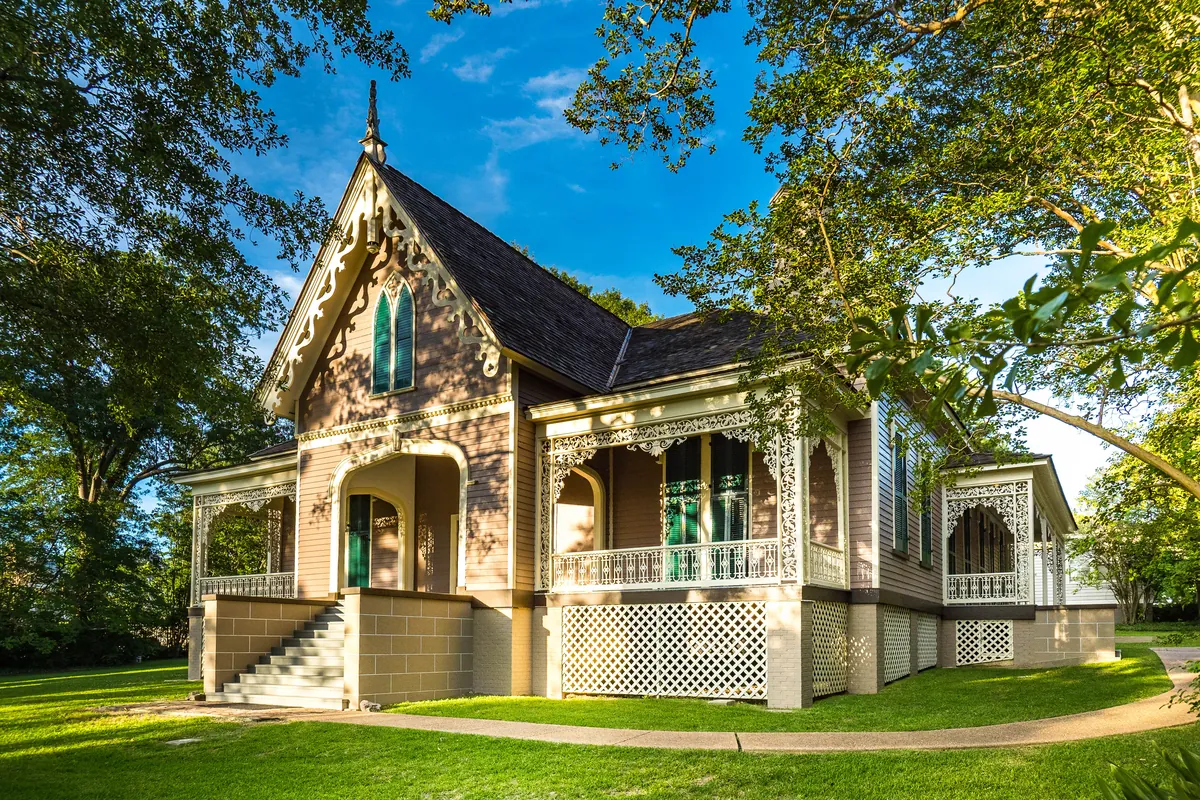
In 1862, Charles Manship made the decision that saved downtown Baton Rouge. Union forces approached the city, and the mayor chose to surrender without firing a shot. The move was controversial — surrender always is — but it spared the residential core from shelling. The houses stayed standing.
Manship's own house, built in 1853, is the clearest proof of what he preserved. The Gothic Revival cottage is the best-preserved example of its type in Louisiana, a style that would have been reduced to scorched timber had he chosen differently. Now it operates as a house museum, run by the Louisiana Division of Historic Preservation, furnished to the period when a mayor weighed his conscience against his city's architecture and chose the latter.
The house sits at 741 North Boulevard in the Beauregard Town Historic District, listed on the National Register. Tours run on the hour, Tuesday through Saturday. Admission is free. You walk through rooms that exist because one man declined to make them a battlefield.
- ·Built in 1853 for Charles Manship, the mayor who surrendered Baton Rouge to Union forces in 1862 without firing a shot — sparing the city from destruction.
- ·Manship's decision to surrender was controversial at the time but almost certainly saved the city's residential architecture from shelling.
- ·The Gothic Revival cottage is the best-preserved example of its type in Louisiana.
- ·Now operated by the Louisiana Division of Historic Preservation as a house museum with period furnishings.
- ·Free admission. Open Tue–Sat. Tours run on the hour. Located at 741 North Boulevard in the Beauregard Town Historic District.
Memories
Editorial content compiled with AI assistance. Place details verified against public records.