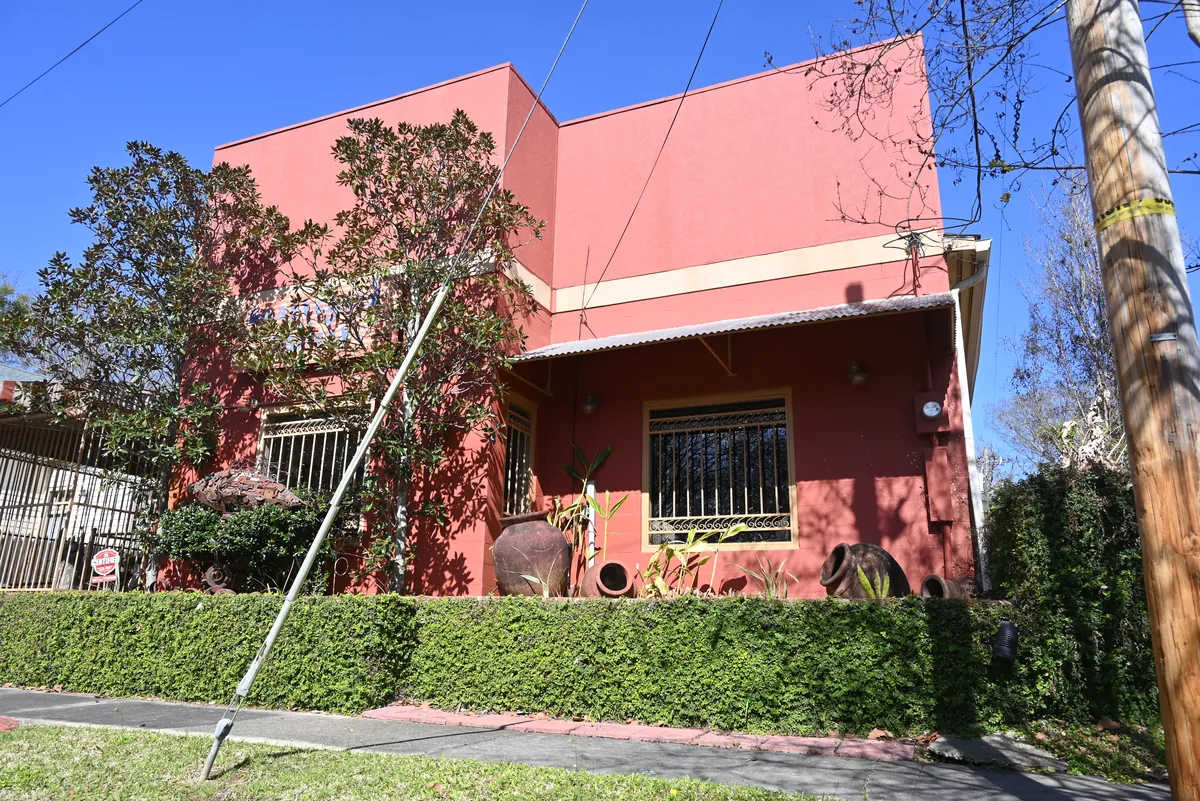
Elias Beauregard hired Arsène Lacarrière-Latour to draw up plans to develop his plantation property into a town in the "Grand European Manner." Advertisements for the scheme circulated in 1806. Lots remained empty until the late nineteenth century, when Baton Rouge was designated state capital. The neighborhood is the second-oldest in Baton Rouge after Spanish Town and was listed on the National Register of Historic Places in 1980.
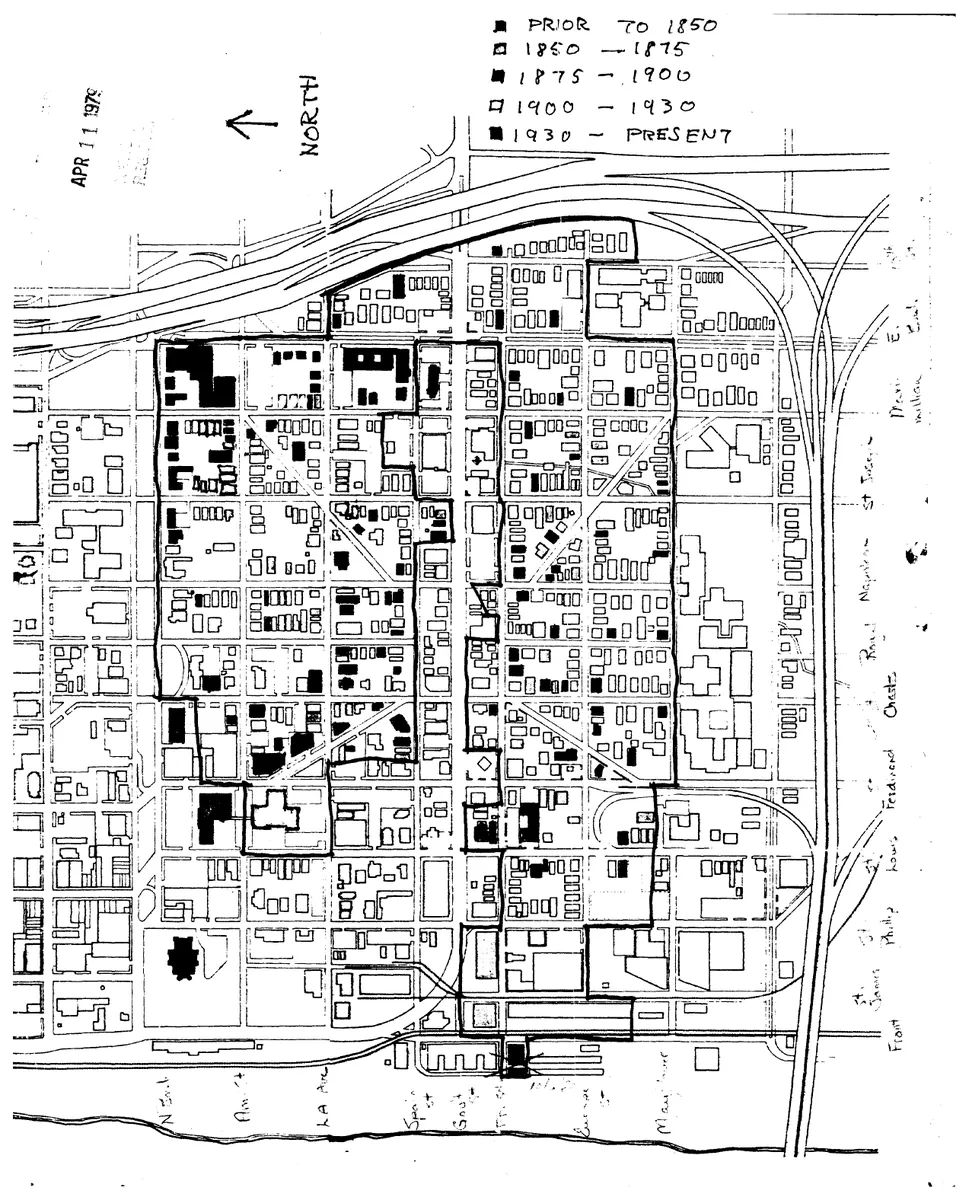
Beauregard called the central route the Grand Rue — Government Street now — and laid four streets across it at diagonal angles in the form of an X, typical of European town design at the time. The diagonals bear the names of men in power: Beauregard himself, Don Carlos Louis Boucher de Grand Pré (the Spanish administrator in 1806), Roman Catholic Bishop Luis de Penalver (the bishop in 1806), and the Marquis de Someruelos, Captain General of Cuba. Other streets honor rulers — Philip, Louis, Ferdinand, Charles, Napoleon, and Maximilian — or places: Spain, France, America, and Europe.
The district runs from North Boulevard to South Boulevard, East Boulevard to Saint Louis Street. Its boundaries were increased twice in 1983 and once in 2000. The first 1983 increase added the privately owned Levy Hay Warehouse, built in 1920, on Front Street. The second added the state-owned Armour Building, built in 1929, on Mayflower Street. The 2000 increase added state-owned houses of Bungalow/Craftsman and Queen Anne architecture.
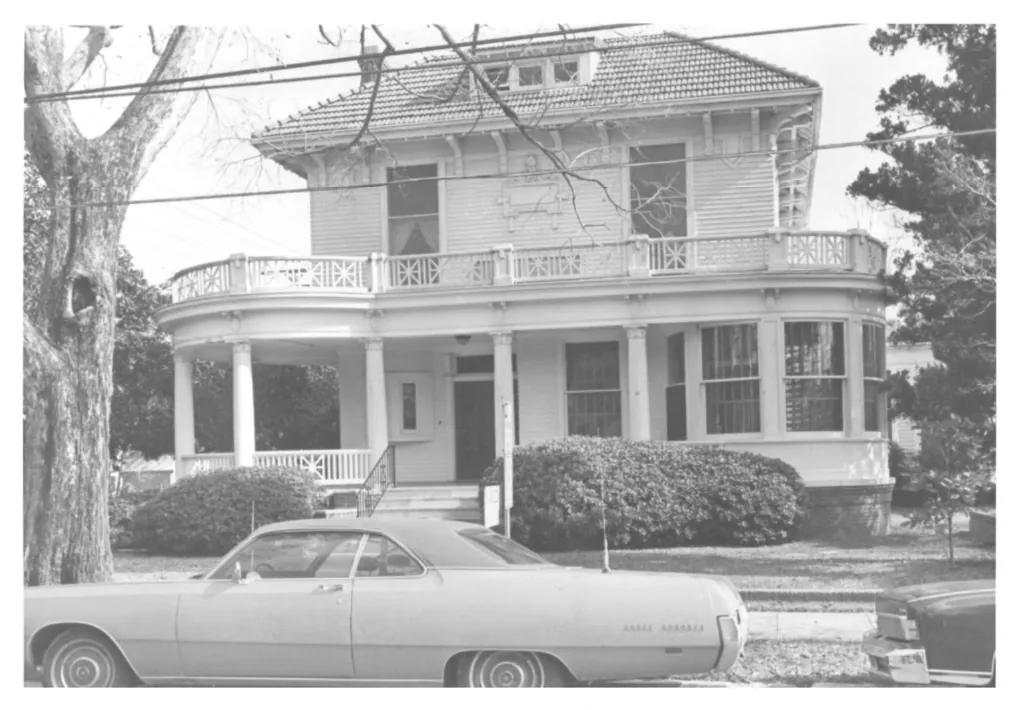
Historic homes include the Governor Henry L. Fuqua House, circa 1834, and the Williams House, circa 1890, both on Napoleon Street. The Judge Robert D. Beale House, circa 1840, sits at the corner of St. Louis and Government streets. The Old Louisiana Governor's Mansion is here too, listed separately on the National Register. The Manship House Museum is the district's anchor property and best-preserved example of Gothic Revival residential architecture in Louisiana.
Walk the X. The grid Beauregard laid in 1806 is still here.
- ·Platted in 1806, it is Baton Rouge's oldest intact residential neighborhood — still holding its original street grid.
- ·Architectural styles span Greek Revival and Italianate cottages to Craftsman bungalows, creating a complete residential record from the early 1800s through the 1930s.
- ·Named for Confederate General P.G.T. Beauregard, though the neighborhood predates the Civil War by more than 50 years.
- ·The Manship House Museum (1853) is the district's anchor property and best-preserved example of Gothic Revival residential architecture in Louisiana.
- ·Listed on the National Register of Historic Places. Walkable from downtown — bounded roughly by Convention, St. Ferdinand, South Boulevard, and Government streets.
More archive
Memories
Editorial content compiled with AI assistance. Place details verified against public records.