The longest siege in American military history—forty-eight days—ended here on July 9, 1863, when Confederate General Franklin Gardner surrendered after learning Vicksburg had fallen. The Union now held the Mississippi River without contest, the Confederacy split in two. What remains on the ground are six miles of original earthworks and rifle pits, trenches dug into terrain that forms a natural terrace sixty-five to eighty feet above Thompson Creek and Sandy Creek. The twisting, steep ground made this a defensible position; Union forces under Major General Nathaniel Prentice Banks ringed the Confederate positions and settled in for weeks of attrition.
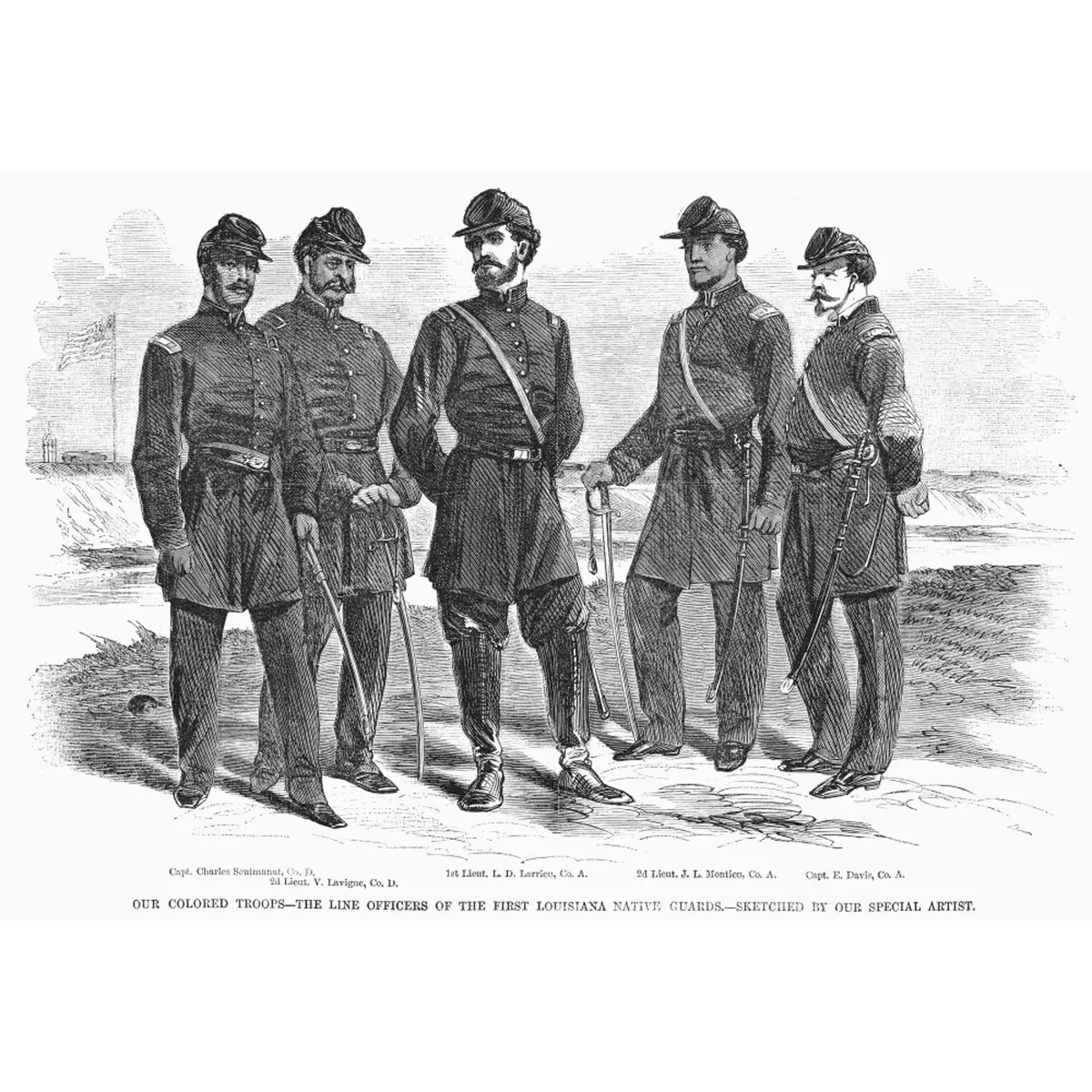
On May 27, the 1st and 3rd Louisiana Native Guards—units composed entirely of African Americans, among the first to include African-American field commanders—were ordered to attack Confederate batteries south of Foster Creek. There was doubt in Union circles about how these men would perform. They reached to within fifty feet of the Confederate guns three times before being repulsed. Of just over a thousand deployed, thirty-seven were killed, one hundred fifty-five wounded, one hundred sixteen missing. They held the field until ordered to retreat at four in the afternoon. The site was designated a National Historic Landmark in 1974 for this reason: it was the first place African-American military units fought for the Union under African-American field leadership.
The interpretive center, artillery displays, and redoubts trace the siege's arc. Historical reenactments are held each year. The trails are shadeless—bring water and start early. Port Hudson National Cemetery, where many of the dead were buried, lies six miles south.
- ·Port Hudson endured a 48-day Union siege, the longest in American military history, ending July 9, 1863.
- ·African-American troops fought their first major Civil War engagement here on May 27, 1863.
- ·Its surrender gave the Union uncontested control of the Mississippi River.
- ·Roughly six miles of original earthworks and rifle pits remain preserved on site.
- ·Visitor tip: the interpretive center trails are shadeless — bring water and start early.
Memories
Editorial content compiled with AI assistance. Place details verified against public records.