The mountain takes its name from the Biblical peak where a man stood to see what he could not reach. At 5,721 feet, the summit tends to earn that reference.
George Vanderbilt bought the mountain and thousands of surrounding acres in the late 1800s while building Biltmore Estate, using the property as a private hunting retreat for family and friends. That land eventually became Pisgah National Forest. The Shut-In Trail — 16 miles, a National Recreation Trail — descends from the area to Biltmore along what was Vanderbilt's old bridle path. His hunting parties rode it. Now anyone willing to walk it can.
The trail to the summit starts at the Blue Ridge Parkway overlook near milepost 407, runs 1.6 miles, and earns its moderate rating — the sections near the top get steep. At the crest, a small observation deck shares the peak with a 339-foot broadcast tower owned by the Sinclair Broadcast Group. That tower is the highest television antenna east of the Mississippi River, sitting 6,023 feet above mean sea level. A cable car still runs up the mountain to ferry engineers and equipment during bad weather. It's a working mountain.
The Pisgah Inn sits at milepost 408, a modern facility with private porches and balconies facing Pisgah National Forest. The dining room serves breakfast, lunch, and dinner. The campground at the same milepost offers tent and RV sites with shower facilities — the highest, coolest, and most secluded campground on the Parkway, according to the Blue Ridge Parkway Association. The inn and its facilities open in late March and run through October.
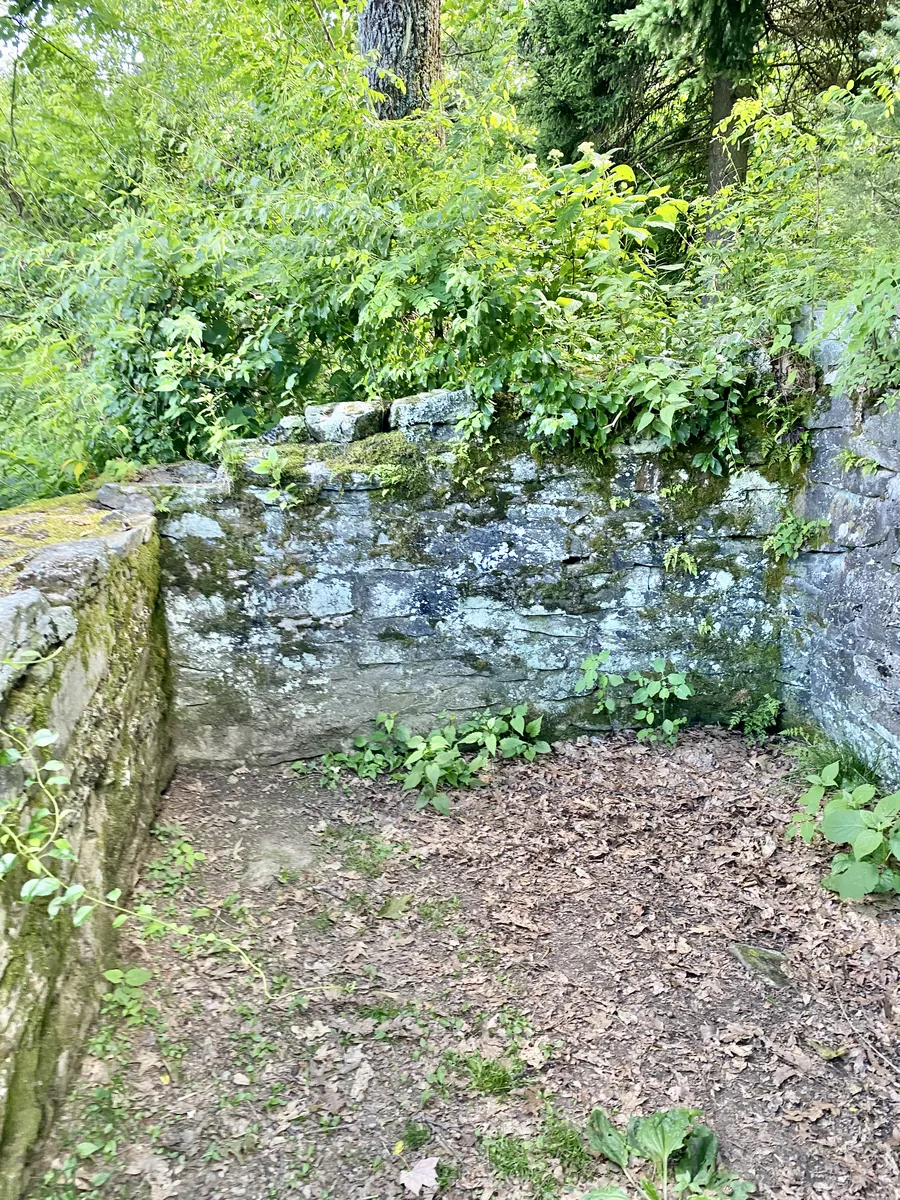
A short walk down the Buck Spring Trail from the parking area leads to the foundation stone remains of Vanderbilt's hunting lodge. What he built is gone. What the land became is the point.
- ·1.5-mile strenuous trail to summit; Shut-In Trail (16 mi) descends to Biltmore via Vanderbilt's old bridle path.
Memories
Editorial content compiled with AI assistance. Place details verified against public records.