Samuel Bass was a white carpenter and abolitionist from Canada, working at Edwin Epps's cotton plantation on Bayou Boeuf when Solomon Northup finally confided in him. Northup had been enslaved for twelve years, ten of them under Epps, a notoriously cruel planter who rotated him through roles from cotton picker to driver—positions that required Northup to oversee and punish fellow enslaved people. Since being drugged and sold in Washington, D.C., Northup had not revealed his true history to anyone, slave or owner. Bass, at great risk, sent letters to Northup's wife and friends in Saratoga Springs. One reached a white shopkeeper named Parker, who contacted Henry B. Northup, the attorney whose family had held and freed Solomon's father. New York had passed a law in 1840 providing financial resources for the rescue of citizens kidnapped into slavery. The state appointed Henry Northup to travel to Louisiana, where he hired a local Avoyelles Parish attorney, John P. Waddill, who succeeded in locating Solomon and freeing him from the plantation.
Northup returned to New York and published his memoir in 1853. *Twelve Years a Slave* sold 30,000 copies—three times as many as Frederick Douglass's slave narrative in its first two years—and drew endorsements from Northern newspapers, antislavery organizations, and evangelical groups. Harriet Beecher Stowe, whose *Uncle Tom's Cabin* had appeared a year earlier, noted the "striking parallel" between her fictional Red River plantation and Northup's documented experience on Bayou Boeuf. Early and mid-twentieth-century historians endorsed the memoir's accuracy; at every verifiable point, it checked out. Northup's account was unique among slave narratives for documenting kidnapping from freedom in the North, and for the perspective of someone who could always compare bondage to what he knew before as a free man in a free state.
The book fell into obscurity for nearly a century. In the early 1960s, two Louisiana historians—Sue Eakin at LSU Alexandria and Joseph Logsdon at the University of New Orleans—separately rediscovered the memoir, then together retraced Northup's journey. They documented it through slave sale records in Washington and New Orleans, court files, and his father's freeman's decree. Their annotated edition, published by LSU Press in 1968, has been widely used by scholars and in classrooms for more than forty years.
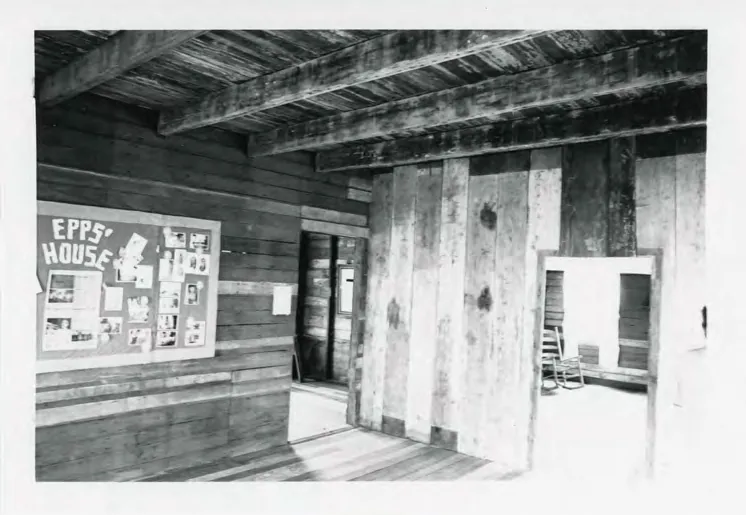
The Epps house, originally on Bayou Boeuf, was relocated to the LSUA campus in 1999. A permanent exhibit opened in 2013 with artifacts and archives, the same year Steve McQueen's film adaptation won the Academy Award for Best Picture. The house is free to visit—a place where the truth, once told, became foundational.
- ·Built 1852—Solomon Northup was enslaved here 1843–1853
- ·Northup's 1853 memoir became a foundational American text
- ·Originally on Bayou Boeuf, relocated to LSUA campus in 1999
- ·Permanent exhibit opened 2013 with artifacts and archives
- ·2013 film adaptation won Academy Award for Best Picture
- ·Free to visit on the LSUA campus
Memories
Editorial content compiled with AI assistance. Place details verified against public records.