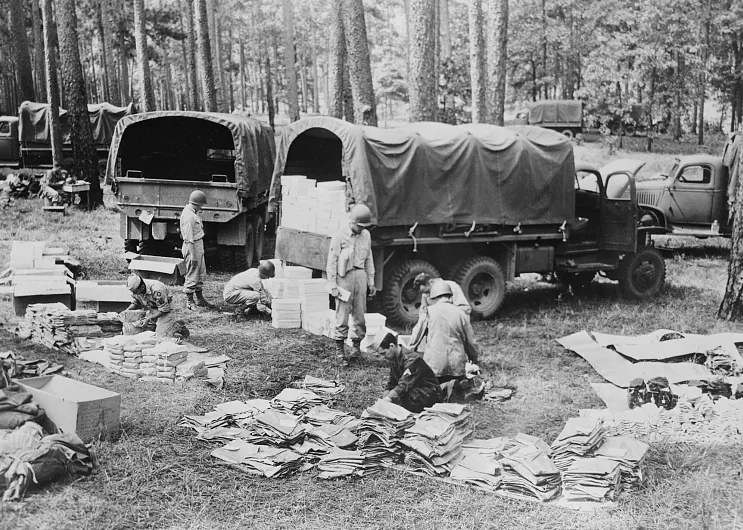
They called it Camp Evangeline when it opened in 1940. Within months it was Camp Claiborne, and more than 500,000 soldiers passed through during the war. The installation covered artillery and precision bombing ranges that sprawled across what is now Kisatchie National Forest, training men on a scale few Southern sites matched.
The Forest Service took the land back in 1946. What remains is an on-site museum that holds the camp's artifacts and interprets what happened here — the physical record of half a million men learning to fight before they left Louisiana. The precision bombing ranges and artillery training grounds that once occupied these acres are gone, but the museum anchors the history to the place where it occurred.
This is formative ground for Alexandria. The city absorbed a wartime population that dwarfed its peacetime scale, becoming a hinge point in the national mobilization. Camp Claiborne made Alexandria a military city in ways that outlasted the camp itself. The museum visit is short, but it locates you in the landscape where that transformation happened.
- ·Activated 1940 as Camp Evangeline, renamed Camp Claiborne
- ·More than 500,000 soldiers trained here during WWII
- ·Included precision bombing and artillery ranges across Kisatchie
- ·Returned to National Forest Service in 1946
- ·On-site museum preserves camp history and artifacts
Memories
Editorial content compiled with AI assistance. Place details verified against public records.