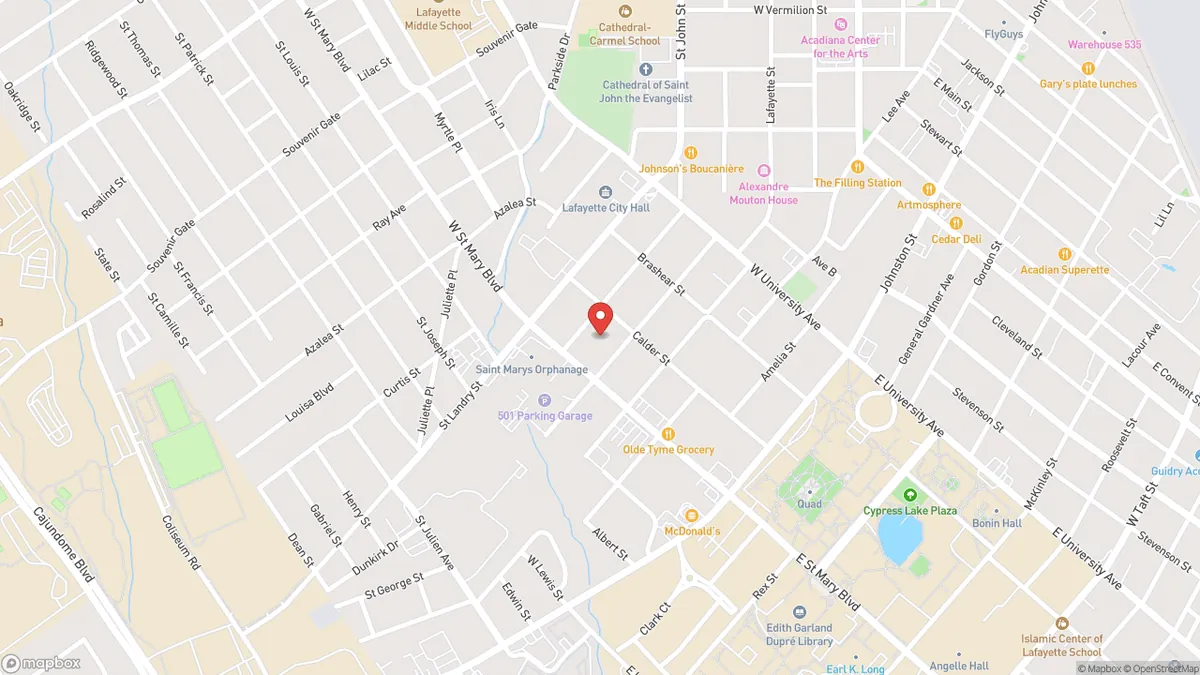
When Lafayette's surrounding sugar plantations freed their workers after Emancipation, those workers didn't scatter — they built. Freetown rose first, a settlement of formerly enslaved people who staked ground in what would become downtown Lafayette. Port Rico formed adjacent, a second freedmen's community. Together the neighborhoods became the cultural and commercial center of Black Lafayette, a role they held through Jim Crow, the civil rights era, and into the present.
The district now covers 220 acres and includes 677 contributing buildings — churches, shotgun houses, commercial storefronts, and civic institutions built in the styles that typified southern towns from the late 19th into the early 20th century: Folk Victorian, Colonial Revival, Bungalow/Craftsman, Minimal Traditional. What matters is the continuous thread: Black civic life older than Lafayette's incorporation, organized and sustained in structures that still stand.
This is one of the oldest African American neighborhoods in Acadiana, founded by people who had every reason to leave and who stayed to build instead. The National Register recognized the district in 2016, but the recognition is administrative. The fact is in the buildings — what was made, what endured, what still anchors the city.
- ·One of the oldest African American neighborhoods in Acadiana — founded by freed people immediately after Emancipation.
- ·Freetown began as a settlement of formerly enslaved workers from surrounding sugar plantations.
- ·Port Rico developed adjacent as a second freedmen's community.
- ·Together they became the cultural and commercial center of Black Lafayette through Jim Crow, civil rights, and beyond.
- ·Listed on the National Register of Historic Places.
- ·The district's churches, shotgun houses, and institutions represent a continuous thread of Black civic life predating Lafayette's incorporation.
Memories
Editorial content compiled with AI assistance. Place details verified against public records.