Twenty thousand nesting birds rise off Lake Martin at dawn in the spring. The McIlhennys' Jungle Gardens started in 1905 with eight snowy egrets E.A. McIlhenny saved from plume hunters; they brought the species back. Lake Fausse Pointe is a 6,000-acre cypress swamp you reach by boat. Acadiana Park's bottomland holds 180 bird species in spring migration. Chicot, the largest state park in Louisiana, sits in pine uplands. The dance halls get the visitors; the alligators and the egrets keep the place.
The route
 1Nature & Parks·1935Jungle Gardens & Bird City
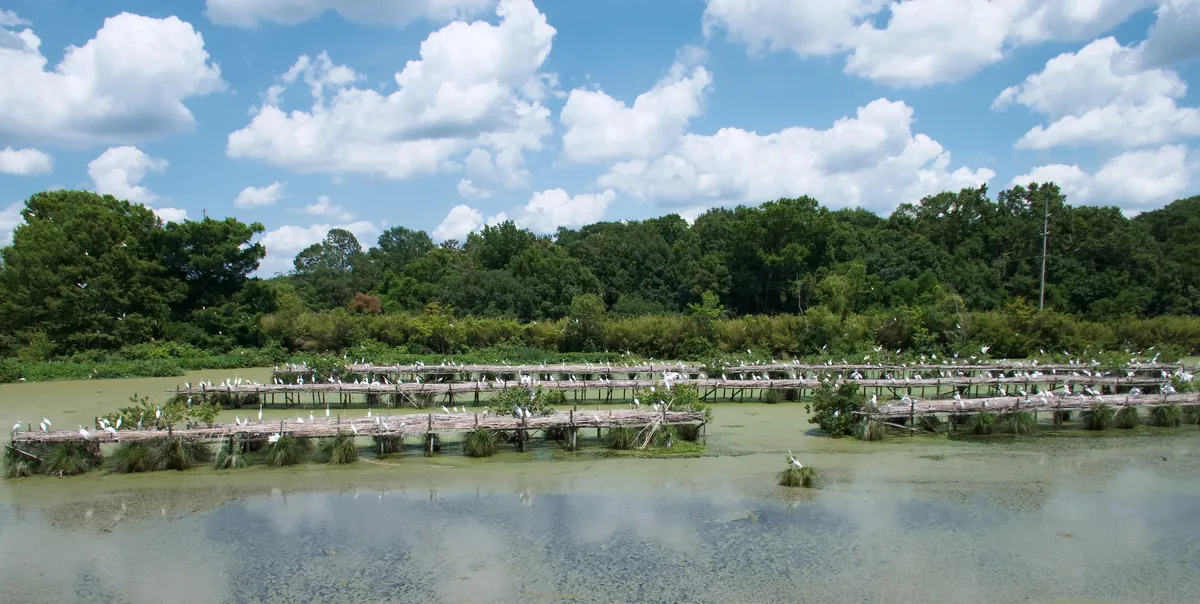
Edward Avery McIlhenny raised eight snowy egrets in 1895 — birds being hunted to near extinction for their plumes. He released them the following spring. They returned with dozens more. Bird City now hosts tens of thousands of nesting egrets and herons each spring. The 170-acre semitropical estate opened to the public in 1935. McIlhenny brought a 900-year-old Buddha statue from China and installed it in a sunken garden. The property's bamboo groves are among the largest outside Asia. Peak nesting season runs March through June. Arrive early morning for the most active rookery viewing. The full driving and walking loop takes one to two hours.
 2Nature & ParksLake Fausse Pointe State Park
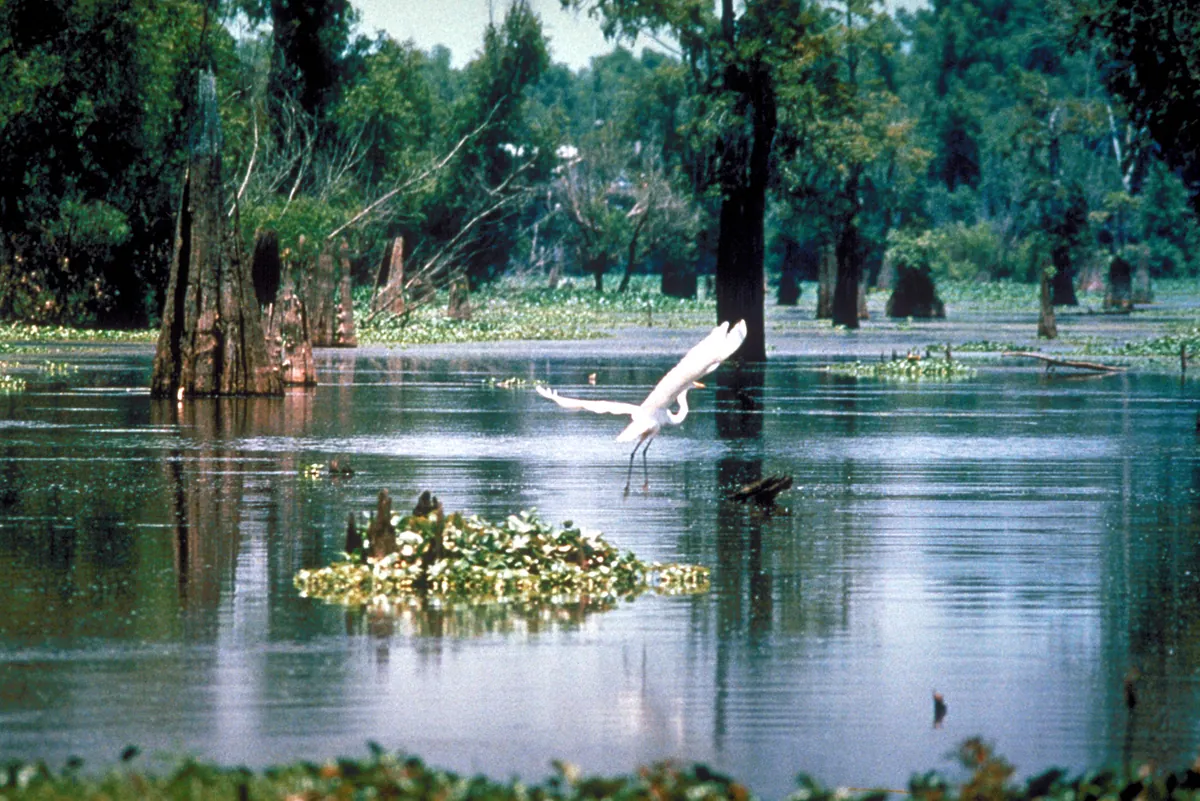
At Lake Fausse Pointe State Park, the waterfront cabins have no road access. You paddle to your front door. The park sprawls across 6,000 acres of cypress-tupelo swamp at the western edge of the Atchafalaya Basin, and the boat-in accommodations sit on stilts over black water, facing either cove or swamp. Cabins book months in advance. The land was carved from what was once Attakapas territory, later French colonial holdings, then a 19th-century sugar plantation. Now it shelters some of the last significant old-growth bald cypress stands left in the Atchafalaya Basin — ancient trees rising from water so dark it swallows light. Twenty-two miles of marked canoe trails wind through cypress-tupelo corridors. At night the sky opens with virtually no light pollution, and you can paddle under stars so dense they blur together. Wikipedia reports the park is home to whitetail deer, black bears, cottonmouth snakes, armadillos, alligators, and bobcats. Canoe and kayak rentals are available at the park office, and several primitive canoe-to campsites sit along the waterways — some accessible only by boat, others reachable by hiking deeper into the swamp interior. The park also offers RV sites, hike-to campsites, and three marked hiking trails that allow biking. An interpretive center provides exhibits on the plants and animals found in the Basin. This is one of the few places in Louisiana where you sleep surrounded by old-growth cypress with no engine sound but your own paddle stroke.
 3Nature & Parks·1974Acadiana Park Nature Station
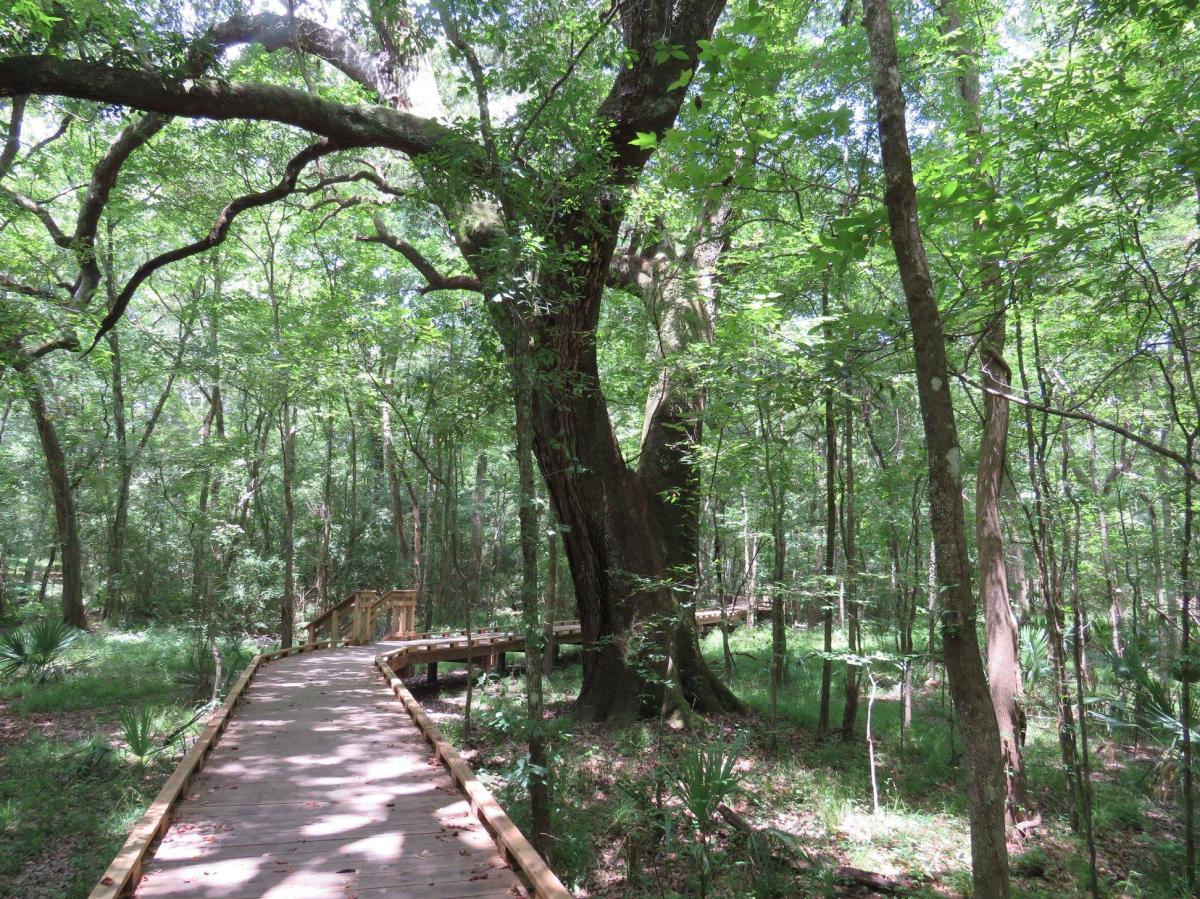
150 acres of mature forest, bottomland hardwoods, and cypress swamp hold 180 bird species on the northeastern edge of Lafayette. Over 30 warbler species pass through during spring and fall migration. Environmental education programs have run here since 1974. The three-story interpretive center overlooks the canopy. More than three miles of trail wind through the forest, including a wheelchair-accessible boardwalk section that puts you at eye level with the hardwoods. The kayak and canoe launch accesses Bayou Vermilion directly — a natural float downstream to Vermilionville. This is Cajun Heartland, USA — Lafayette Parish and its seven surrounding parishes officially designated as the core of Acadiana. The Acadians who settled in French Louisiana after the British expelled them from Canada at the end of the Seven Years' War intermarried with other settlers and formed what became Cajun culture. Most trace their ancestry to approximately fifty families who once lived in Port Royal, Acadia — now Annapolis Royal, Nova Scotia. The nature station offers a piece of what they found: bottomland forest threading into bayou, cypress swamp holding water and birds. Free. Open year-round.