The story of Black Natchez was being recorded in the 1830s by the people who lived it. William Johnson, freed in 1818, ran three barber shops by 1830 and kept a 2,000-page diary from 1835 until his murder in 1851 — one of the only records of antebellum free-Black life written from inside a slaveholding city. Forks of the Road, the second-largest slave market in the Deep South, is a memorial now. Concord Quarters preserves two brick cabins where enslaved people lived. The Rhythm Night Club Memorial names the 209 who died in the 1940 fire. The Natchez Museum of African American History carries the longer arc. The community was always here.
The route
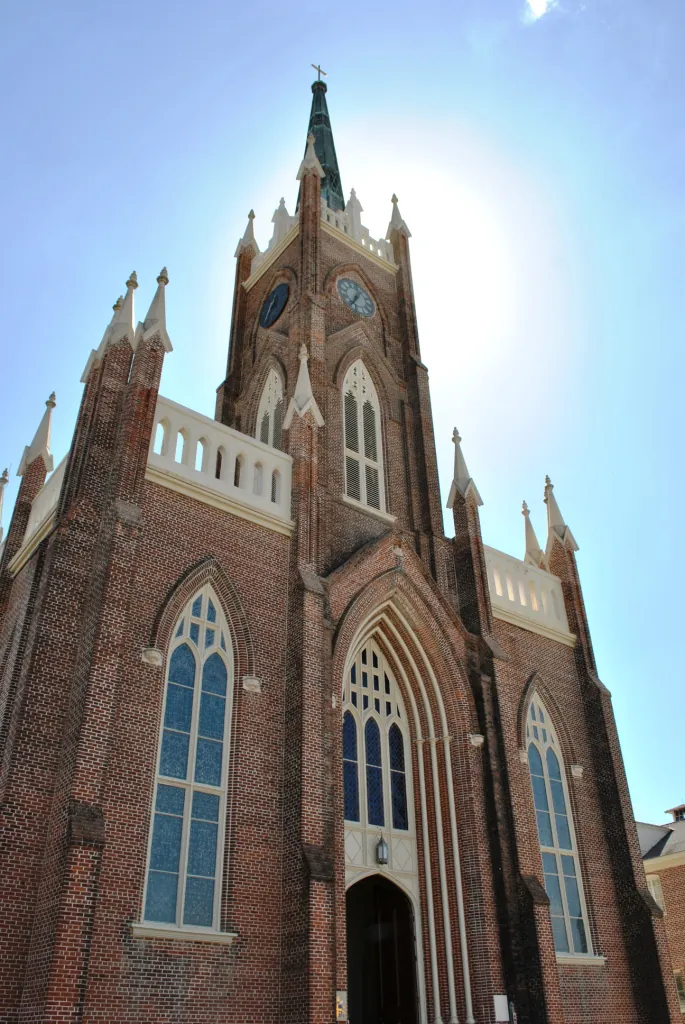 1Religious Site·1842·NRHPSt. Mary Basilica
One of fewer than 100 minor basilicas in the United States, elevated to that rank by Pope John Paul II in 1998. The present brick church was built in 1842, but Catholic worship at this site dates to the French colonial era — making this one of the oldest continuously active Catholic parishes in the Mississippi Valley. The interior features Gothic Revival arches, stained glass windows, and a pipe organ that draws musicians from across the state.
 2Nature & Parks·1902·NRHPDuncan Park Golf Course
The oldest golf course in Mississippi sits inside the oldest public park in the state — a nested inheritance that speaks to how early Natchez turned wealth into civic ground. Duncan Park opened in 1902, laid out on land donated in 1849, half a century before the first tee. Nine holes roll through terrain anchored by Auburn mansion, every fairway framed by live oaks that were here before the game arrived. This is municipal golf — green fees around fifteen dollars, walking allowed, pro shop on site, open daily. The course doesn't apologize for what it isn't. What it offers is continuity: a city that was the territorial capital, the southern terminus of the Natchez Trace, and the second-largest slave market in the nation also knew how to set aside land for public use before the Civil War. Duncan Park is what came of that impulse. The live oaks remember more than golf, but they frame the fairways all the same.
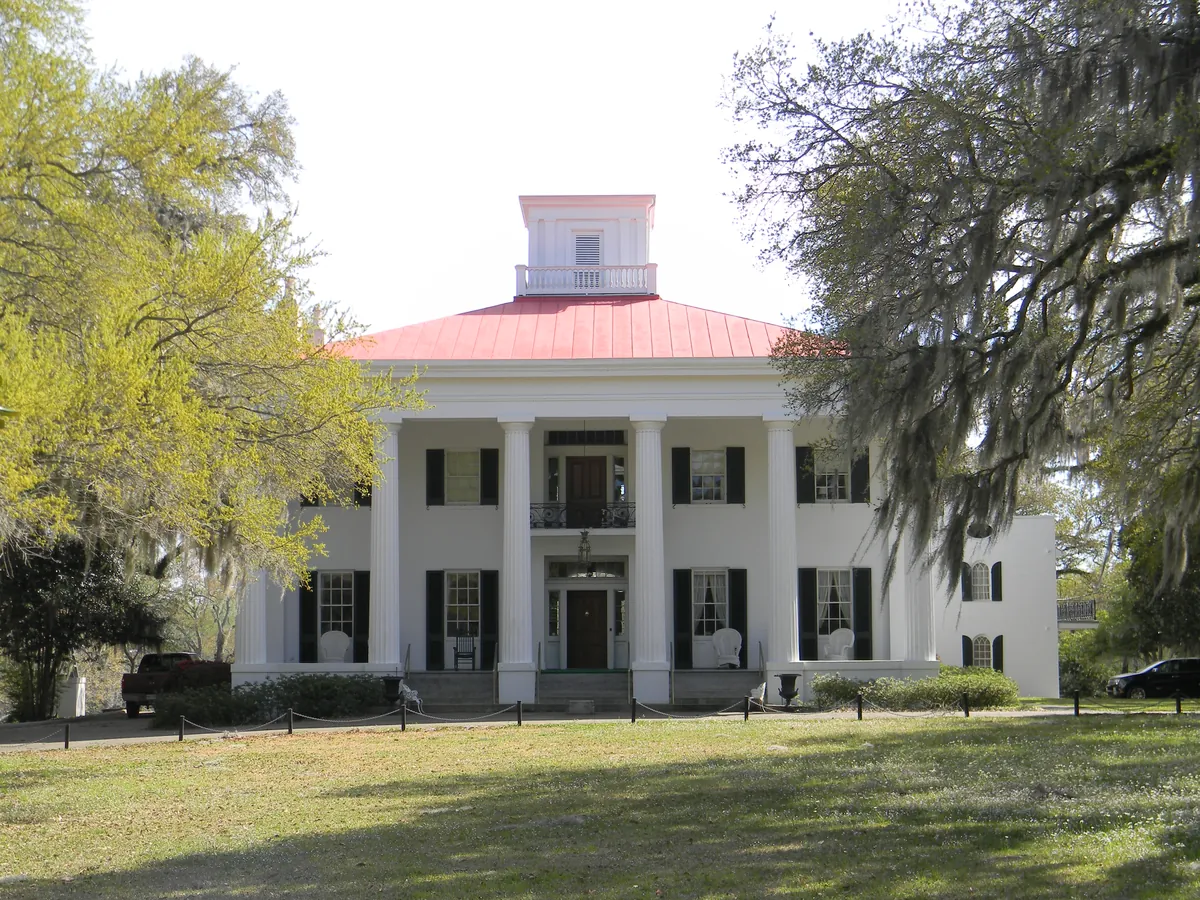 3Architecture·1840·NHLD'Evereux
A Greek Revival mansion built in 1840 that architectural historians consider one of the purest examples of the style in the South — clean lines, massive Doric columns, and none of the ornamentation that later Natchez builders added. Confederate President Jefferson Davis was a guest here. The house sits on landscaped grounds surrounded by live oaks. Private residence; open during Pilgrimage seasons.
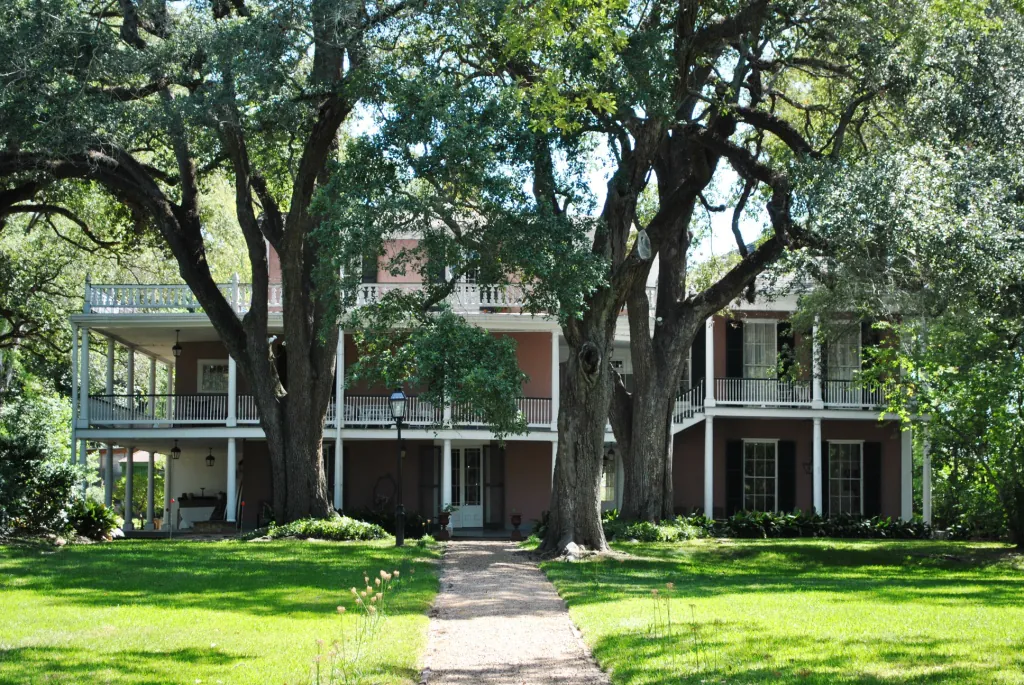 4Architecture·1782·NRHPThe Elms
A Spanish cottage built in 1782, before there was a United States flag to raise over Natchez — before there was a Mississippi, before there was an American South as we'd come to know it. The Elms went up when this bluff town belonged to Spain, part of a colonial territory that stretched from the Gulf Coast into what would become the cotton states. The house has outlasted every flag. French colonists founded Natchez in 1716. The British took it in 1763 after the French and Indian War, granting land to officers from New York, New Jersey, Pennsylvania — men who brought Georgian symmetry and plantation wealth to the lower river. Spain seized control in 1779 and held on even after the Treaty of Paris gave the territory to the United States, refusing to yield until Major Andrew Ellicott marched up to the bluff in 1797 and raised the American flag. The Elms was already fifteen years old by then, a cottage that had seen three empires. After 1798, American owners expanded the original Spanish structure — you can read the layers if you know how to look, the way a house grows when the people living in it change nationality without moving. It's been continuously occupied for over 240 years, which makes it one of the oldest structures in a city that was already ancient by the time Jackson became the state capital in 1822. The house is private, visible from the street, occasionally open during Pilgrimage. What you're looking at is what survives when a place gets built before anyone knows what country it will belong to.
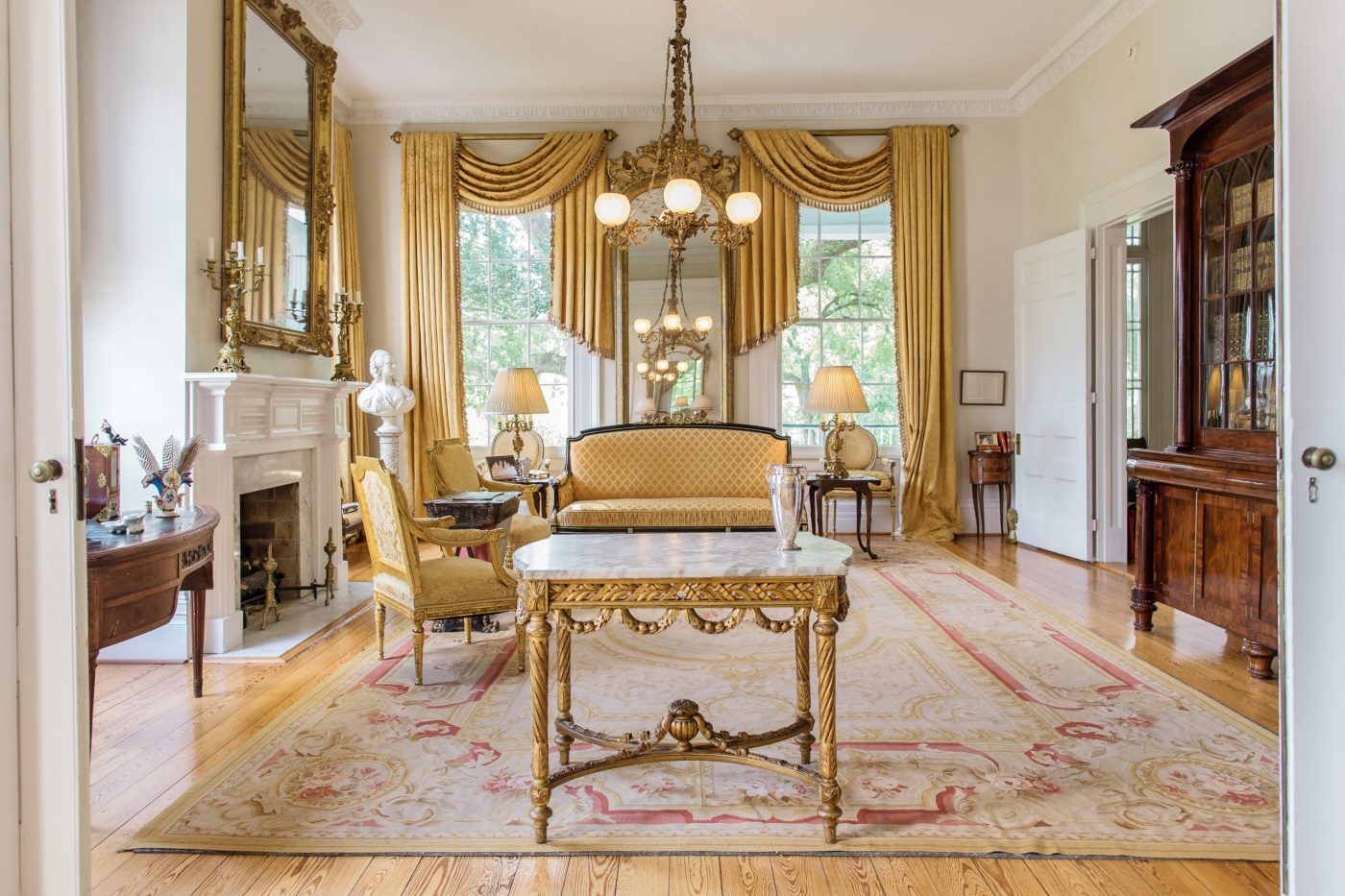 5Cultural Heritage·1932–presentHistoric Natchez Pilgrimage
In 1932, when cotton collapsed and the river traffic had long since moved on, Natchez did something no Southern city had done before: it opened its private houses to paying strangers. The Depression had gutted the city's economy. Antebellum mansions — remnants of the years when Natchez was the wealthiest city per capita in America, a center of cotton planters and Mississippi River trade — stood empty or half-maintained. So the garden clubs invented the historic home tour, creating an economic lifeline out of architecture and memory. It worked. And the model spread. Every historic home tour program in the American South traces back to what Natchez did first. The Pilgrimage still runs twice a year — spring and fall — opening 20+ antebellum homes, many of them private residences accessible only during these weeks. Tickets are sold per house or as multi-house packages; spring season sells out, so book early. Among the properties is Longwood, the largest octagonal house in the United States. Philadelphia architect Samuel Sloan designed it in 1859 for cotton planter Haller Nutt. Work halted in 1861 at the start of the Civil War. Nutt died of pneumonia in 1864, leaving the work incomplete. Of the 32 rooms planned, only nine on the basement floor were finished. The Pilgrimage Garden Club owns and operates it now as a museum — ornate first floor, unfinished upper floors, byzantine onion dome overhead. The last burst of antebellum opulence, frozen mid-construction when the world that built it collapsed.