Jazz is what happens when African drumming, Creole conservatory training, and red-light district money occupy the same twenty blocks. Congo Square, where enslaved Africans gathered on Sundays from 1740, is the place in North America where African rhythm most visibly survived the crossing intact. Creole free people of color had formal conservatory training. Storyville, 1897–1917, paid for Armstrong's education. Bolden's house on First Street still stands; Armstrong's on Jane Alley is a marker. The trail walks the argument.
The route
- 1Historic Site·1718·NHLCongo Square — Louis Armstrong Park
Every Sunday throughout the 18th and 19th centuries, enslaved people gathered at this open space behind the French Quarter to drum, dance, and sing in African rhythms. New Orleans was unique in allowing these gatherings — the practice was suppressed everywhere else in the Americas. In 1817, the mayor issued an ordinance restricting all gatherings of enslaved Africans to this one location, where they could set up a market, perform, and earn money to purchase their freedom. The weekly assemblies became famous among visitors from across the United States, who marveled at what they heard: the beat of the bamboulas, the wail of the banzas, dances including the Bamboula, Calinda, Congo, Carabine, and Juba. Architect Benjamin Latrobe wrote in his 1819 journal about seeing 500 to 600 unsupervised enslaved people assembled for dancing, performers ornamented with tails of wild beasts, fringes, ribbons, little bells, shells, and balls. Clusters of musicians and dancers represented tribal groupings, each nation taking a different part of the square. The instruments spanned available cultures: drums, gourds, banjo-like instruments, quills made from reeds strung together like pan flutes, marimbas, violins, tambourines, and triangles. This mix of African and European styles helped create African American culture. The rhythms played here can still be heard in New Orleans jazz funerals, second lines, and Mardi Gras Indians parades. The preserved West African musical traditions became the foundation of jazz, blues, and eventually rock and roll. Creole composer Louis Moreau Gottschalk incorporated rhythms and tunes he heard in Congo Square into some of his compositions. The gatherings declined as harsher United States practices of slavery replaced the more lenient Spanish colonial style, stopping more than a decade before the Civil War ended slavery. In 1893, the city officially renamed the square for Confederate General P. G. T. Beauregard in an attempt to suppress its mass gatherings, though most locals continued calling it Congo Square. In 2011, the New Orleans City Council voted to restore the traditional name. In the 1960s, an urban renewal project leveled a substantial portion of the surrounding Tremé neighborhood; after a decade of debate, the city turned the land into Louis Armstrong Park, which incorporates the old square. Congo Square is now a National Historic Landmark inside Louis Armstrong Park. A statue of Louis Armstrong stands near the park entrance on Rampart Street. The park also contains the Mahalia Jackson Theater. It remains a venue for music festivals and a community gathering place for brass band parades, protest marches, and drum circles. Every Sunday, the Congo Square Preservation Society gathers to celebrate the history and culture through drum circles, dancing, and musical performances, carrying on the tradition. The park is free and open daily; visit during daylight hours.
 2Music·1901Louis Armstrong Birthplace Site
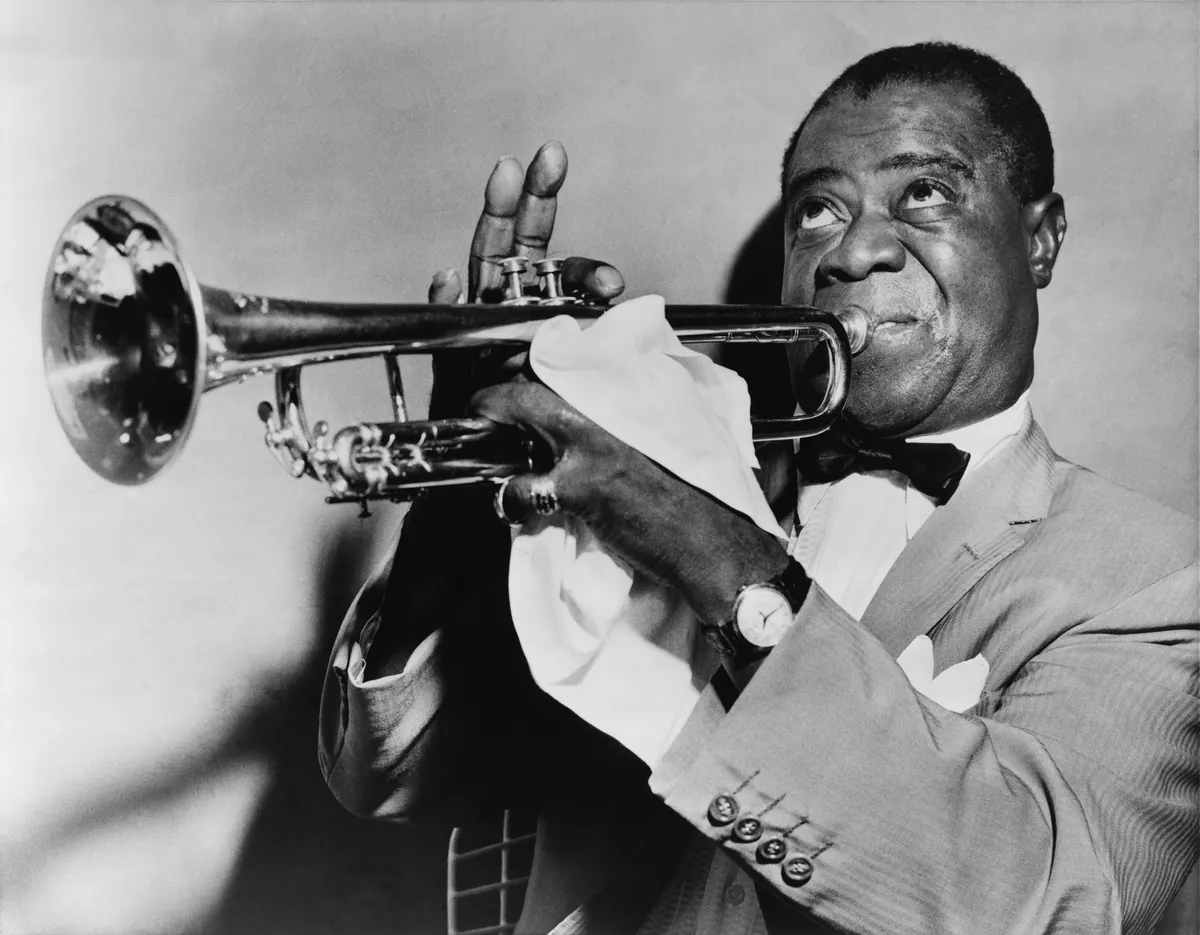
A marker on South Rampart Street near Perdido marks where Louis Armstrong was born on August 4, 1901. The house on Jane Alley is gone. The block was razed decades ago. Armstrong grew up surrounded by brass bands, street parades, and honky-tonks. At age 11, he fired a gun on New Year's Eve and was sent to the Colored Waif's Home. Peter Davis, the band director there, gave him his first cornet. That environment shaped the most important career in American music history. The marker stands on asphalt now, but what happened here traveled everywhere Armstrong went.
 3Music·1890Jelly Roll Morton Birth Site — Frenchmen Street Area
Ferdinand Joseph LaMothe was born in the Faubourg Marigny in 1890 to a Creole family. He renamed himself Jelly Roll Morton and became the first great composer of jazz and the first to write jazz arrangements on paper. His recordings with the Red Hot Peppers in the late 1920s are foundational documents of the art form. He grew up playing piano in Storyville's houses and parlors. He claimed, with characteristic modesty, that he personally invented jazz in 1902. The birth site sits near Frenchmen Street, now the center of the city's live music scene. The Faubourg Marigny was once the plantation of Bernard de Marigny, a wealthy Creole who subdivided his property in 1806 to sell lots and develop a residential area. The Frenchmen Street entertainment district began developing in the 1980s. As Bourbon Street became dominated by tourism, Frenchmen developed as a spot for locals to enjoy live music. Morton was born where the city's Creole culture — French-speaking, Catholic, musically literate — met the raw material of American vernacular music. That collision is what jazz is. The first composer to write it down walked these blocks first.
- 4Historic Site·1897Storyville Historic District (Site)
In 1897, New Orleans drew a perimeter around 38 blocks and made prostitution legal within it. Storyville was the only legally sanctioned red-light district in the United States. Jazz was invented in the parlors and dance halls. Jelly Roll Morton played piano in the houses on Basin Street. Louis Armstrong sold coal to the brothels. The district ran for twenty years. The Navy shut it down in 1917 because sailors kept getting into trouble. The city demolished the entire district in the 1930s and built the Iberville housing project on top of it. Almost nothing of the original built environment survives. The site marks where a form of American music came into being, in a place the city later erased. You stand where the addresses were.
 5Music·1961·NRHPPreservation Hall
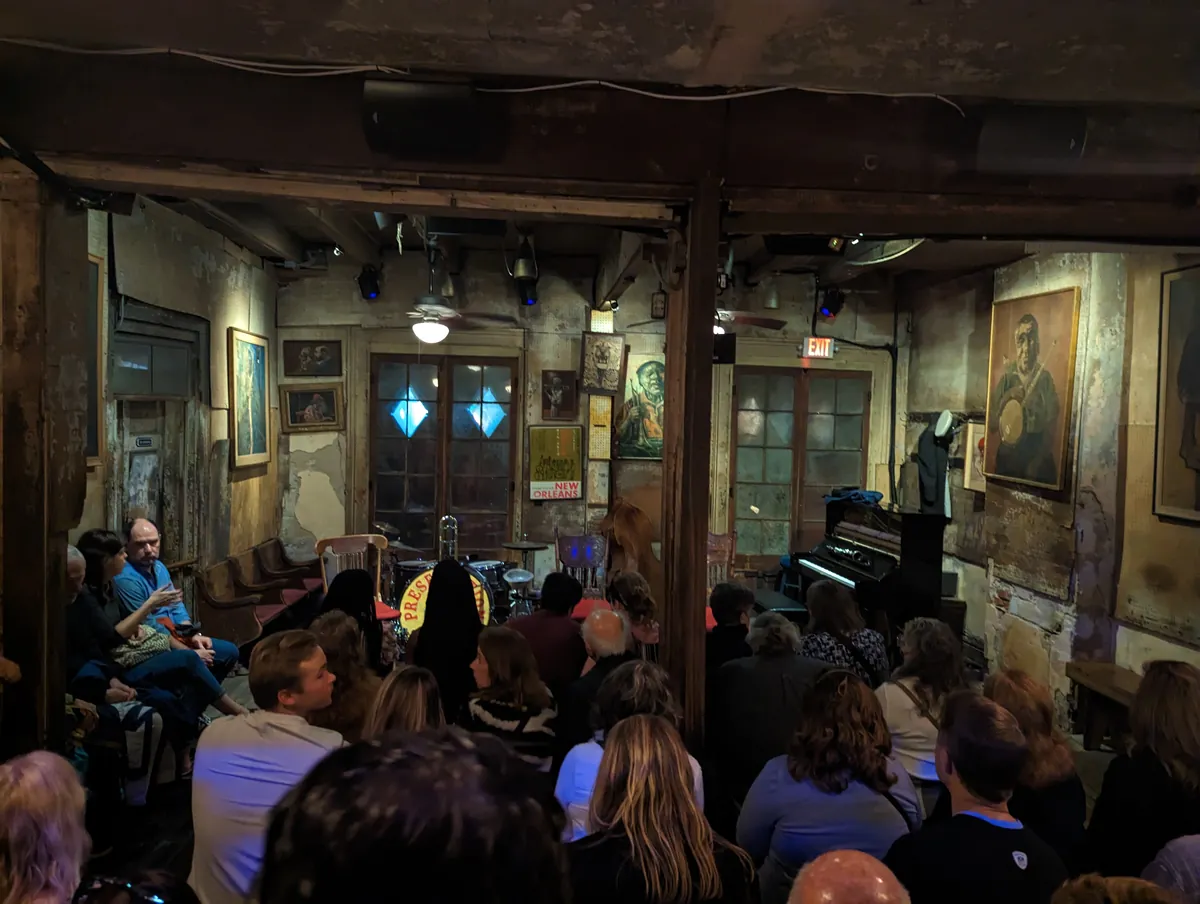
A bare room with wooden benches, no air conditioning, no drinks menu, and a $25 cash cover — and one of the most important music venues in the world. Allan and Sandra Jaffe opened Preservation Hall in 1961 specifically to give traditional New Orleans jazz a permanent home at a moment when rock and roll was pushing it toward extinction. The musicians who play here are direct inheritors of a lineage that runs back to Buddy Bolden and King Oliver. No microphones, no amplification — the band plays three feet from the front row. Shows start at 5, 6, 8, 9, and 10 PM nightly. Get in line early; the room holds about 40 seated.
 6Museum·1835·NHLNew Orleans Jazz Museum
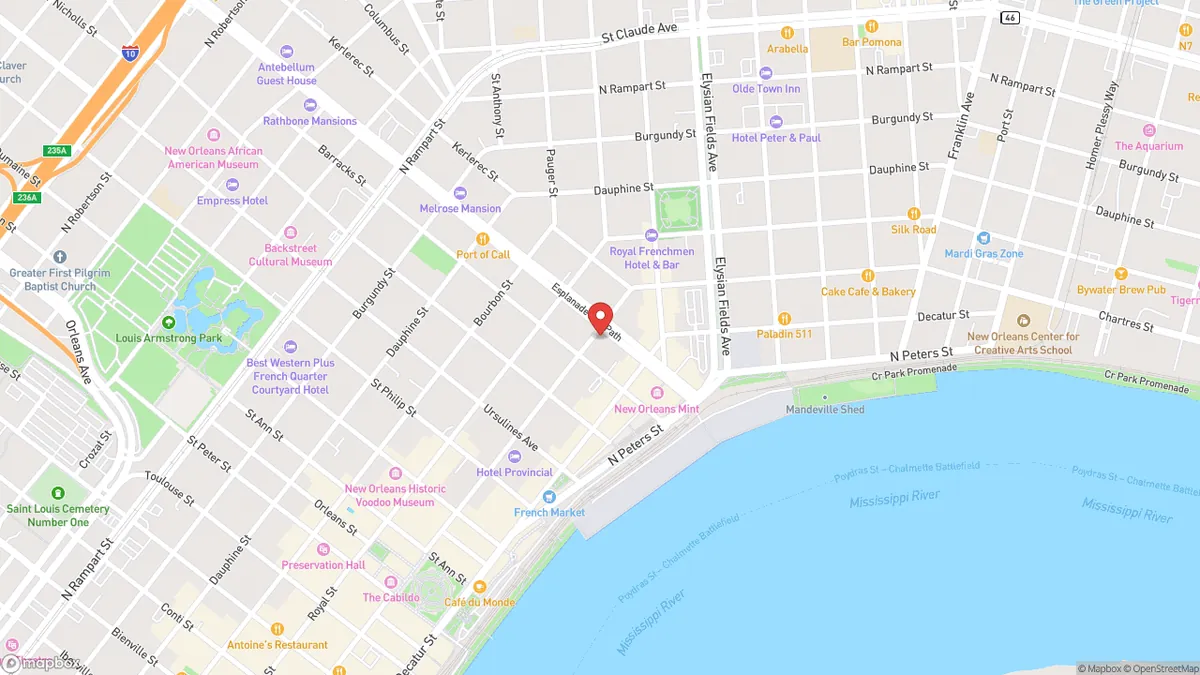
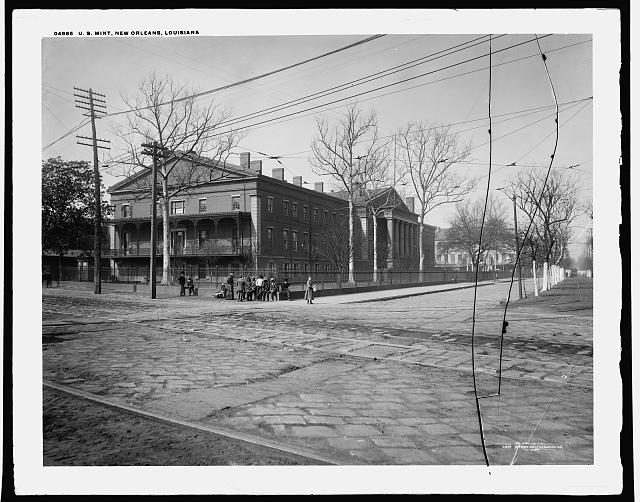
Louis Armstrong's first cornet sits behind glass in a building that once stamped coins for three different governments. The 1835 U.S. Mint produced currency for the United States, the Confederacy, and the State of Louisiana — the only mint to serve all three. Now it houses the world's largest collection of instruments owned and played by the people who made jazz. The New Orleans Jazz Club began gathering this material in the years after its founding in 1948. Edmond "Doc" Souchon, Myra Menville, and Helen Arlt led the effort. The museum opened in 1961 at 1017 Dumaine Street with Clay Watson as curator, relocated twice, then closed due to bankruptcy. On September 15, 1977, the entire collection was donated to the people of Louisiana. In the early 1980s, the exhibit opened on the second floor of the Old U.S. Mint under curator Don Marquis. Hurricane Katrina damaged both building and collection in 2005; the Mint reopened in 2008. The holdings span trumpets, cornets, trombones, clarinets, and saxophones from Bix Beiderbecke, Edward "Kid" Ory, George Lewis, Sidney Bechet, and Dizzy Gillespie. A rare Adolphe Sax original saxophone anchors the instrument collection. Some 12,000 photographs document the early days of jazz. Over 4,000 78 rpm records date from 1905 to the mid-1950s, joined by thousands of LPs, 45s, and approximately 1,400 reel-to-reel tapes. Hundreds of sheet music examples span late 19th-century ragtime to 1950s standards, many first editions. Film rolls capture concert footage, nightclub performances, funerals, parades, and festivals. Architectural fragments salvaged from important jazz venues survive here. The third floor hosts live performances. Admission is free. Open Tuesday through Sunday, 10am to 4:30pm.
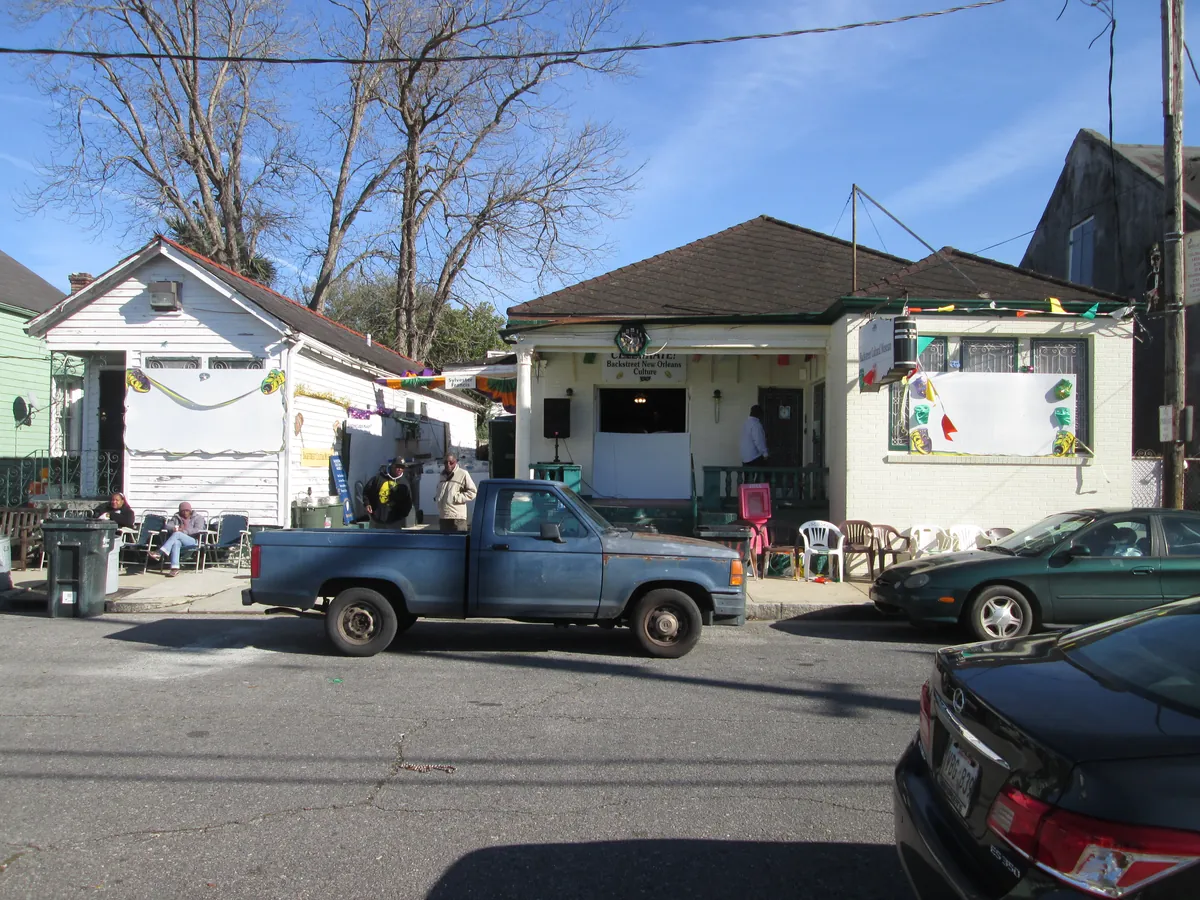 7Museum·1999Backstreet Cultural Museum
Sylvester Francis spent decades collecting what others threw away after the parades ended. The hand-beaded Mardi Gras Indian suits — each taking a full year to make, weighing up to 100 pounds, worn once — weren't museum pieces to him. They were proof that Tremé's Black parade traditions weren't footnotes to the city's culture. They were the culture. Francis founded the Backstreet Cultural Museum in 1999. The collection documents second lines, Mardi Gras Indians, jazz funerals, and Social Aid and Pleasure Clubs — the street traditions that survived when so much else didn't. The museum holds rare photographs of Mardi Gras Indian gangs from the 1940s and elaborate suits from years past, artifacts that would have disappeared without Francis deciding they mattered enough to save. Originally housed in a former Tremé funeral home, the museum moved to a larger space in 2023. It's become a clearing house for information about upcoming Mardi Gras Indian and second-line events, and hosts ceremonies including the annual White Buffalo Day procession to Congo Square. Photography is allowed; video isn't. You go because this is where the beadwork and the photographs and the actual costumes make clear what a century of erasure tried to bury: that New Orleans street culture was built here, by these hands, in these neighborhoods, and it never stopped.