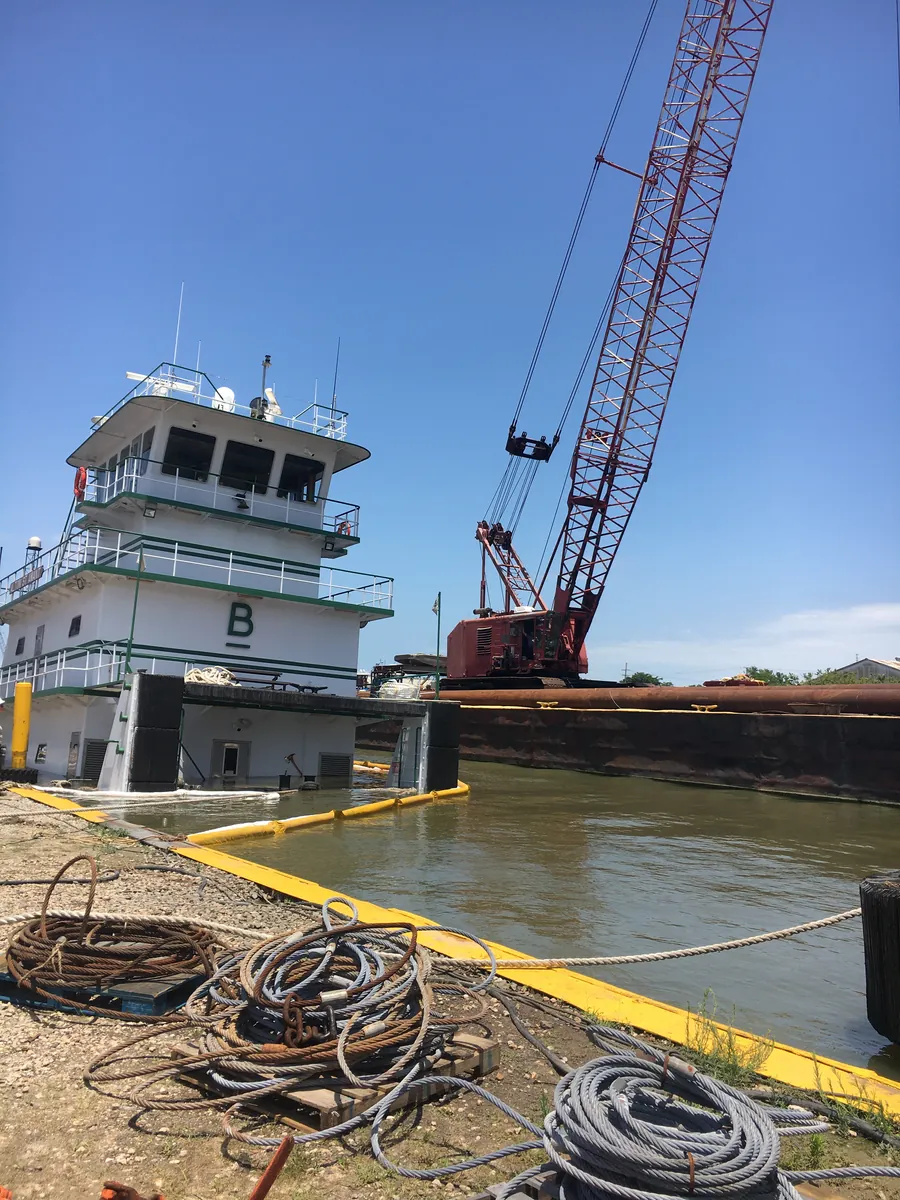
The first version was a ditch dug by enslaved people. Jean-Baptiste d'Estrehan de Beaupré, the French colonial royal treasurer, had his plantation workers cut a channel from the Mississippi River south toward Bayou Barataria — a shortcut between the river's commerce and the swamp's resources. In 1839, Nicholas Noel Destrehan hired Irish laborers to widen it into a real canal, and by 1844 it was open for traffic: barges and schooners hauling timber, moss, fish, and shellfish from the bayous to the city. The canal needed a way to get boats over the levee, so engineers built a “submarine railway” — a mechanical lift that dragged vessels up and over the earthen wall. That contraption served until the Army Corps of Engineers completed a proper lock in 1907, then a larger one in 1934. The town that grew around the canal took its name from Joseph Hale Harvey, who married a Destrehan descendant and renamed the settlement after himself. By the twentieth century, the Harvey Canal had become part of the Gulf Intracoastal Waterway, linking the Mississippi to the oil fields and fishing grounds of Barataria Bay. It is the seam between two versions of Jefferson Parish — the river side and the bayou side — and everything on the West Bank flows through it.