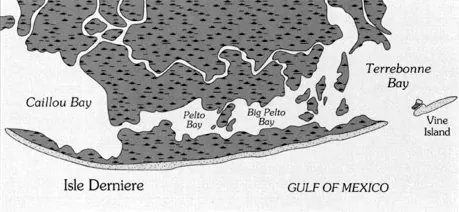
Before Galveston, before the railroads, Last Island was where Louisiana planters went to escape the summer fever. A twenty-five-mile barrier island off Terrebonne Parish. The Ocean House Hotel, gambling parlors, a beach promenade, steamboats from New Orleans twice a week. Four hundred guests at peak season, staying for weeks.
August 10, 1856. A storm of unknown intensity — modern reanalysis puts it at Category 4 — came directly over the island. The surge split it in half and scoured every structure off its surface. Of the four hundred vacationers on the island that weekend, nearly two hundred died. The steamer *Star*, arriving with more guests, was driven onto the beach and broke apart; survivors clung to debris for a full day before the water receded.
This is not a single tragedy. It is a Louisiana habit. The state keeps building pleasure on its barrier islands and the Gulf keeps taking it back, and the people who came after kept having to write it down. Thirty-two years on, Lafcadio Hearn made the 1856 storm a novel — *Chita: A Memory of Last Island*, Harper's, 1888 — a Creole child pulled alive from the bodies and raised by the fisherman who found her. Five years after that, in October 1893, the Chênière Caminada hurricane killed an estimated two thousand people down the same coast and erased another resort community beside Grand Isle — the island world Kate Chopin would set *The Awakening* in by 1899. Two of the finest writers Louisiana produced, each elegizing a different island the same Gulf had already erased, half a lifetime apart. It is easy to mistake one for the other. That is the point. It keeps happening.
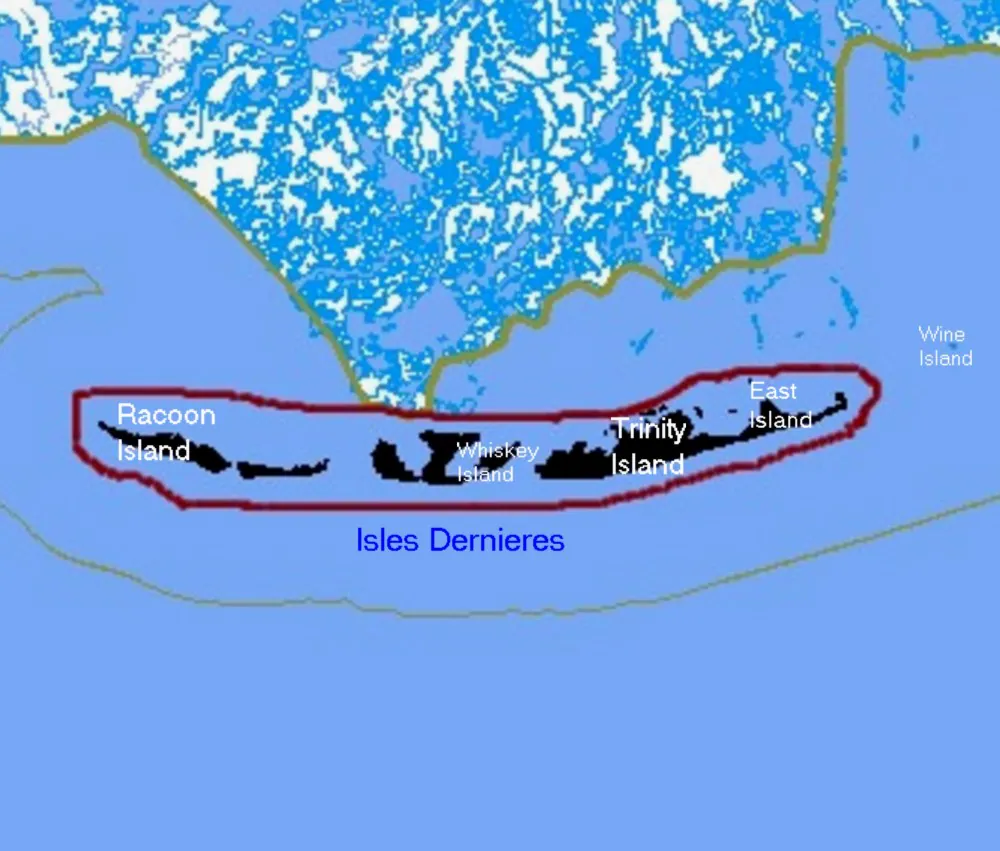
The island never came back. What was one landmass is now four fragments — the Isles Dernieres Barrier Island Refuge — and they will be underwater within a generation. The place where the Ocean House stood is not land anymore. The story is the only part that survived intact.
What stood here
2 surviving images.
Map of Last Island before the 1856 hurricane
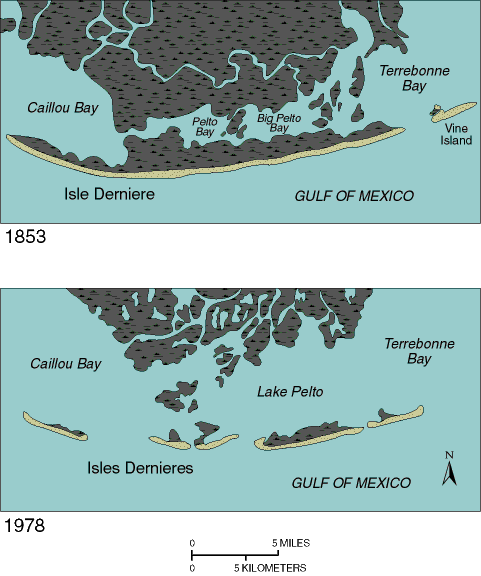
Geographical comparison of the landscape around Isles Dernieres in 1853 and 1978, 1997