Destrehan Harvey dug this canal by hand with enslaved labor in the 1830s, cutting through swamp to connect the Mississippi River to Barataria Bay and the Gulf. The community that grew around it took his name.
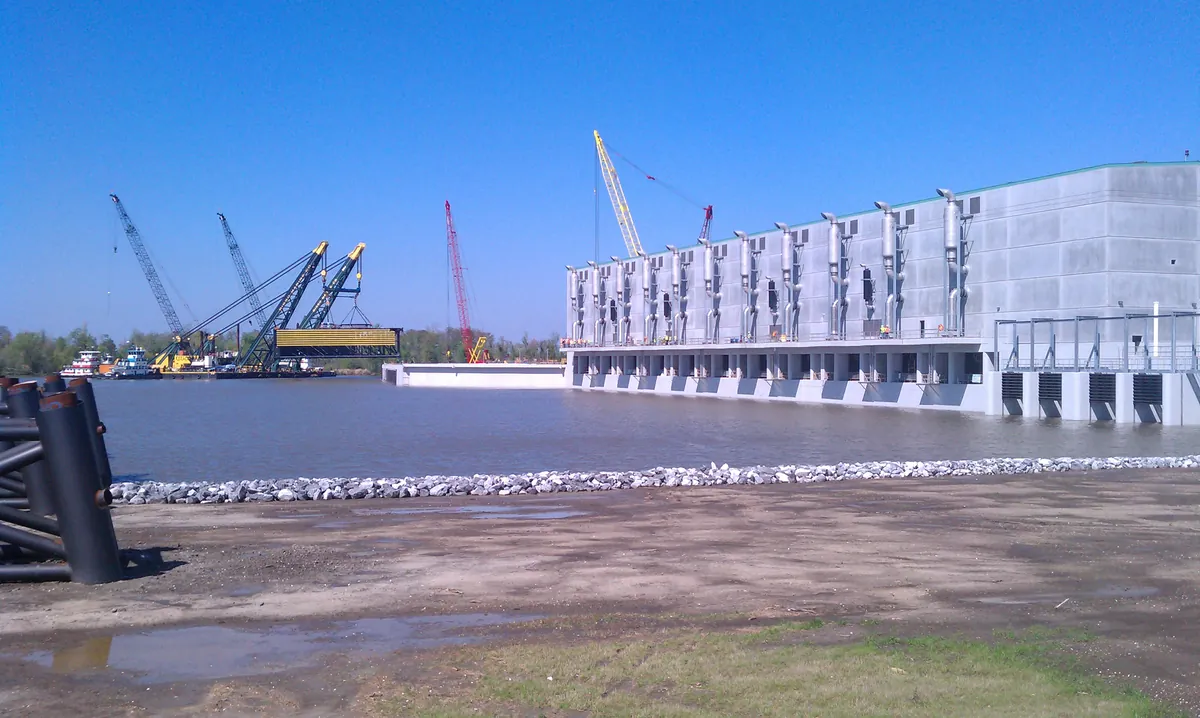
The canal became a critical link in the Gulf Intracoastal Waterway system. Today the Harvey Canal Lock, operated by the Army Corps of Engineers, is one of the busiest navigation locks in the United States. Offshore oil and gas supply boats transit daily, part of the machinery that transformed the West Bank into a maritime industrial corridor.
Stand at the lock and watch the procession: crew boats, barges, tugs moving between river and gulf. The canal connects two waters, two economies. What enslaved hands dug in the 1830s now carries the offshore oil trade that defines the bayou coast.
- ·Originally dug by hand with enslaved labor in the 1830s.
- ·Built by Destrehan Harvey — namesake of the Harvey community.
- ·Connects the Mississippi River to Barataria Bay and the Gulf.
- ·The Harvey Canal Lock is operated by the Army Corps of Engineers.
- ·One of the busiest navigation locks in the United States.
- ·Critical link in the Gulf Intracoastal Waterway system.
- ·Offshore oil and gas supply boats transit the canal daily.
- ·The canal transformed the West Bank into a maritime industrial corridor.
Memories
Editorial content compiled with AI assistance. Place details verified against public records.