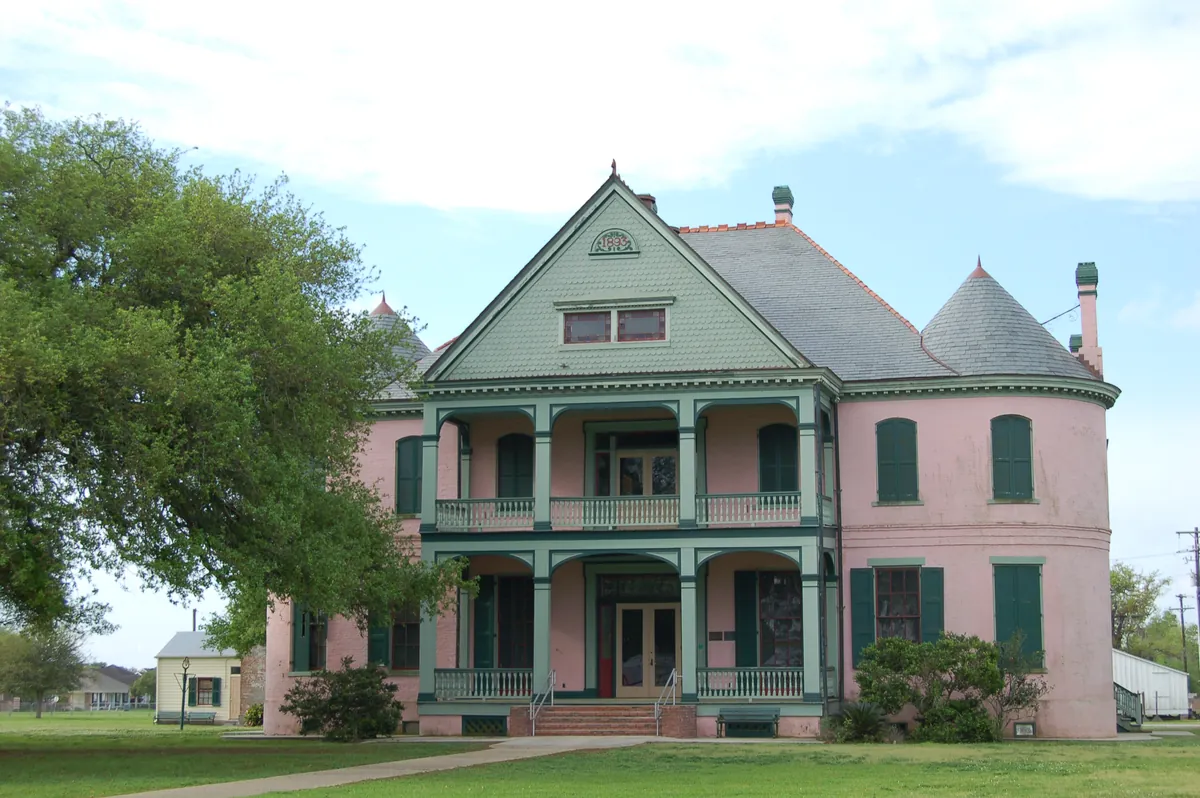
Jim and Rezin Bowie — the knife people — cleared indigo here starting in 1821. The Minor family bought them out in 1828 and switched to sugar, built a Greek Revival house in 1858, then added a Victorian second story in 1893 with Favrile glass panels showing the plantation itself, palmetto leaves, magnolias, and sugarcane stalks. The family raised a breed of sheep called Southdown, which gave the place its name. They also developed a mosaic-resistant cane variety that kept the local industry alive.
By 1852, 233 enslaved people lived on the property, most in family units. The Minors ran over 10,000 acres at the plantation's height and hosted extravagant balls.
The family lost the house in the Depression. The sugar mill kept running until 1979, the last of 86 that had operated in Terrebonne Parish during the nineteenth-century boom. The machinery was disassembled, shipped to Guatemala, and reassembled there — it still grinds cane today.
The house opened as a museum in 1982 after renovation uncovered the original 1893 pink and green paint, which was restored. The exhibits now cover sugar production, Mardi Gras, the United Houma Nation, and Senator Allen Ellender. It's a National Register property. Open Monday through Saturday; admission charged.
- ·Jim and Rezin Bowie — of Bowie knife fame — owned this land first, running an indigo plantation from 1821 to 1828.
- ·The Minor family converted it to sugar and built a Greek Revival house in 1859, adding a Victorian second floor in 1893 with Favrile stained glass.
- ·At its peak, Terrebonne Parish had 86 sugar mills operating; Southdown ran the last one, which closed in 1979.
- ·The mill was dismantled, shipped to Guatemala, and still runs today.
- ·Now the Terrebonne Museum — covering sugar history, Mardi Gras, the United Houma Nation, and Senator Allen Ellender under one roof.
- ·Open Mon–Sat. Admission charged. Located at 1208 Museum Drive, Houma.
Memories
Editorial content compiled with AI assistance. Place details verified against public records.