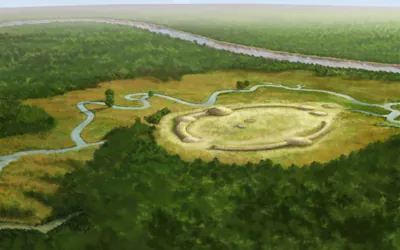
The oldest mound complex in North America sits in the Ouachita River floodplain south of Monroe — eleven earthen mounds connected by ridges in a 900-foot oval. Watson Brake is 5,400 years old. Hunter-gatherers built it over 500 years. The scale of that duration matters: five centuries of episodic construction, return visits, collective labor by people with no permanent settlement to anchor them.
In 1997, new dating pushed the site's age back far enough to rewrite North American archaeology. What had been understood about mound-building — who did it, when, under what social arrangements — no longer held. Watson Brake became the datum point, the thing that forced the revision.
Northeast Louisiana is a region formed by water and by what people made from the land the water shaped. The Ouachita floodplain has carried that dynamic for millennia. Watson Brake is the earliest known expression of it — deliberate earthwork on a monumental scale, built by a mobile population over lifetimes and generations.
You go because it is the beginning of a North American tradition. The mounds and ridges are still readable after fifty-four centuries. What they represent — the ability to organize labor, to return, to build across time without agriculture or permanence — remains among the continent's most important archaeological questions.
- ·Oldest mound complex in North America — 5,400 years old
- ·Eleven mounds connected by ridges in a 900-foot oval
- ·Constructed over 500 years by hunter-gatherers
- ·1997 redating rewrote North American archaeology
- ·Located in Ouachita River floodplain south of Monroe
Memories
Editorial content compiled with AI assistance. Place details verified against public records.