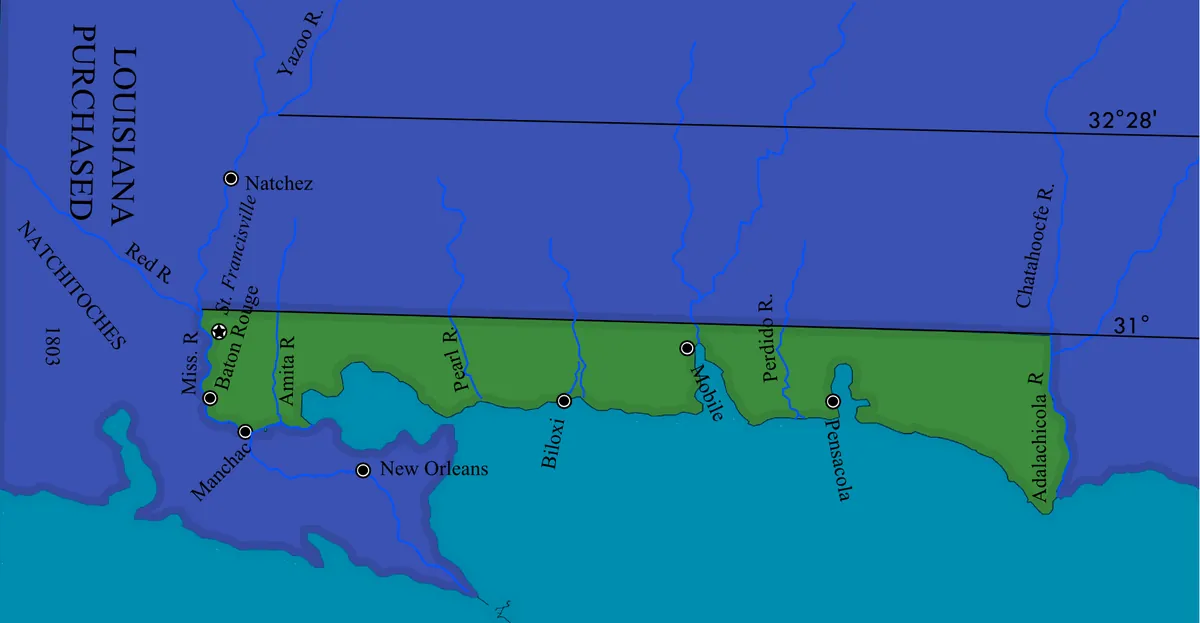
In September 1810, a group of Anglo-American settlers in what is now southeastern Louisiana did something no other community in the future United States ever managed: they overthrew their colonial government, declared independence, designed a flag, and operated a sovereign republic — all in 74 days. The Republic of West Florida stretched from the Mississippi River to the Perdido, encompassing present-day St. Tammany, Tangipahoa, and Washington parishes. The territory had passed through Spanish, French, English, and Spanish hands again before the rebellion, and Governor William Claiborne himself noted that 'civil authority remains weak and lax in West Florida.' The republic's Bonnie Blue Flag — a single white star on a blue field — would later inspire the first flag of the Confederacy, but the original moment was something rarer: frontier democracy improvised from scratch. President Madison annexed the territory within weeks, and Louisiana statehood in 1812 folded these 'Florida Parishes' into the state. But the identity stuck. Locals still call this region the Florida Parishes, and the independent streak that produced a republic in 74 days never fully went away.