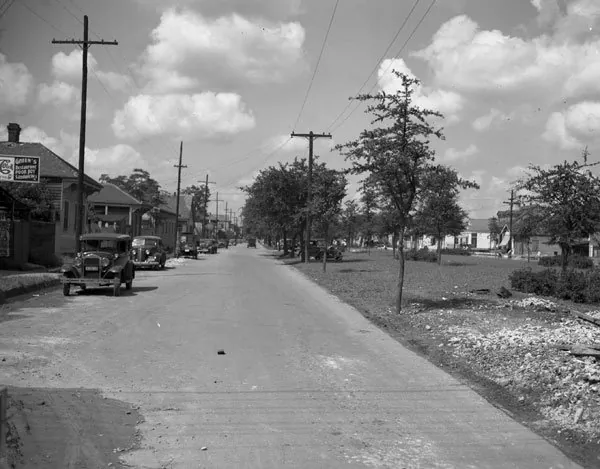
North Claiborne Avenue through Tremé and the Seventh Ward was the main street of Black New Orleans. Not a metaphor — literally the main street. A double row of live oaks ran the full length of the median, some a century old. Beneath them: groceries, pharmacies, insurance offices, barbershops, the Circle Food Store, the route of every Black Mardi Gras parade. It functioned the way Canal Street did for white New Orleans — the place where commerce and celebration happened together, where you went to see and be seen.
In 1966 the Federal Highway Administration chose this median for Interstate 10. By 1968 every oak was gone and a six-lane concrete expressway stood on pylons overhead. By 1975 two-thirds of the businesses had closed. The Claiborne Expressway was, at the time, the largest single act of federally-planned destruction of a Black community in Louisiana history. A proposal to tear it down and restore the avenue has been under review, on and off, since 2019. The expressway is still there.
What stood here
3 surviving images.
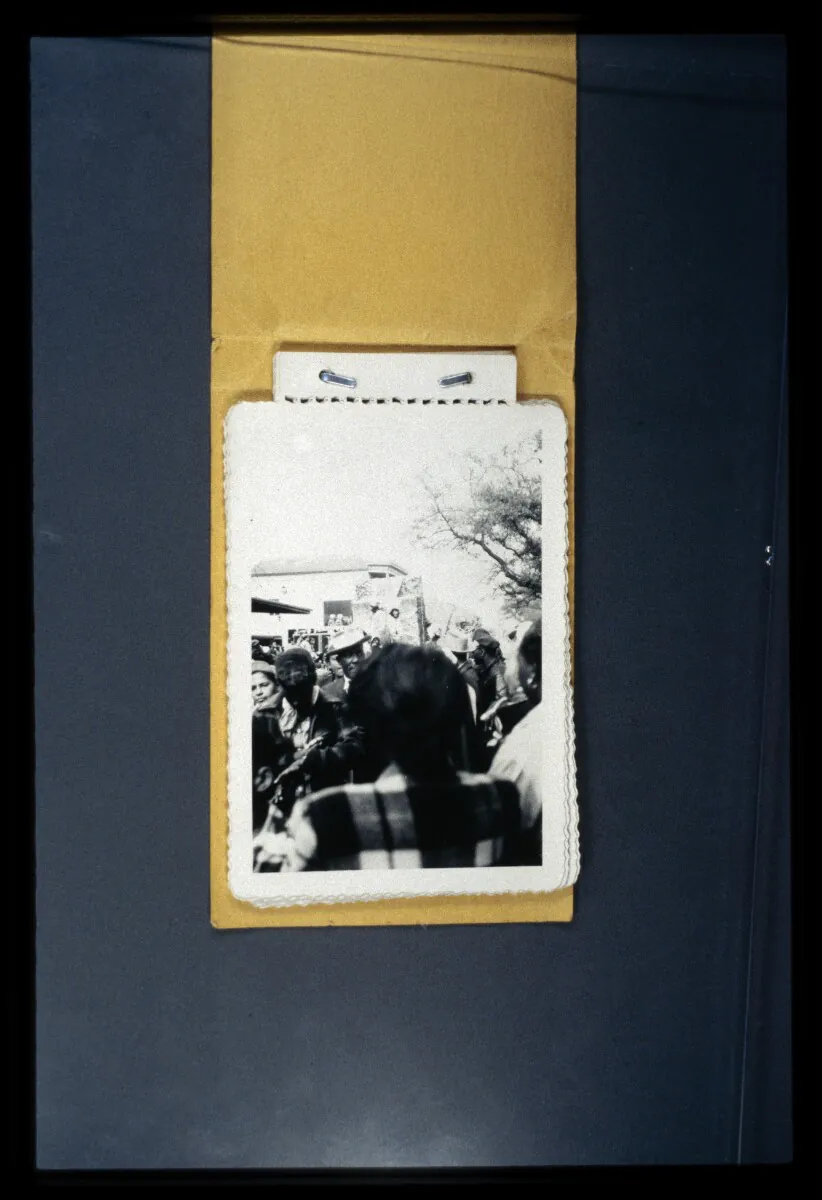
Aline St. Julien slides: "Black Carnival," Claiborne or Orleans Avenue, New Orleans, 1950s, 1950s
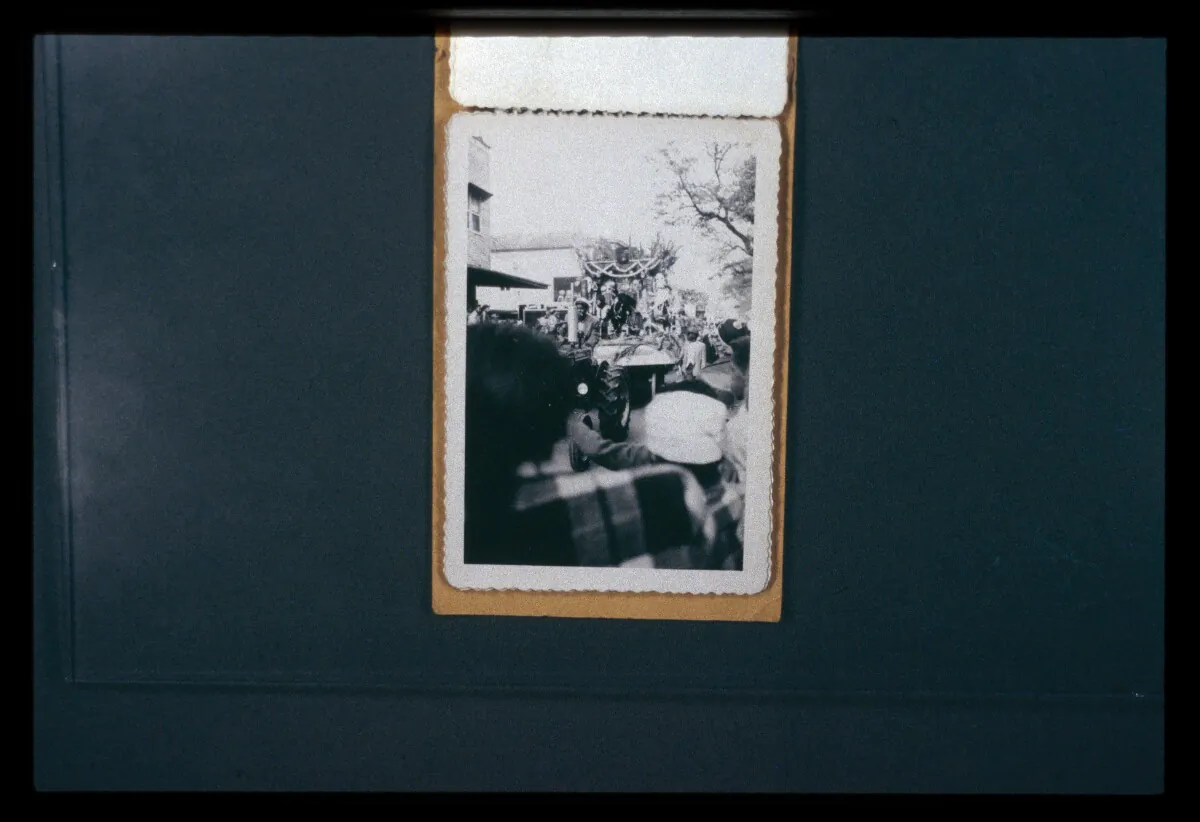
Aline St. Julien slides: Zulu Float, Carnival, Claiborne or Orleans Avenue, New Orleans, 1950s, 1950s
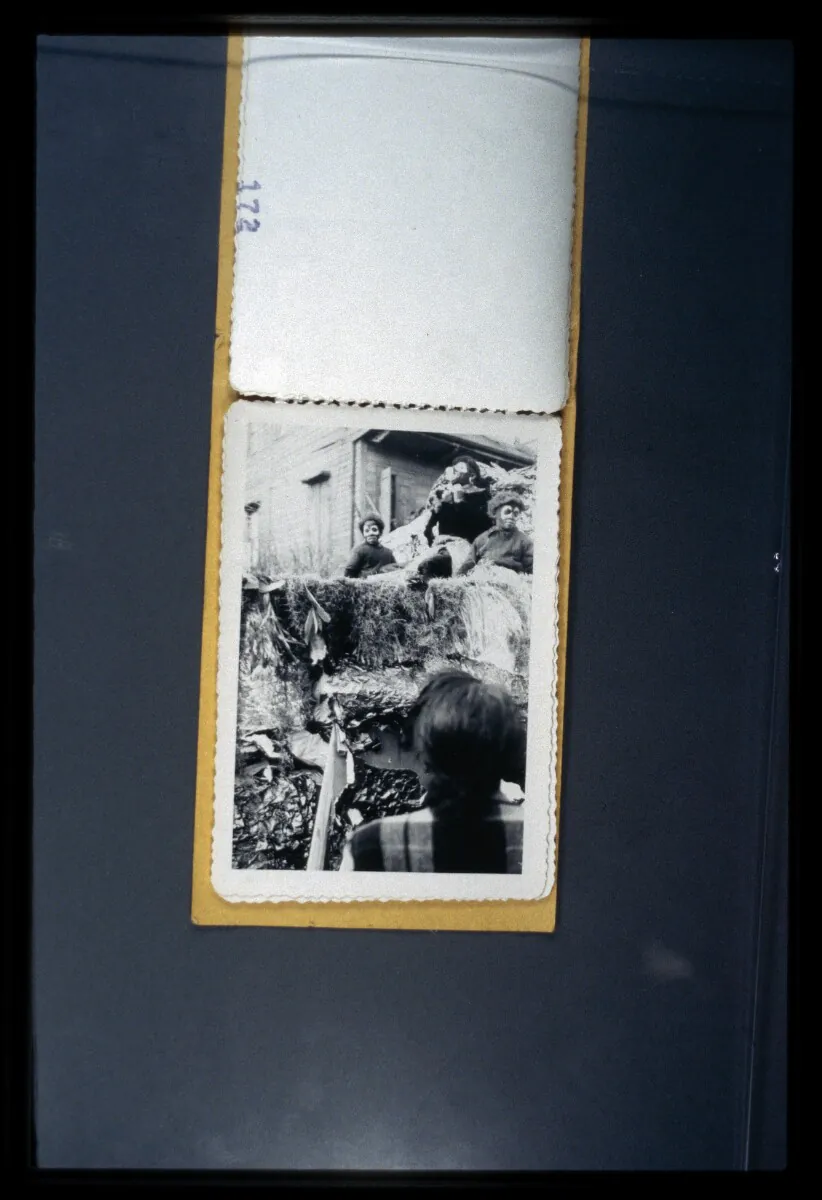
Aline St. Julien slides: Zulu Float, Carnival, Claiborne or Orleans Avenue, New Orleans, 1950s, 1950s