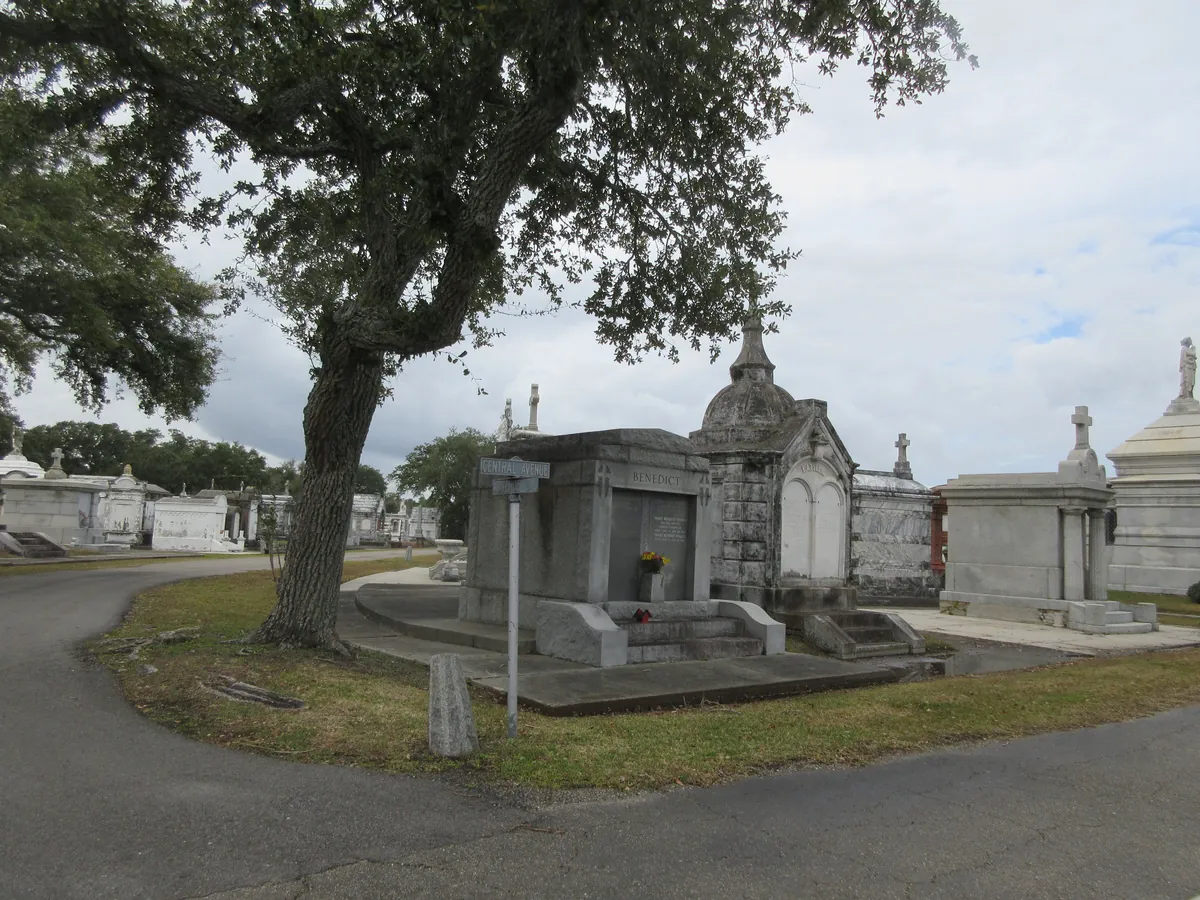
The word métairie is French for a sharecropping farm, and that's all this was for most of its history — flat, soggy land along an old bayou ridge, too wet for much besides small-scale agriculture. What changed everything was drainage. When engineers figured out how to pump the swamp out faster than it seeped back in, Metairie exploded. The post-WWII suburban boom turned it into one of the most densely populated unincorporated areas in the South. Veterans Memorial Boulevard became four miles of strip malls and parking lots. Then came Fat City. In the 1970s, an apartment boom near Severn and 17th Street drew young renters, and within a few years there were fifty bars and lounges packed into a few blocks — the Playboy Club, Bobby McGee's, Don Quixote. By the early 1980s, drugs and strip clubs had moved in. The parish council rezoned it in 1985, and the party was over. Through all of this, Metairie Cemetery has sat on the old ridge, quiet and unmoved. It was a horse racing track before it was a cemetery — founded in 1838, converted in 1872. The oval layout of the graves still follows the shape of the original racetrack. It is the most honest monument in Metairie: everything here was something else first.