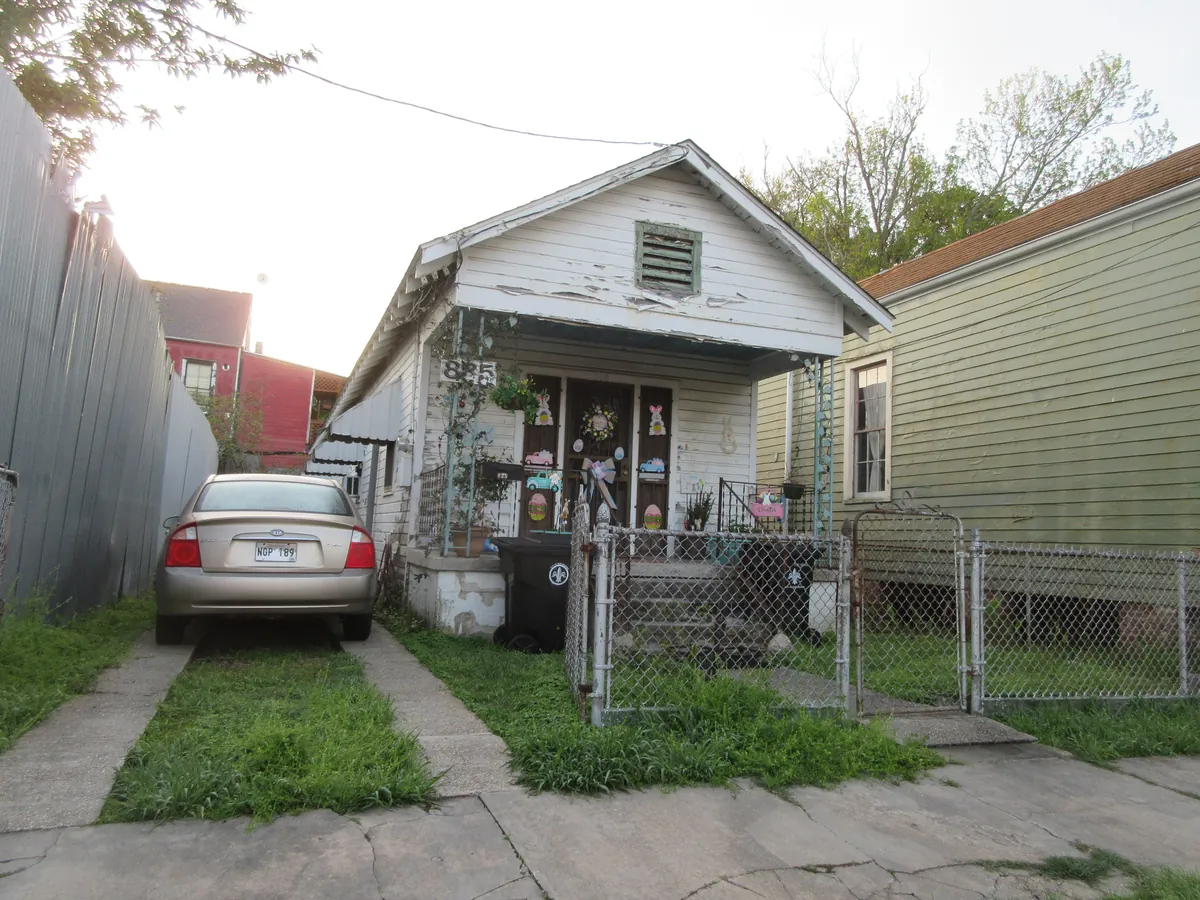
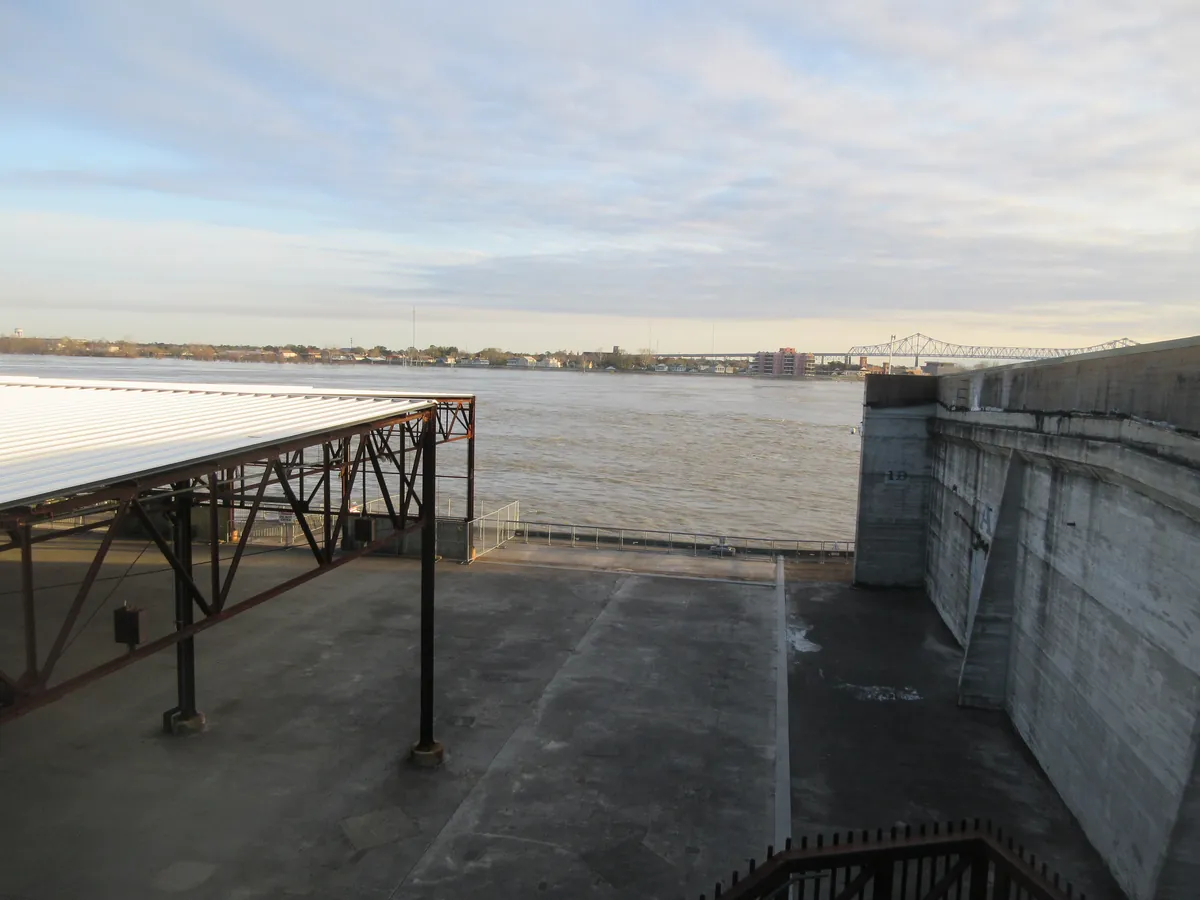
The Industrial Canal runs along the eastern edge of the Bywater — the same canal whose floodwall failures devastated the Lower Ninth Ward during Hurricane Katrina. What came after remade the neighborhood as decisively as what came before. The Bywater had been working-class for generations: dock workers, railroad men, Irish and German and Croatian immigrant families. The storm changed the math. Artists arrived. Galleries opened in former warehouses. Street murals now cover nearly every block, an open-air gallery that sprawls across the grid.
The Music Box Village sits in the neighborhood — an interactive sound sculpture garden built from salvaged house parts. You can walk here from the Marigny, or ride a bike along the river levee. The murals are the landmark, but the real reason to come is to see what a city does with the space a catastrophe leaves behind. New Orleans has always rebuilt. The Bywater is what that looks like when the people who do the rebuilding are different from the ones who were there before.
- ·Originally a working-class neighborhood of dock workers, railroad men, and immigrants — Irish, German, and Croatian families.
- ·After Hurricane Katrina, the Bywater became the center of New Orleans' artist migration, with galleries opening in former warehouses.
- ·Home to the Music Box Village — an interactive sound sculpture garden built from salvaged house parts.
- ·Street murals cover nearly every block, making the neighborhood an open-air gallery.
- ·The Industrial Canal forms the neighborhood's eastern boundary — the same canal whose floodwall failures devastated the Lower Ninth Ward.
- ·Walkable from the Marigny. Best explored on foot or by bike along the river levee.
More archive
Memories
Editorial content compiled with AI assistance. Place details verified against public records.