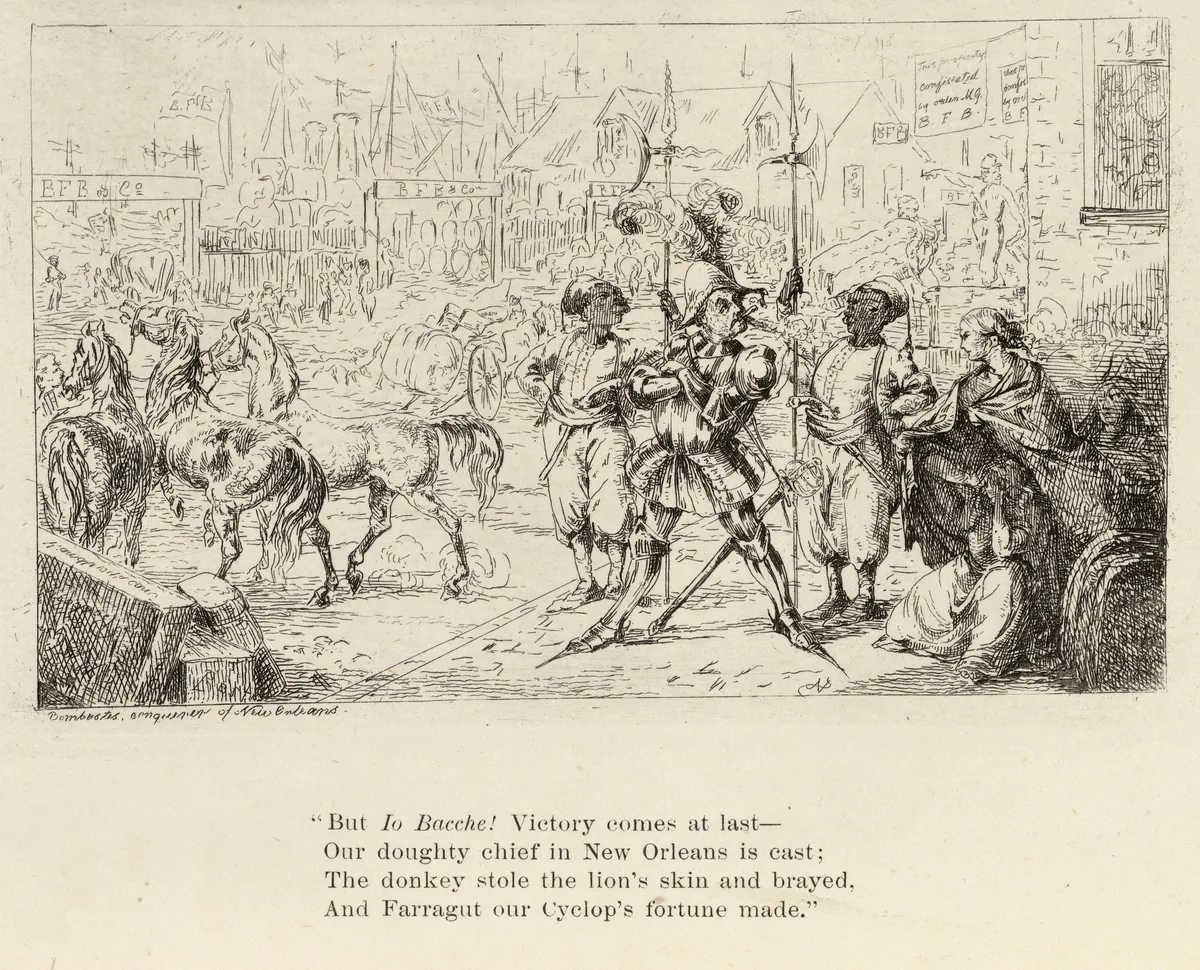
On May 15, 1862, General Butler issued General Order No. 28: any woman insulting a Union soldier would be "treated as a woman of the town plying her avocation." Across the South, he became Beast Butler. Confederate President Davis declared him an outlaw. New Orleans families put his portrait inside chamber pots — some of those pots still surface in French Quarter antique shops.
The Union had taken the largest city in the South, the port that had exported most of the nation's cotton and commanded the Mississippi. Butler became the face of that loss. He also cleaned the streets — notoriously filthy streets the city had lived with — and reduced yellow fever deaths dramatically. Then he was accused of looting silverware from occupied homes. Spoons.
What survives is the chamber pot revenge, specific and material, the kind of insult you can hold. The hatred was real. So was the fact that he made the city work better than it had. New Orleans remembers both, which is how the city tends to remember everything.
- ·General Order No. 28, issued May 15, 1862, declared any woman insulting a Union soldier would be 'treated as a woman of the town plying her avocation.'
- ·Butler earned the nickname 'Beast Butler' across the South; Confederate President Davis declared him an outlaw.
- ·New Orleans families placed Butler's portrait inside chamber pots — some survive in antique shops today.
- ·Despite the hatred, Butler cleaned the city's notoriously filthy streets and reduced yellow fever deaths dramatically.
- ·Butler was also accused of looting silverware from occupied homes, earning the additional nickname 'Spoons.'
Memories
Editorial content compiled with AI assistance. Place details verified against public records.