The merger that created Dillard University in 1930 joined two institutions that had spent decades fighting the same war from different corners of the same city. Straight University was founded on June 12, 1868, by the American Missionary Association of the Congregational Church, responding to the post-Civil War need to educate newly freed African Americans in New Orleans and the surrounding region. The Freedman's Aid Society of the Methodist Episcopal Church established Union Normal School on July 8, 1868, to train teachers, recruiting educators in the North to work in the South with freedmen and their children. Both expanded into professional programs—Straight ran a law school from 1874 to 1886, and its graduates fought Reconstruction and post-Reconstruction era civil rights battles. Union Normal School became New Orleans University and by the 1890s was running the Flint Medical College, a pharmacy school, and the Sarah Goodridge Hospital and Nurse Training School.
By 1930, local Black and white leaders saw the need for a larger, more notable African-American institution of higher learning in New Orleans and the greater South. Straight College and New Orleans University chartered Dillard University on June 6, 1930. The new university, named for James H. Dillard, was created to offer a traditional liberal arts curriculum rather than nonprofessional, vocational training. Its development was tempered by the Jim Crow era. Many local whites objected to the possibility of a Black president presiding over white faculty members. The arrival of African-American students commuting by bus to the Gentilly campus disturbed white residents in the area. Edgar B. Stern Sr., an influential and diplomatic board member, suggested Will W. Alexander—a white Southern preacher—as a compromise candidate. Alexander became Dillard's first acting president from 1935 to 1936. The university opened in fall 1935 and attracted prominent scholars including Horace Mann Bond in psychology and education, Frederick Douglass Hall in music, Lawrence D. Reddick in history, and St. Clair Drake in sociology and anthropology.
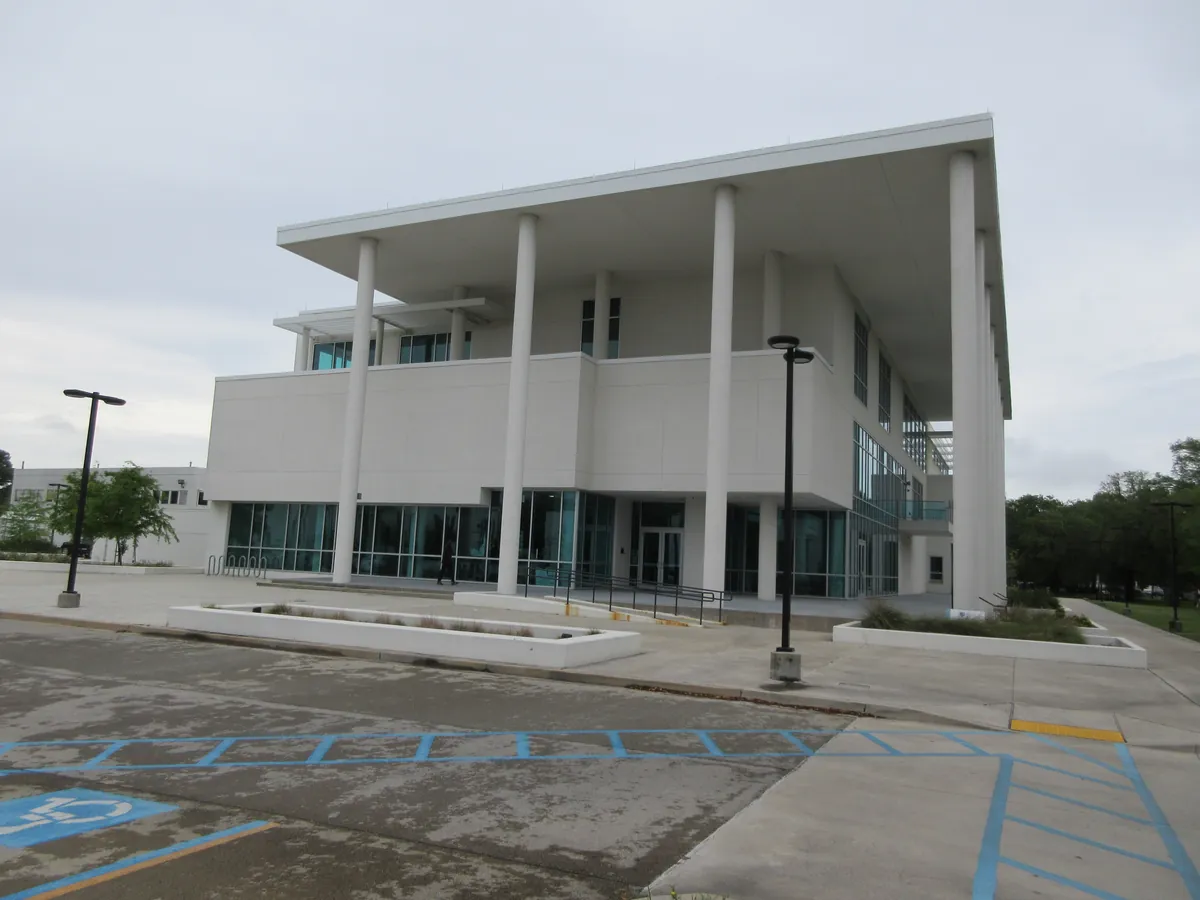
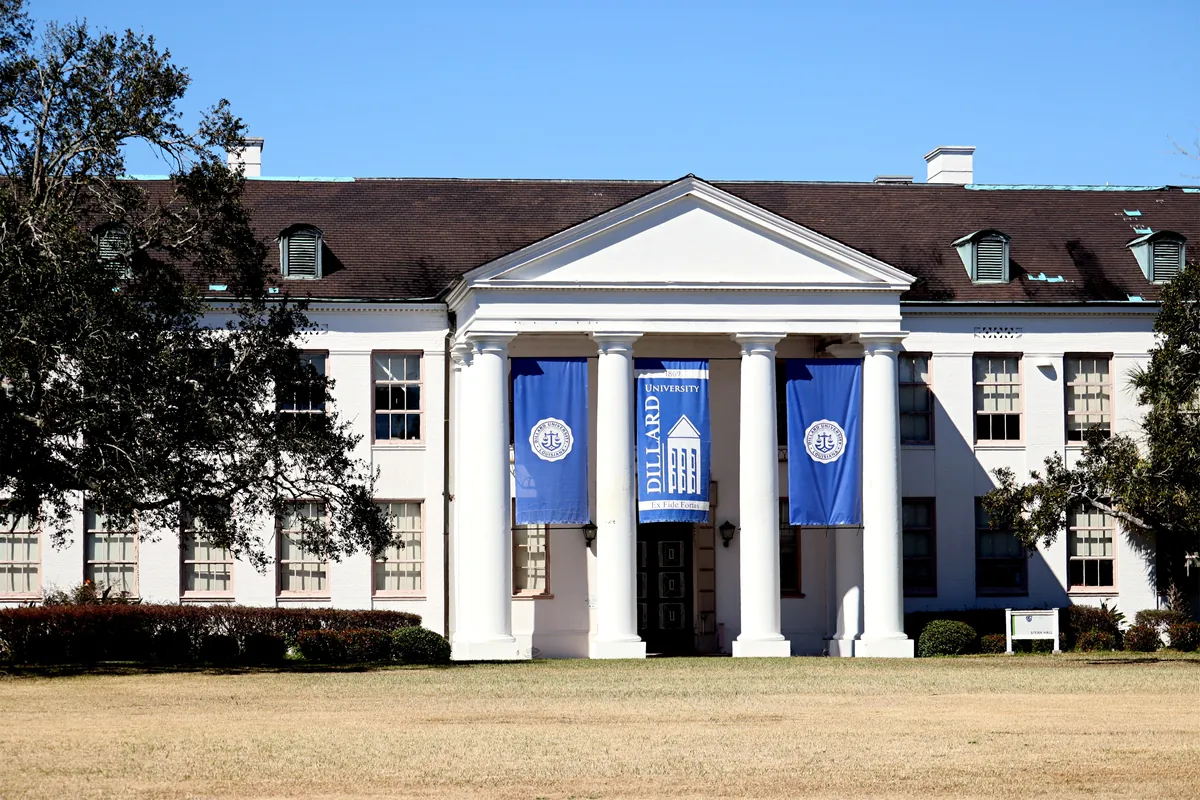
The Gentilly campus, designed by architect Moïse H. Goldstein, spreads across 55 acres anchored by Neoclassical architecture and live oak trees. The double tree-lined Avenue of the Oaks forms the focal point of the gated campus. Rosenwald Hall, the first permanent building, went up in May 1934, named for philanthropist Julius Rosenwald. The Will W. Alexander Library, built in 1961, houses the papers of the American Missionary Association of the United Church of Christ.
In 2003, musician Ray Charles added a provision to his will endowing a one-million-dollar professorship of African-American culinary history—the first such position in the country, called the Ray Charles Program. Two years later, in August 2005, the campus suffered extensive flood damage in the aftermath of Hurricane Katrina. Nelson Hall was destroyed by fire. A bus fire destroyed the belongings of thirty-seven students during evacuation. Students returned to campus in September 2006. In 2020, MacKenzie Scott donated five million dollars; in 2025, she gave nineteen million more, the largest single gift in the university's history.
Alumni include Ernest Morial, New Orleans's first Black mayor; jazz clarinetist Ellis Marsalis; and NASA's Ruth Bates Harris. The campus is open; visitors are welcome.
- ·Founded in 1930 from the merger of Straight University (1869) and New Orleans University (1873).
- ·The Gentilly campus is one of the most architecturally cohesive HBCU campuses in the country.
- ·Alumni include New Orleans's first Black mayor Ernest Morial, jazz clarinetist Ellis Marsalis, and NASA's Ruth Bates Harris.
- ·Straight University was established by the American Missionary Association for freed slaves.
- ·Campus is open; visitors welcome.
More archive
Memories
Editorial content compiled with AI assistance. Place details verified against public records.