Enslaved West and Central Africans brought a folk-magic tradition to Louisiana — a living practice of protection, healing, and spiritual work that would adapt to survive. What became Hoodoo absorbed Catholic saints, Native American herbs, and European spellcraft into a system that could be practiced quietly, passed down without temples or texts. This is not Voodoo: Voodoo is a religion with priests and altars and cosmology. Hoodoo is a toolkit — candles dressed with intention, roots bundled into mojo bags, baths mixed to shift luck.
Marie Laveau practiced both. She moved between the two worlds, a priestess who also knew which herbs to burn and which psalms to write on brown paper and bury at a crossroads.
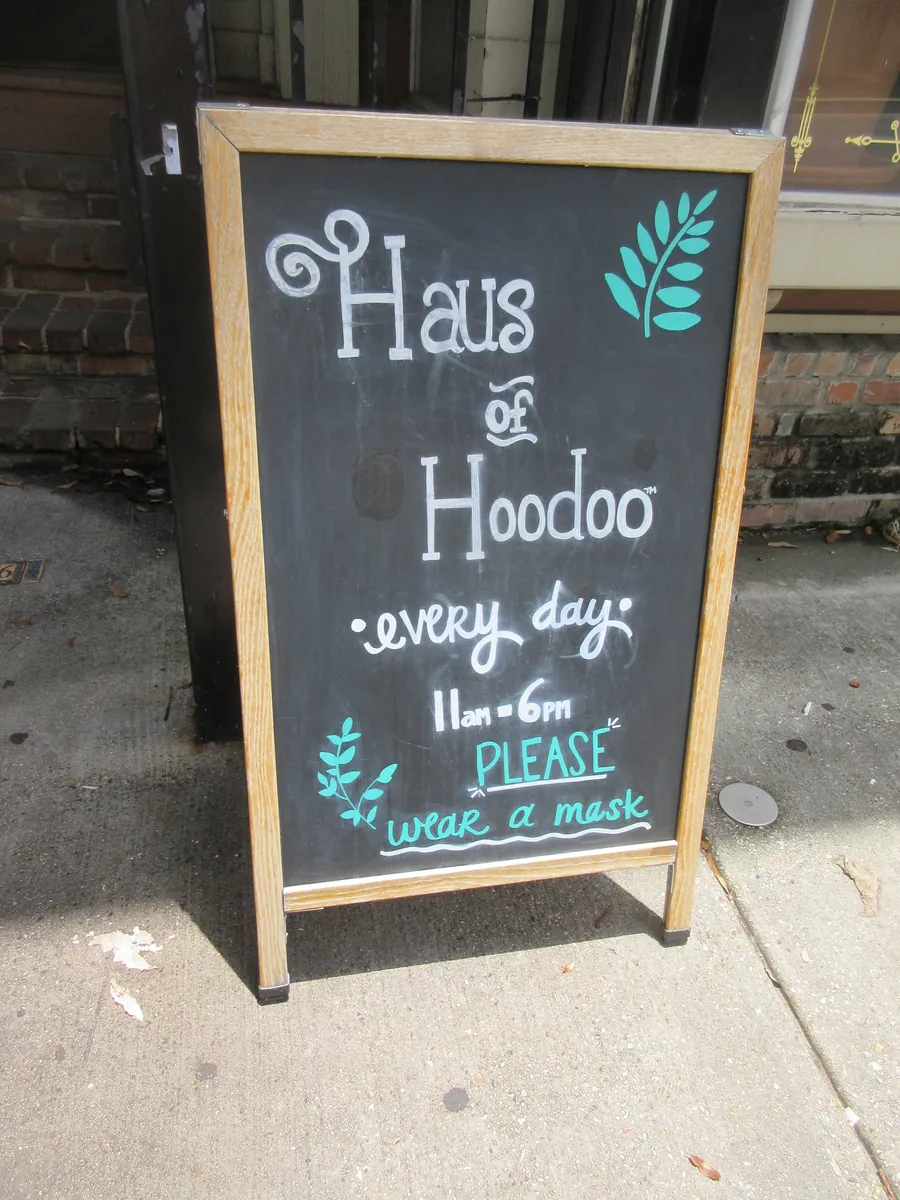
The tradition never stopped. Botanicas along Rampart and Orleans in Tremé still sell what practitioners need: seven-day candles fixed for specific work, condition oils, powders, roots. The customers know what they're buying. The city that became the largest port in the South by the 19th century, exporting cotton and cane through a delta the Mississippi deposited over millennia, required its people to find ways to endure. Hoodoo was one of them. You can still walk into a shop and ask for Van Van oil or a bag for road-opening, and the person behind the counter will know exactly what you mean.
- ·Hoodoo is the folk-magic tradition enslaved West and Central Africans brought to Louisiana.
- ·Adapted with Catholic saints, Native American herbs, and European spellcraft.
- ·Distinct from Voodoo: Voodoo is a religion, Hoodoo is a practice.
- ·Marie Laveau practiced both.
- ·Visitor tip: Tremé botanicas on Rampart and Orleans still sell candles, oils, and mojo bags to active practitioners.
Memories
Editorial content compiled with AI assistance. Place details verified against public records.