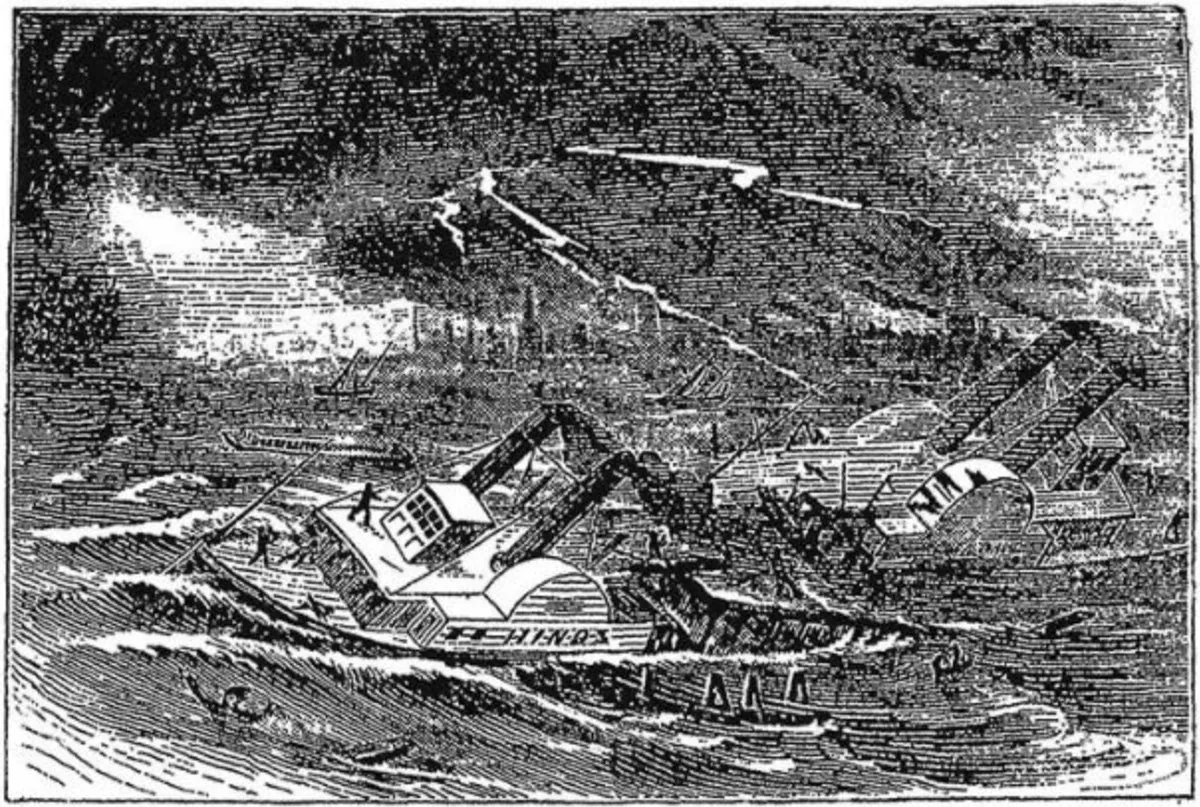
Before the railroads, Natchez-Under-the-Hill was the business end of the richest cotton economy in America — the landing at the foot of the bluff where the flatboats and steamboats tied up, a dense strip of warehouses, saloons, gambling rooms and brothels with the cotton money moving through all of it. On the morning of May 7, 1840, a hundred and twenty flatboats were moored there.
Around two in the afternoon a tornado came up the river out of the southwest — an F4 or F5 by modern reckoning, the second deadliest single tornado in United States history. It obliterated twelve downtown blocks, hotels and churches and a theater, and then it took the river. Of the hundred and twenty flatboats, a hundred and sixteen were thrown into the Mississippi with their crews aboard. The steamboat Prairie went straight down. The counted dead came to three hundred seventeen, most of them on the water; the real number was higher, because the enslaved who died were generally not counted. Natchez rebuilt the bluff. The lower town it had been never came back to what it was — the tornado is the line the place is measured from.
What stood here
2 surviving images.
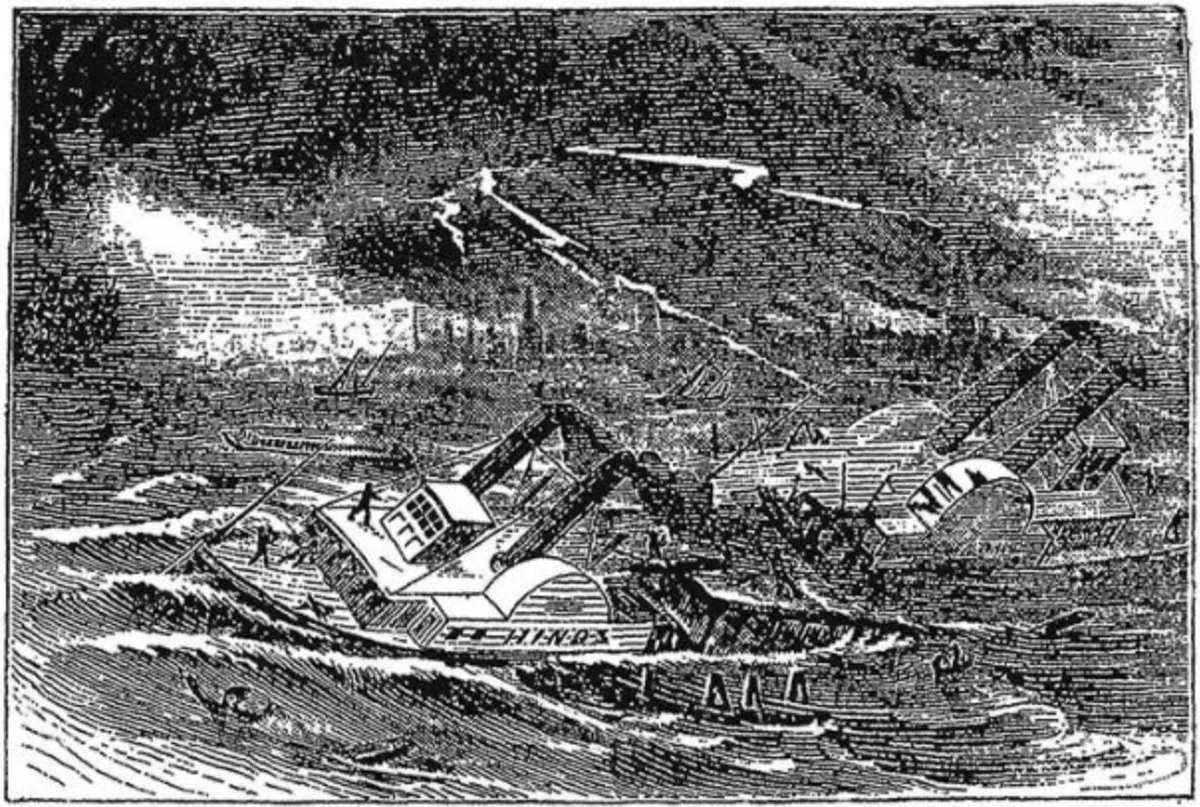
Period engraving of the May 7, 1840 Natchez tornado — the flatboats and steamboats torn off the riverfront, the lower town in pieces
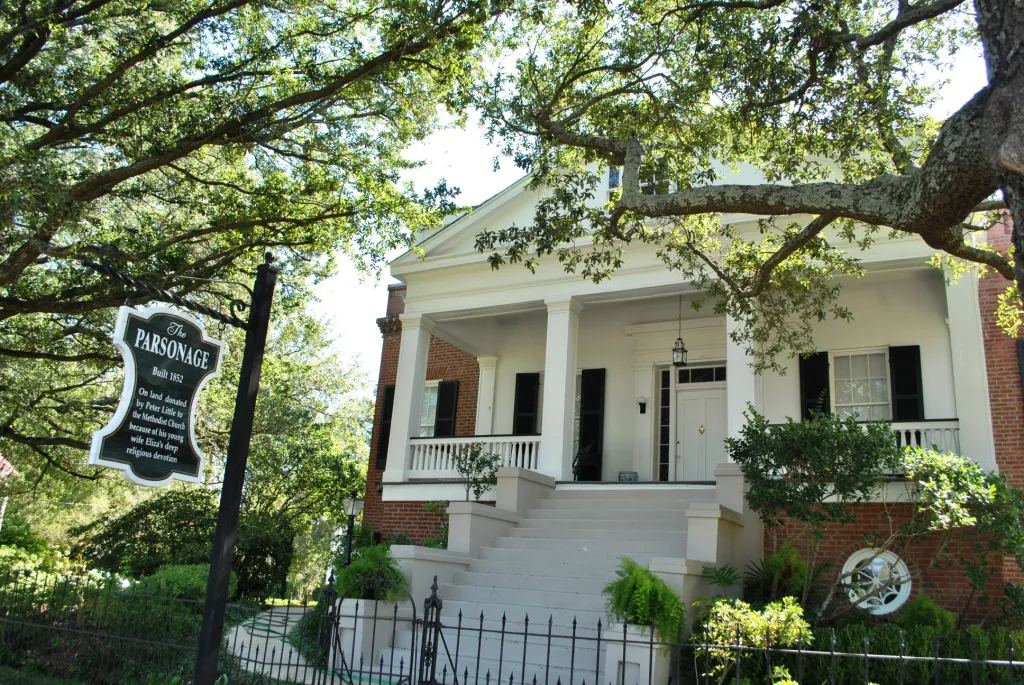
Natchez Under-the-Hill today — the surviving sliver of what the tornado took, the rest never rebuilt to what it was