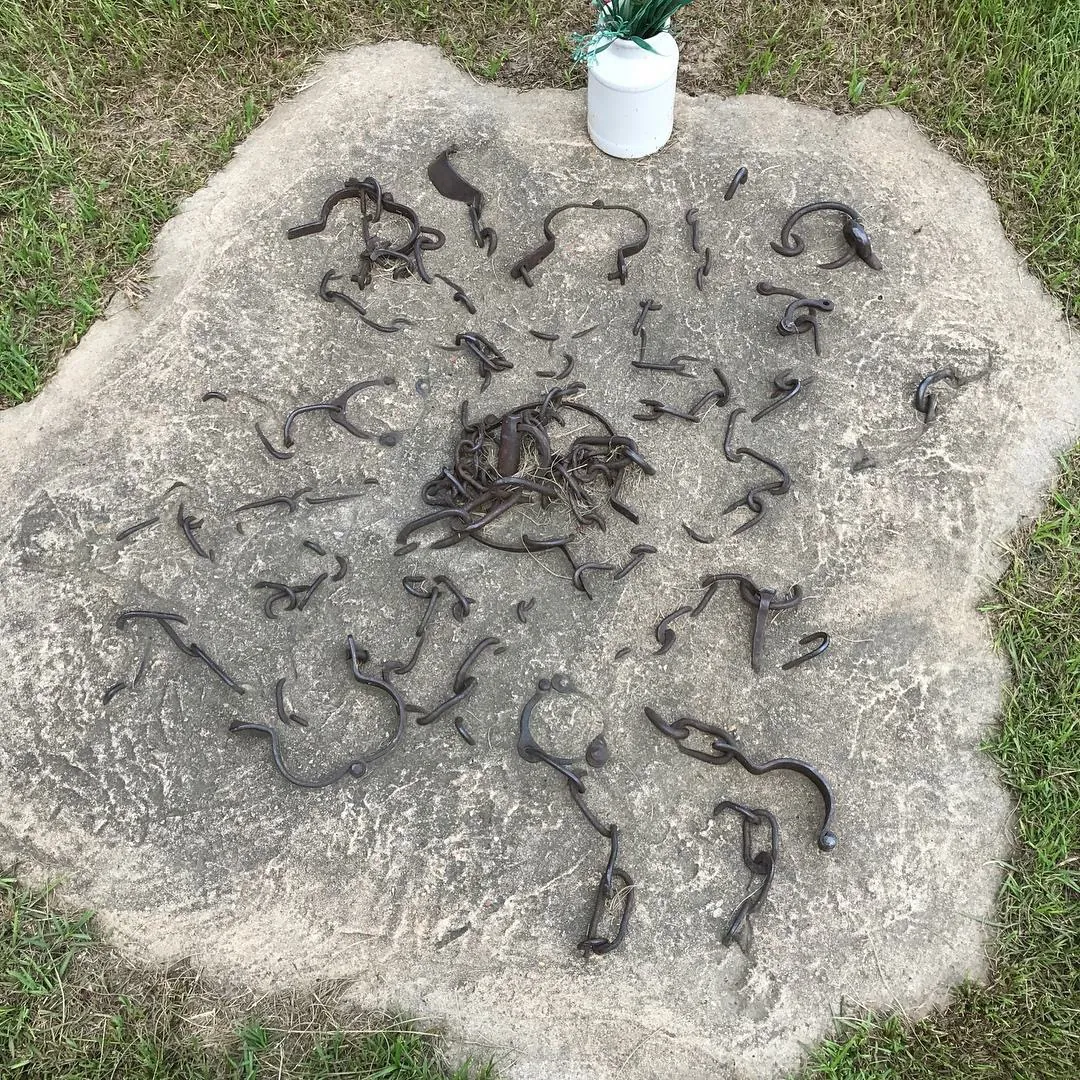
The second-largest slave market in the United States operated a mile from downtown Natchez, at the intersection of Liberty Road and St. Catherine Street. Only New Orleans was larger. Between 1832 and 1863, an estimated two hundred thousand enslaved people were sold here.
Before 1833, slave sales were held throughout the settlement — at the boat landing, on the front steps of the Mansion House. That year, in response to fears of contagion stoked by the cholera epidemic, several traders signed a public letter agreeing to permanently move the market outside city limits. The signers were just a fraction of the thirty-two "non-resident slave merchants" selling in Natchez that year, who collectively reported $238,879 in taxable revenue.
The market differed from many other slave sellers by offering individuals on a first-come first-serve basis rather than selling them at auction. People were marched overland from Virginia in coffles along the Natchez Trace. In 1834, the novelist J. H. Ingraham, visiting from New England, estimated that more than four thousand slaves passed through that year. Frederic Bancroft, writing in 1931, described the chief market about 1834 as "a cluster of rough wooden buildings, in the angle of two roads," with four or five other pens in the vicinity "where several hundred slaves of all ages, colors and conditions, of both sexes, were exposed for sale."
William T. Martin, a county lawyer who became an in-house attorney for Franklin & Ballard, told Bancroft around the turn of the century: "In some years there were three or four thousand slaves here. I think that I have seen as many as 600 or 800 in the market at one time."
In 1863, Black Union soldiers — some of whom had been sold here — tore down the slave pens. The site became part of Natchez National Historical Park in 2021. Interpretive markers are on site. Open daily, free.
- ·Second-largest slave market in the Deep South — only New Orleans was larger.
- ·An estimated 200,000 enslaved people were sold here between 1832 and 1863.
- ·Located at the intersection of Liberty Road and St. Catherine Street, about a mile from downtown.
- ·Enslaved people were marched overland from Virginia in coffles along the Natchez Trace.
- ·In 1863 Black Union soldiers — some of whom had been sold here — tore down the slave pens.
- ·Part of Natchez National Historical Park since 2021. Open daily, free. Interpretive markers on site.
Memories
Editorial content compiled with AI assistance. Place details verified against public records.