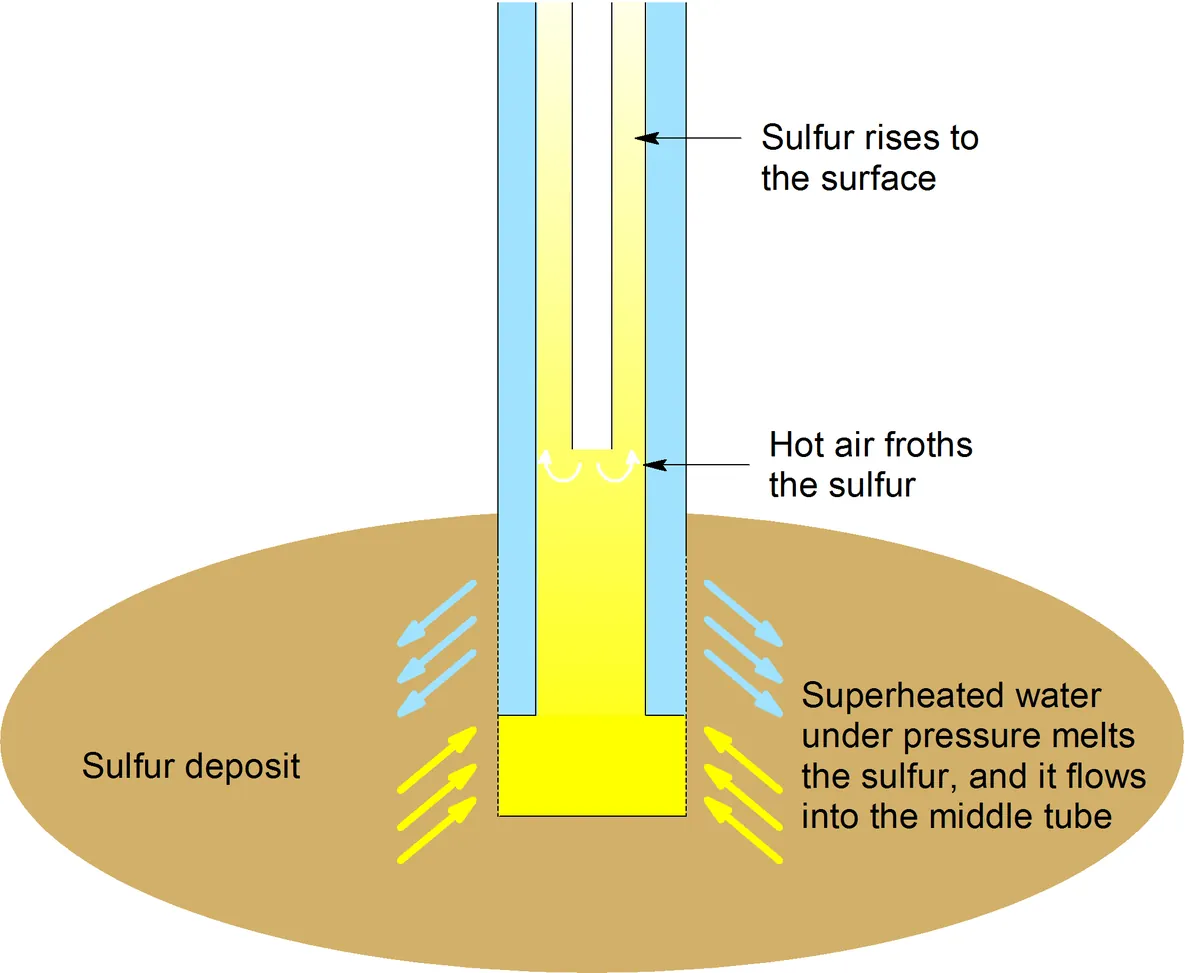
In 1867, a survey crew drilling near the Calcasieu River struck something unexpected beneath a layer of quicksand: a massive dome of nearly pure sulphur, 200 feet underground. The problem was getting it out. Conventional mining failed — the quicksand flooded every shaft. For thirty years the deposit sat untouched until Herman Frasch, a German-born chemist in Ohio, proposed an idea that sounded insane: pump superheated water underground to melt the sulphur, then force the liquid to the surface with compressed air. It worked. By 1903, the town that sprang up around the mine had named itself Sulphur, and the Frasch process had broken Sicily's centuries-old monopoly on the global sulphur market. At its peak, the Calcasieu mines produced over a million tons a year, supplying the fertilizer, gunpowder, and vulcanized rubber industries that drove early twentieth-century growth. The mines closed decades ago, but the Brimstone Museum in Sulphur preserves the story of the process that changed global chemistry from a patch of Louisiana prairie.