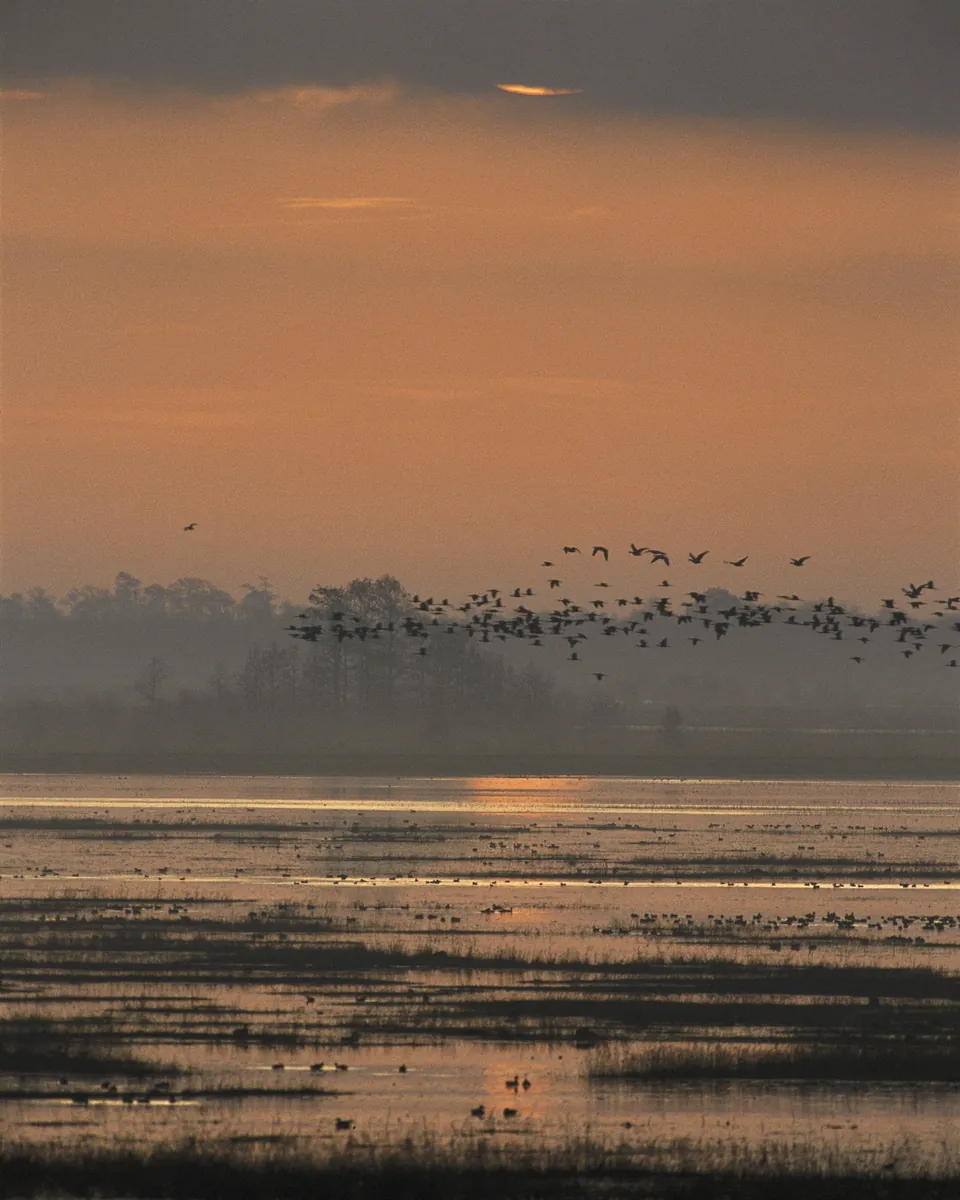
The 16,000-acre Lacassine Pool is one of the most important wintering waterfowl sites in the Mississippi Flyway. Several hundred thousand ducks and geese use the refuge as wintering habitat. At its peak, Lacassine drew 300,000 pintails each winter. The refuge hosted numbers well over 100,000 until the mid-1980s, then saw the peaks reduced by half in the 1990s. Drought in the mid-2000s brought numbers down from 30,000 to around 18,000. The birds concentrate in the northwest and northeast sections of the Pool.
The refuge was established in 1937 by Executive Order No. 7780 as "a refuge and breeding ground for migratory birds and other wildlife." It was formed with 13,000 acres purchased from The Lacassane Company for $51,774.00. The land had been part of two plantations, the Illinois Plantation and the Lowery Plantation. The refuge now covers nearly 35,000 acres in Cameron and Evangeline Parishes. In 1976 the United States Congress designated 3,345.6 acres of the southern portion as the Lacassine Wilderness.
The habitat divides into 16,500 acres of natural, freshwater marsh and open water, 16,000 acres of managed, freshwater marsh (Lacassine Pool), 2,200 acres of rice, wheat, soybean, and natural moist soil fields, 350 acres of flooded gum and cypress trees, and 350 acres of restored tallgrass prairie. Vegetation in the undeveloped marshes is dominated by bulltongue and maidencane. Water levels are manipulated to manage naturally occurring marsh and moist soil plants. Crops are planted to provide food for wintering waterfowl that migrate down the Mississippi and Central Flyways. Native prairies and marshes are periodically burned on a 3-5 year rotational basis to invigorate native grasses and forbs, and to set back cool season plant growth or to reduce the fuel load and organic accumulations in the marshes.
Wood ducks, fulvous and black-bellied whistling ducks, and mottled ducks nest on the refuge during the breeding season. Nesting colonies of wading birds such as ibis, roseate spoonbills, and egrets are found on the refuge. Alligators live here, along with furbearers such as mink, otter, raccoon, and nutria. Threatened and endangered species that have used the refuge include bald eagles, peregrine falcons, and Louisiana black bears.
The refuge offers fishing, hunting, boating, wildlife observation, and hiking. A nature drive, foot trails, and observation towers are available year-round. Admission is free.
- ·35,000 acres of freshwater marsh and coastal prairie in Jeff Davis Parish.
- ·The 16,000-acre Lacassine Pool is one of the most important wintering waterfowl sites in the Mississippi Flyway.
- ·White-faced ibis, fulvous whistling-ducks, and massive snow goose concentrations in winter.
- ·Less crowded than Cameron Parish refuges but equally productive for birding.
- ·Free admission. South of Jennings off LA-14.
Memories
Editorial content compiled with AI assistance. Place details verified against public records.