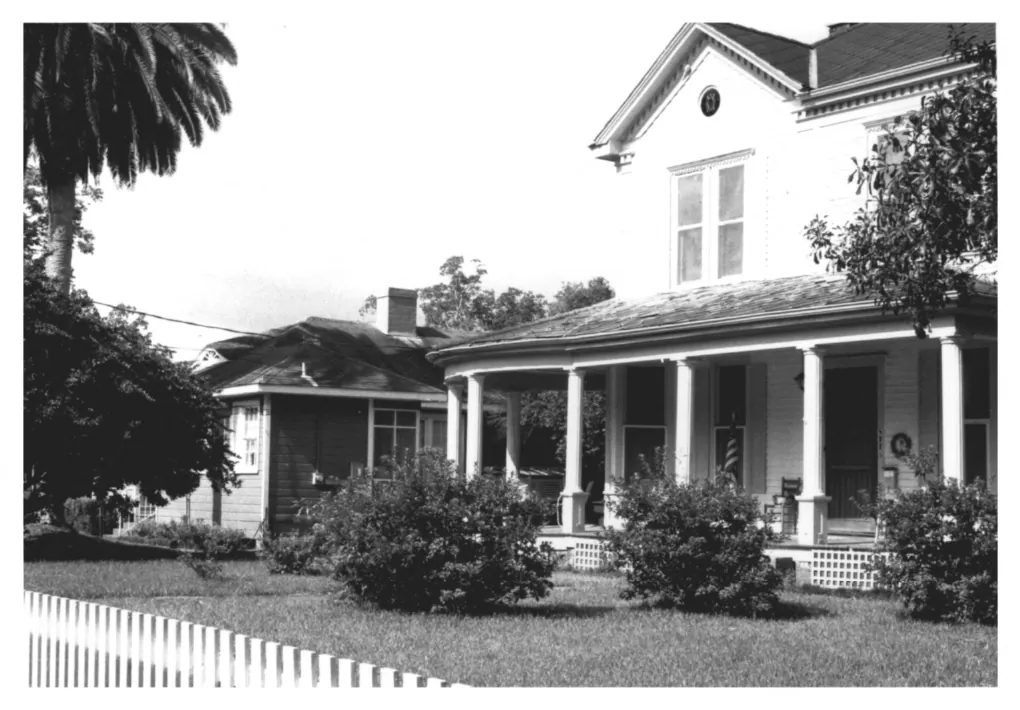
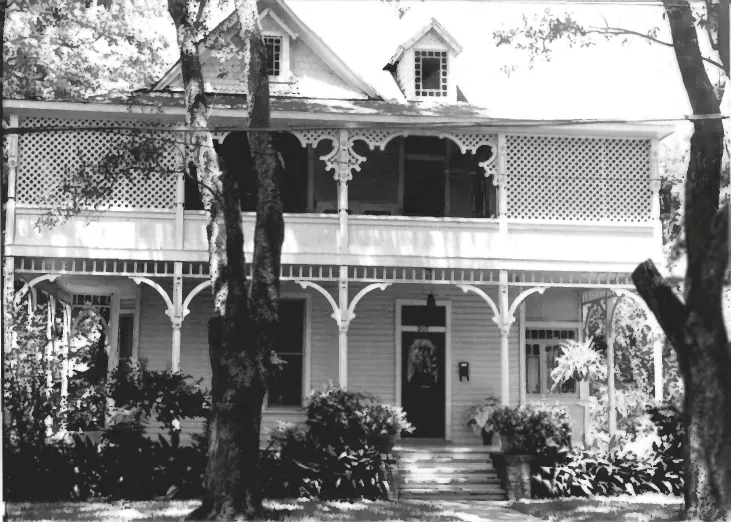
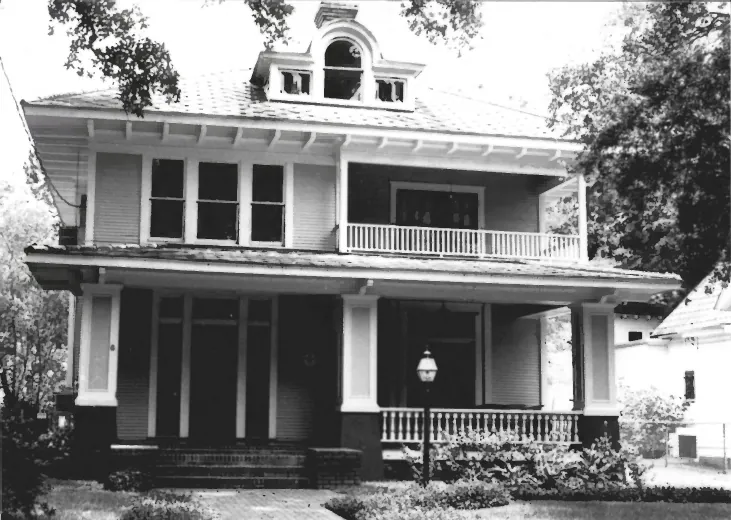
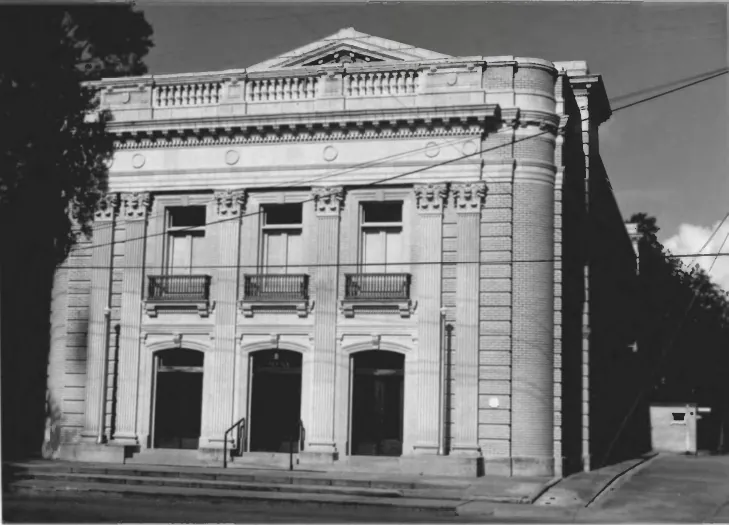
Lake Charles got rich cutting longleaf pine and Louisiana cypress during the lumber boom of the 1880s through 1920s, but the new money arrived before the architects did. The carpenters who framed the sawmill owners' houses competed block by block, each building a one-of-a-kind design in whatever style caught his eye — Queen Anne Revival, Colonial Revival, Italian Renaissance, often on the same block. No trained architect would have mixed them that way. The district takes its name from the French word for carpenter: *charpentier*.
The National Register listed the district in 1990. It covers 158 acres and includes 281 contributing buildings dating from around 1880 to 1939. The cypress and pine they used came from the same forests that made the city. Wikipedia's nomination summary calls it "all that is left to represent the lumber boom prosperity of Lake Charles in the late-nineteenth and early-twentieth centuries," and notes that it shares distinction with the historic districts in Crowley and Jennings — and is superior to both in some respects.
Works by architects Favrot & Livaudais and Edward F. Neild appear in the district, as does the 1896 Church of the Good Shepherd, separately listed on the National Register in 1983. The district sits roughly bounded by Iris, Hodges, Lawrence, Kirkman, South Division, and Louisiana. Start at the 1911 Historic City Hall for self-guided walking tour maps. The thing to see is what happens when craftsmen build without a pattern book — forty-plus blocks of houses that look like arguments made in wood.
- ·40+ blocks of Victorian homes built by competing carpenters, not architects — each house a one-of-a-kind design.
- ·Named 'Charpentier' — French for carpenter — honoring the craftsmen who defined the district's character.
- ·Listed on the National Register of Historic Places in 1990.
- ·Architectural styles range from Queen Anne Revival to Colonial Revival to Italian Renaissance, often on the same block.
- ·Built from Louisiana cypress and longleaf pine during the lumber boom of the 1880s–1920s.
- ·Self-guided walking tour available. Start at the 1911 Historic City Hall for maps.
More archive
Memories
Editorial content compiled with AI assistance. Place details verified against public records.