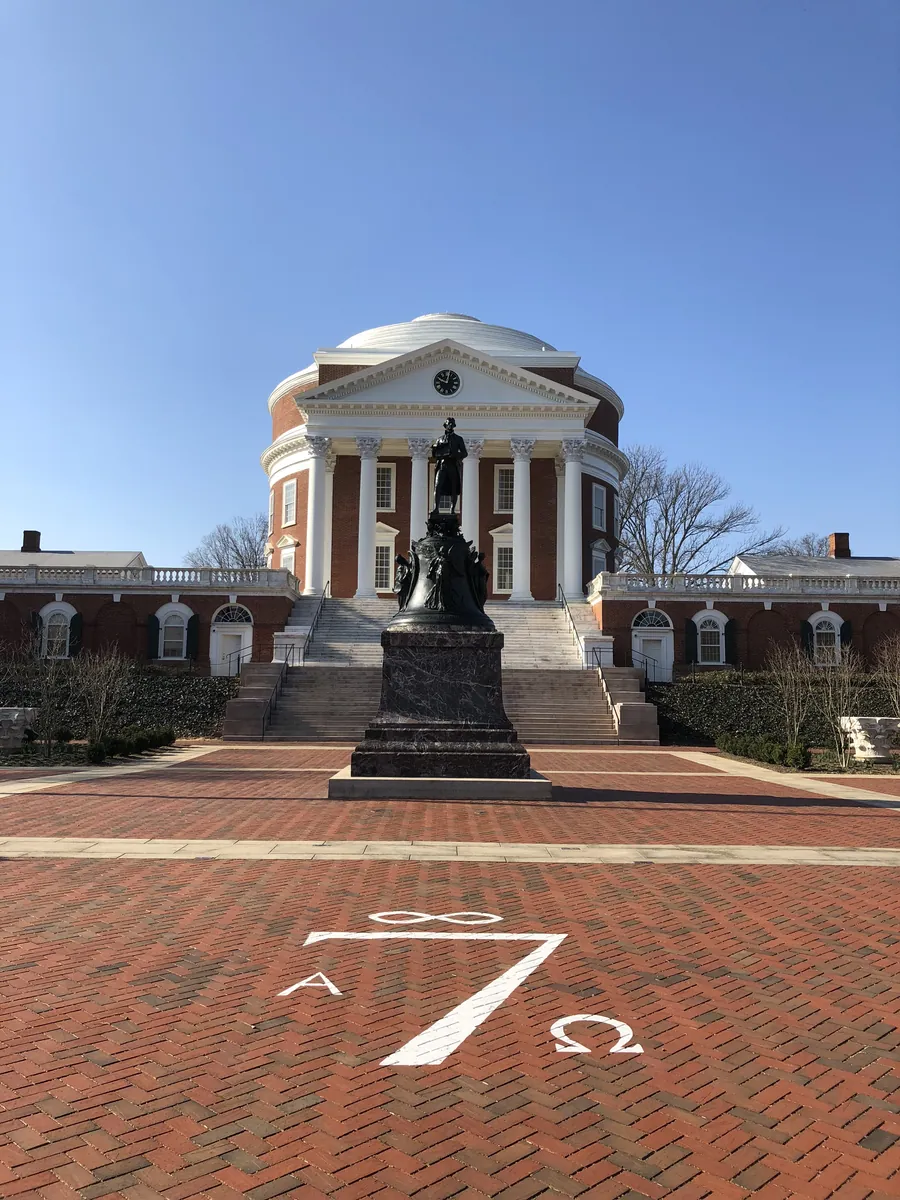
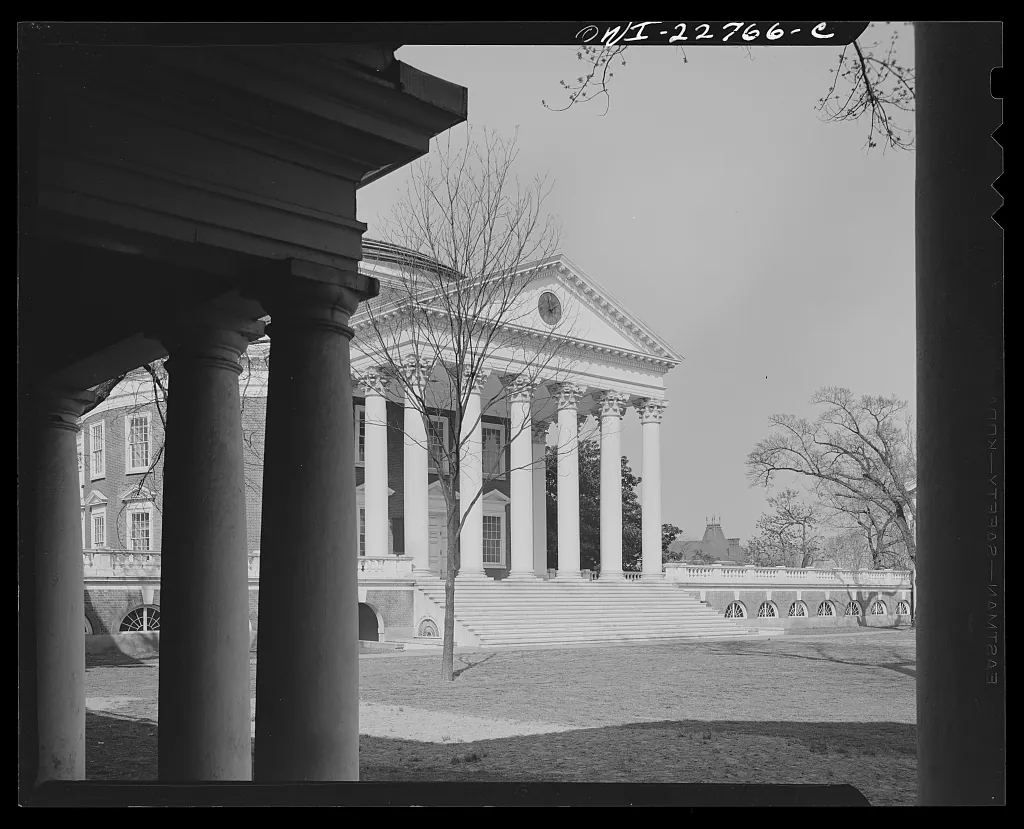
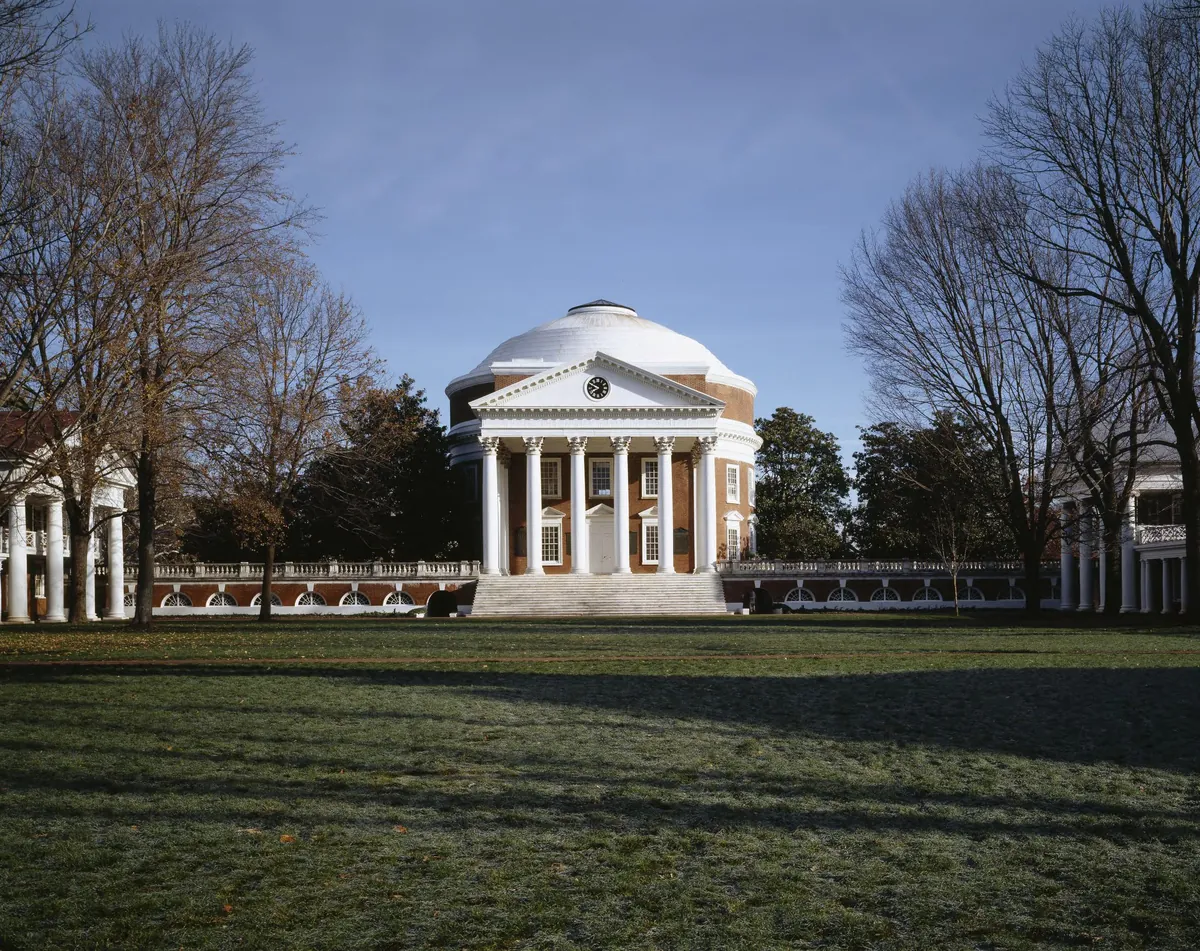
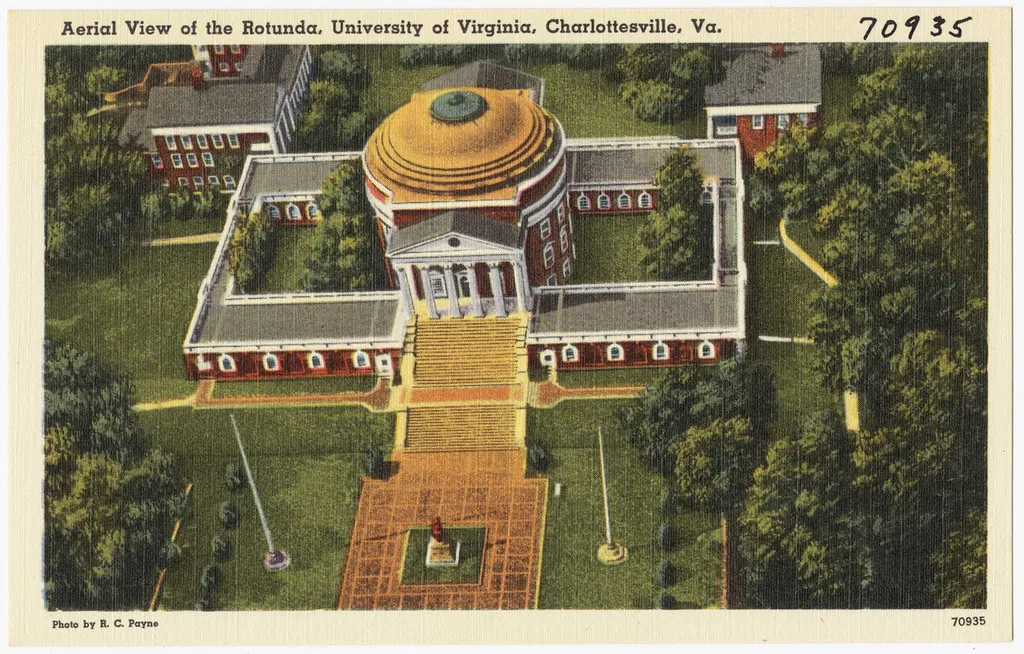
Jefferson wanted a library at the center of his university, not a church. That choice became the Rotunda. He modeled it after the Pantheon in Rome — working from Palladio's architectural drawings, scaling the proportions down to half the Pantheon's diameter. Enslaved laborers built it alongside freed black and white laborers. Construction began in 1822 and finished shortly after Jefferson's death in 1826.
In 1895, fire gutted the building — likely faulty electrical wiring. Students saved what mattered: a marble likeness of Jefferson, books from the Dome Room, scientific instruments. Stanford White rebuilt the interior, collapsing Jefferson's three floors into two and enlarging the Dome Room. A fireproof tile dome replaced the wooden one.
During renovations begun in 2012, workers found a nineteenth-century chemistry laboratory hidden inside the walls — a chemical hearth, brick ventilation tunnels, sealed and forgotten.
It is one of six modern man-made UNESCO World Heritage Sites in the United States. The designation is shared with Monticello. Come for the architecture; stay long enough to reckon with what it took to build it.
- ·UNESCO World Heritage Site 1987 (jointly with Monticello). NHL. Originally housed the library. Built by enslaved laborers.
More archive
Memories
Editorial content compiled with AI assistance. Place details verified against public records.