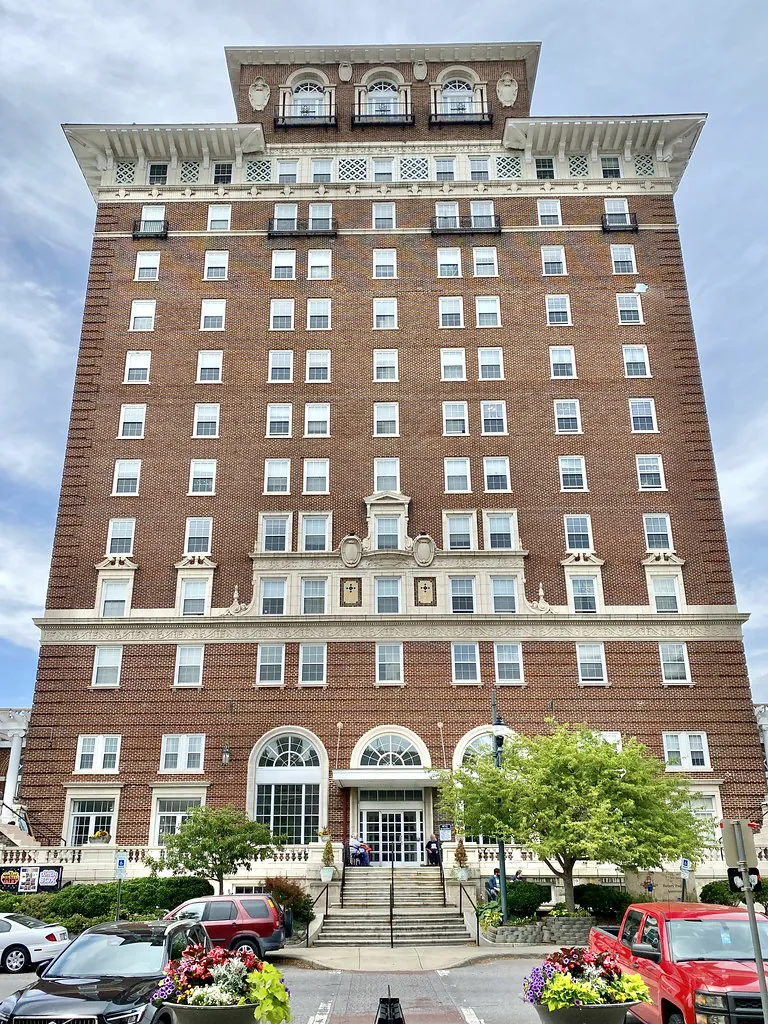
The hill is gone. That's the first thing to understand about Battery Park Hotel. Edwin W. Grove didn't just build a new hotel — he leveled the small mountain the original stood on, hauling it away with steam shovels and ox carts before breaking ground on what stands today.
The original Battery Park Hotel went up in 1886, built by Colonel Frank Coxe and designed by Philadelphia architect Edward Hazlehurst in Queen Anne style. It was the first hotel in the South with an electric elevator, and among the first anywhere with electric lighting. George Vanderbilt stayed here and, from his window, could see the land that would become Biltmore Estate. The Rockefeller and Lorillard families came too. The hotel was where Asheville's serious money slept.
By 1921, Grove owned it. He tore it down and flattened the hill beneath it, then built the 14-story steel-frame and brick replacement that opened September 18, 1924. Architect William Lee Stoddart of New York City designed 220 rooms with brick, limestone, and terra cotta — a Mission Revival roof with a dining patio on top and views of a city in boom.
The hotel survived the Depression. Grove died here in 1927. And in July 1936, a 19-year-old college student named Helen Clevenger was found dead in Room 224 — shot in the chest, her face slashed. A hall boy named Martin Moore confessed, recanted, and was executed on December 11, 1936. The case remains disputed. On September 4, 1943, a U.S. government official named Clifton Alheit jumped from the roof.
The hotel closed October 30, 1972. It became apartments for senior citizens — a use it still serves. The ground floor now houses the Asheville Pinball Museum. The hill is still gone.
- ·1 Battle Square. Houses Asheville Pinball Museum on ground floor. Steel-frame with brick veneer.
Memories
Editorial content compiled with AI assistance. Place details verified against public records.